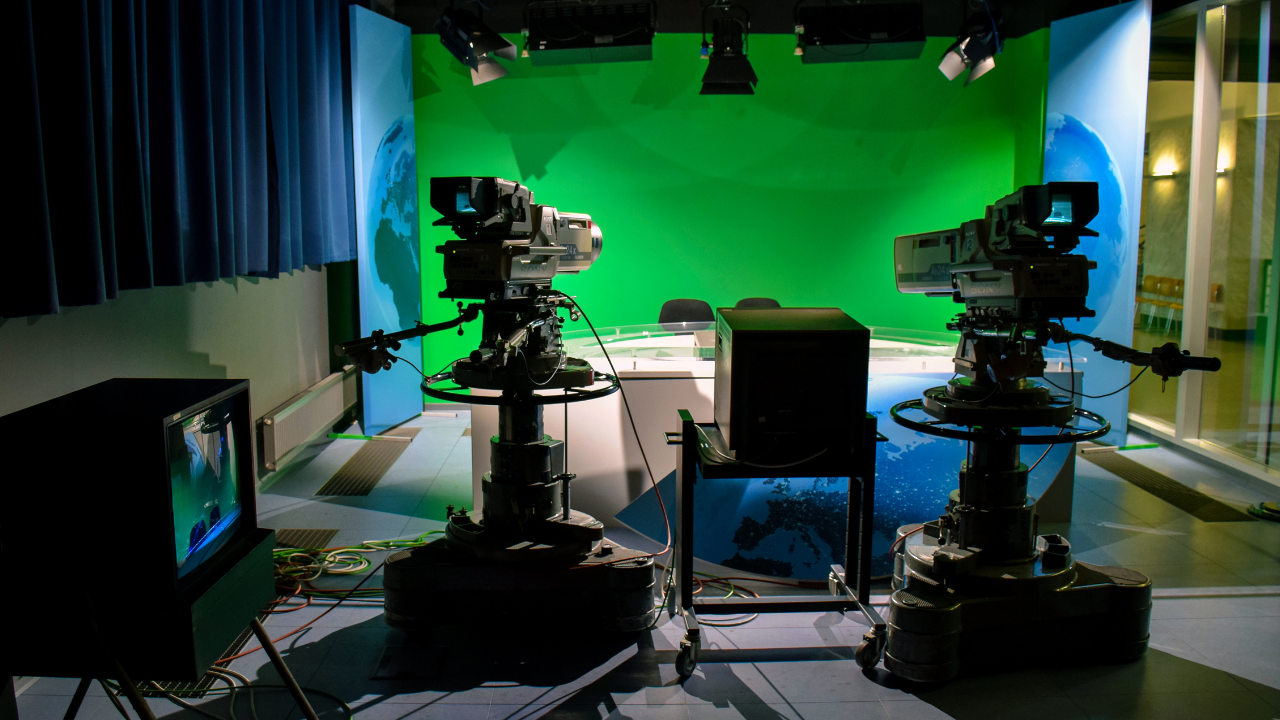
The traditional television newsroom operates on a high-fixed-cost model anchored around human talent. When a broadcast network experiments with removing anchors from its programming, the strategic impetus is rarely creative innovation; it is a calculated restructuring of operational expenditures, marginal cost reduction, and workflow velocity. Deconstructing this transition requires analyzing the trade-offs between human-centric charisma and automated efficiency across three operational vectors: talent overhead, editorial flexibility, and audience retention dynamics.
To understand why media organizations test anchorless formats, one must first isolate the cost function of a standard broadcast. Traditional news production is bound by the labor economics of star talent, makeup departments, wardrobe management, green rooms, and live-studio crew synchronization. An anchor acts as a single point of failure and a disproportionate cost center. By replacing the talking head with dynamic data visualizations, automated voice synthesis, and continuous graphics feeds, broadcasters attempt to shift from a variable cost structure—where scaling production requires adding proportional human resources—to a fixed-cost software model.
However, removing the anchor introduces a distinct set of operational frictions. Television news is fundamentally a synchronous, interrupt-driven medium. Breaking news requires real-time narrative adaptation, a function traditionally managed by an experienced anchor who can ad-lib, pivot tone, and maintain narrative coherence during live crises. An anchorless broadcast relies entirely on upstream editorial automation and pre-rendered graphic templates. When an unexpected event occurs, the system's reaction time is constrained by how quickly human operators can reconfigure the automated graphics engine and ingest new data feeds. Consequently, the reduction in labor costs is often offset by an increase in engineering and control-room complexity during high-velocity news cycles.
Audience retention represents the primary variable in this economic equation. Media consumption habits diverge along demographic lines, but television viewing historically relies on parasocial interaction—the psychological illusion of a personal relationship with the on-screen personality. Anchors serve as trust heuristics; viewers tune in not merely for the data, but for the interpretive filter provided by a familiar face. Stripping away the human element eliminates this heuristic, forcing the audience to evaluate the raw information on its structural merits. This increases cognitive load for the viewer, which can manifest as elevated channel-switching rates during broadcast transitions.
The viability of an anchorless broadcast model depends entirely on the nature of the content delivery. Commodities news—weather patterns, financial market tickers, traffic routing, and structured sports scores—benefits significantly from automation. These domains require high data density, rapid updating, and minimal interpretive bias, making them ideal candidates for template-driven, anchor-free presentation. Conversely, investigative journalism, political analysis, and crisis reporting require nuanced pacing, ethical judgment, and emotional calibration that automated systems cannot replicate without introducing severe tone-deafness.
Organizations attempting this transition must avoid treating anchorless production as a simple cost-cutting exercise. The correct deployment involves establishing a dual-track architecture: automated, anchor-free feeds for continuous data-heavy segments, paired with human-led deep dives for complex narrative reporting. Media strategists must measure success not by immediate payroll reductions, but by the marginal change in viewer drop-off rates across different programming tiers.
Deploy capital into automated graphics rendering pipelines and modular content management systems only after establishing strict content categorization protocols. Separate high-variance investigative segments from high-frequency data briefs, ensuring that automation is applied exclusively where narrative elasticity is zero.