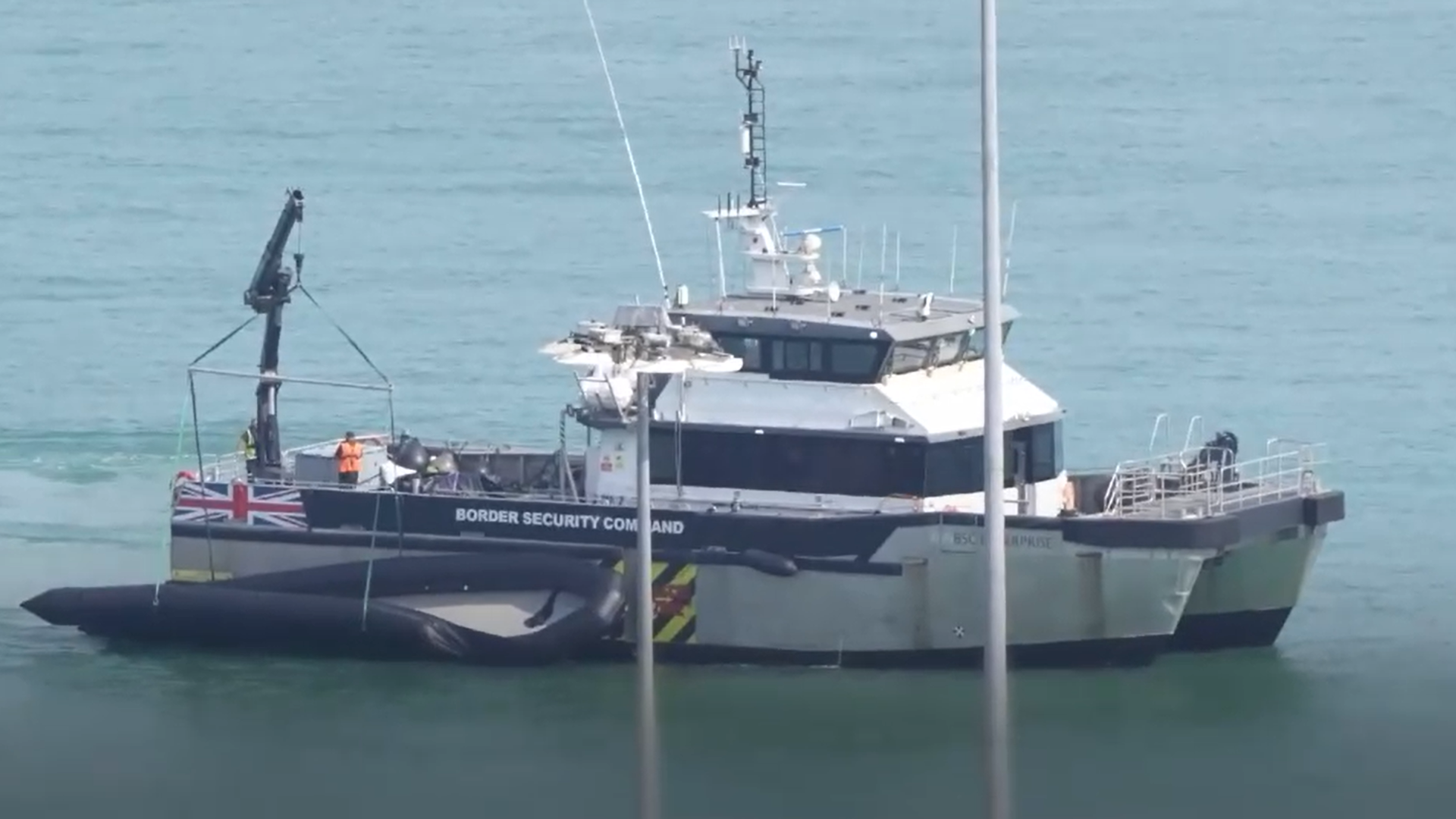
The Operational Anatomy of Channel Crossings
The apprehension of individuals accused of steering small watercraft across high-density shipping lanes exposes the fundamental mechanics of modern maritime smuggling networks. When an adolescent is charged with piloting a dinghy carrying 167 passengers from continental Europe to the United Kingdom, public discourse typically focuses on individual culpability. A rigorous analysis, however, must look past the immediate legal defendant to evaluate the systemic variables that enable these operations.
Transnational irregular migration relies on predictable economic incentives, minimal fixed capital requirements, and asymmetric risk distribution. Criminal syndicates do not invest in professional maritime labor. Instead, they exploit the structural vulnerability of marginalized participants by shifting the operational risk downstream.
[Criminal Syndicate] ---> (Capital Allocation: Low-Cost Inflatable) ---> [Vulnerable Proxy Pilot] ---> (Systemic Exposure) ---> [Maritime Enforcement]
Understanding how a minor came to hold the tiller of an overloaded rigid-hull inflatable or rubber dinghy requires examining three distinct vectors: the economics of asset acquisition, the logistics of passenger loading, and the mechanics of enforcement interception.
Asset Economics and the Low-Cost Inflatable Model
The core financial architecture of small boat trafficking is built on margin maximization through extreme capital minimization.
Sourcing and Depreciation
Smuggling organizations operate on a high-turnover, low-asset-cost model. The watercraft utilized in these crossings are typically mass-produced, commercial-grade PVC or hypalon inflatables procured through decentralized supply chains to bypass regulatory tracking.
- Hull Cost: A standard multi-chambered dinghy capable of holding over one hundred individuals represents a relatively low upfront capital expenditure when amortized across the total passenger tariff.
- Propulsion: Outboard motors are often acquired second-hand or stripped from recreational vessels to obscure serial numbers and complicate law enforcement tracing.
- Disposal Risk: Because these vessels are frequently intercepted, abandoned, or destroyed upon arrival, syndicates factor total asset loss into the baseline pricing model of each journey.
Revenue Concentration
The gross revenue generated by a single overcrowded crossing dwarfs the replacement cost of the hardware. With passenger tariffs fluctuating based on seasonal demand, weather windows, and perceived enforcement pressure, a single transit carrying 167 people yields significant capital inflow.
This financial asymmetry explains why interdiction does not deter syndicate operations. The loss of a single hull represents a minor operational setback rather than a structural threat to the enterprise.
The Logistics of Overloading and Proxy Piloting
Operational security for smuggling rings depends on absolute compartmentalization. The architects of the venture rarely approach the shoreline.
The Recruitment of Proxy Operators
To minimize exposure, syndicates systematically avoid deploying trained maritime professionals. Professional mariners command higher wages and carry identification profiles that increase law enforcement visibility. Instead, organizations recruit individuals who lack legal agency, economic mobility, or social protection—frequently minors or asylum seekers with mounting debt obligations to the network.
- Coercion Mechanisms: Operators are often offered discounted passage or forced through physical intimidation to act as the nominal helmsman.
- Skill Deficit: These proxy pilots typically possess zero navigation training, no familiarity with collision regulations, and no ability to interpret marine weather forecasts.
Payload Optimization vs. Structural Integrity
The decision to load 167 individuals into a vessel designed for a fraction of that capacity is not an accident of poor organization; it is a calculated risk to maximize yield per departure window.
Standard Capacity:  [======] (Nominal Load)
Actual Deployed:    [====================================================================================================] (167 Passengers)
Physics dictates the failure mode of this approach. As weight increases exponentially past the manufacturer maximum payload line:
- Freeboard height diminishes, leaving the vessel vulnerable to minor wakes and wind-chop.
- Center of gravity shifts dynamically with passenger movement, creating an unstable roll axis.
- Engine mounting brackets experience structural fatigue, risking total propulsion failure mid-channel.
Enforcement Bottlenecks and Jurisdictional Friction
Maritime border security operates within a complex web of international maritime law, sovereign waters, and search-and-rescue (SAR) obligations. These legal frameworks create operational friction that smuggling networks actively exploit.
The Search and Rescue Paradox
Under the International Convention on Maritime Search and Rescue and the Safety of Life at Sea (SOLAS) conventions, any vessel in distress commands an absolute obligation for rendering assistance. Traffickers weaponize this obligation. By intentionally overloading vessels to the point of structural compromise, they ensure that the craft meets the legal definition of being in distress upon clearing departure beaches.
- Interception Dynamics: Border forces cannot simply engage in kinetic deterrence without violating international humanitarian law regarding life at sea.
- The Hand-off Problem: Jurisdictional boundaries between territorial waters require coordinated hand-offs between continental coastal guards and British enforcement agencies, creating tactical windows where vessels can drift or be guided into congested shipping lanes.
Legal Attribution and the Scapegoat Effect
When enforcement agencies intercept a crossing, the primary tactical objective is identifying the individual operating the vessel. In legal proceedings, defendants frequently deny piloting the craft, pointing to the chaotic nature of the loading process and the absence of formal control mechanisms.
This defense highlights a broader investigative challenge. In a vessel packed shoulder-to-shoulder with 167 people, physical control of the tiller is often temporary, shared, or passed in panic. Prosecuting a minor as the sole principal operator masks the broader command chain, leaving the financial and logistical tiers of the network intact.
Systemic Vulnerabilities in Coastal Surveillance
Preventing high-volume maritime smuggling requires continuous intelligence-led disruption rather than reactive shoreline interdiction. Current methodologies suffer from a high latency between asset preparation and border response.
Intelligence Gathering Deficits
Law enforcement agencies frequently focus assets on tactical interdiction—patrol vessels stationed in the Channel—rather than upstream disruption.
- Supply Chain Blind Spots: Tracking the wholesale purchase of commercial inflatables and outboard engines requires real-time point-of-sale data integration that crosses national borders.
- Communication Protocols: Syndicates utilize encrypted messaging applications to coordinate beach movements, bypassing traditional signals intelligence intercept capabilities.
The Cost of Reactive Posture
Deploying heavy naval and air assets to manage small boat arrivals represents a misallocation of defensive resources. Every hour a multi-million-dollar cutter spends escorting an overloaded dinghy is an hour it is diverted from broader maritime security missions. Until enforcement strategy shifts focus toward dismantling the localized logistical hubs where boats are inflated and staged, the structural supply of crossings will remain inelastic to interdiction pressure.
Allocate enforcement capital toward dismantling the staging warehouses and financial clearinghouses on the continent rather than expanding tactical interdiction capacity in mid-channel waters.