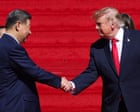
The convergence of sovereign leadership at a premier geopolitical summit represents a critical pressure test for bilateral technology coordination. When United States President Donald Trump and Chinese President Xi Jinping concluded their recent high-level talks without establishing a major binding agreement on artificial intelligence governance, mainstream observers characterized the outcome as a diplomatic failure or a missed opportunity for international accord. This interpretation relies on a fundamental misunderstanding of structural incentives in great power competition. Strategic bifurcation in high-technology sectors is not a temporary policy misalignment or a failure of negotiation tact; it is a permanent structural condition driven by incompatible economic models, divergent security imperatives, and the zero-sum nature of foundational computational advantages.
The Divergence of Strategic Imperatives
To understand why a comprehensive bilateral pact on artificial intelligence remains unattainable, one must dissect the underlying objectives of both state apparatuses. The United States operates primarily through a decentralized, market-driven ecosystem where commercial entities—dominated by hyper-scale cloud providers and private model developers—lead algorithmic innovation, while state intervention manifests predominantly through export controls, semiconductor restrictions, and targeted national security guardrails. Conversely, the Chinese economic model integrates state-owned enterprises, municipal computing power networks, and centralized industrial policy into a singular directive apparatus designed to achieve technological self-sufficiency and ideological alignment.
These distinct architectures generate asymmetric risk profiles. Washington evaluates artificial intelligence through the lens of national security exposure, intellectual property theft, and dual-use capabilities that could alter military force projection or autonomous cyber warfare capacities. Beijing evaluates the same technology through the prism of social stability, economic modernization under industrial transition, and the mitigation of external supply chain dependencies, particularly in advanced lithography and specialized accelerator hardware. When two sovereign entities approach the negotiating table with mutually exclusive operational premises, comprehensive standardization becomes structurally impossible.
The Economics of Computational Bottlenecks
The structural limits of cooperation are further defined by the economics of the hardware supply chain. Advanced artificial intelligence development relies on extreme concentrations of physical capital, notably extreme ultraviolet lithography systems, high-bandwidth memory, and massive clusters of application-specific integrated circuits. Current regulatory frameworks implemented by the United States are explicitly engineered to cap the computational ceiling available to foreign competitors, utilizing choke points in semiconductor manufacturing equipment to maintain a strategic lead.
[US Export Control Infrastructure]
       │
       ▼
[Advanced Lithography & Logic Chokepoints]
       │
       ▼
[Hard Ceiling on Foreign Compute Scaling]
       │
       ▼
[Diversification into Indigenous Silicon & Algorithmic Efficiency]
From a game-theoretic perspective, signing a major agreement that locks in current hardware asymmetries would require one party to accept permanent structural subordination in a transformative technological domain. Because computational capacity correlates directly with economic productivity and military capability, neither state possesses the domestic political license to accept such terms. Consequently, diplomatic engagements function not as mechanisms for harmonization, but as signaling arenas designed to establish red lines, manage tactical escalation, and prevent unintended crises in automated systems.
The Mechanics of Tactical De-escalation
Despite the absence of a sweeping bilateral accord, the summit yielded implicit operational understandings that should not be dismissed as mere rhetoric. In complex geopolitical negotiations, the absence of a formal treaty often masks the presence of tacit deterrence frameworks. Both nations face shared systemic vulnerabilities, including the risk of algorithmic flash crashes in global financial markets, the proliferation of unvetted autonomous weaponry, and the systemic destabilization caused by deepfake-driven disinformation campaigns.
Strategic stability in this domain does not require mutual affection or unified regulatory codes; it requires predictable signaling and risk mitigation protocols. The working-level dialogues maintained between technical agencies serve a narrow, vital function: preventing misunderstandings regarding critical infrastructure attacks, establishing communication channels for algorithmic anomalies, and defining the boundaries of commercial retaliation. These functional mechanisms operate independently of grand summit declarations because they address immediate operational friction rather than ideological divergence.
The Architecture of Long-Term Bifurcation
The structural trajectory of artificial intelligence points toward permanent architectural divergence rather than convergence. As both nations double down on indigenous supply chains—exemplified by domestic semiconductor initiatives in China and re-shirring efforts within Western alliances—the global technology ecosystem is partitioning into distinct operational zones. Each zone features proprietary standards, isolated developer communities, and incompatible regulatory frameworks for data privacy and algorithmic safety.
This structural separation alters the calculus for multinational enterprises operating across jurisdictions. Compliance overhead increases exponentially as organizations must navigate dual-track engineering, separate model alignment protocols, and fragmented infrastructure dependencies. The absence of a summit-level agreement merely accelerates this reality, stripping away the illusion of a unified global internet or a universally accepted governance standard.
Strategic Execution
Organizations navigating this bifurcated environment must abandon assumptions of regulatory convergence. Risk management frameworks must be restructured to account for continuous supply chain decoupling, jurisdiction-specific model compliance, and the virtualization of computational resources. Long-term operational planning requires immediate hedging against export control shifts, localization of model deployment infrastructure, and the development of modular architectures capable of adapting to divergent regulatory regimes without catastrophic technical debt.