The return of the Artemis II Orion spacecraft to its primary assembly facility marks the transition from theoretical mission architecture to empirical validation. While public discourse focuses on the "homecoming," the technical reality is a rigorous post-flight data extraction phase designed to calibrate the thermal protection system (TPS) and life-support integration before human occupancy. The spacecraft’s movement from the recovery site to the Kennedy Space Center (KSC) represents a critical milestone in the hardware-in-the-loop testing cycle, serving as the final physical verification that the pressure vessel survived the mechanical stresses of its previous test flights and the logistical hazards of cross-country transport.
The Triad of Post-Recovery Structural Analysis
The evaluation of a returned crew module follows a rigid hierarchy of concerns. Engineers categorize these into three distinct domains of inquiry to ensure the vehicle meets the safety margins required for a crewed lunar flyby.
1. Thermal Protection System (TPS) Degradation Rates
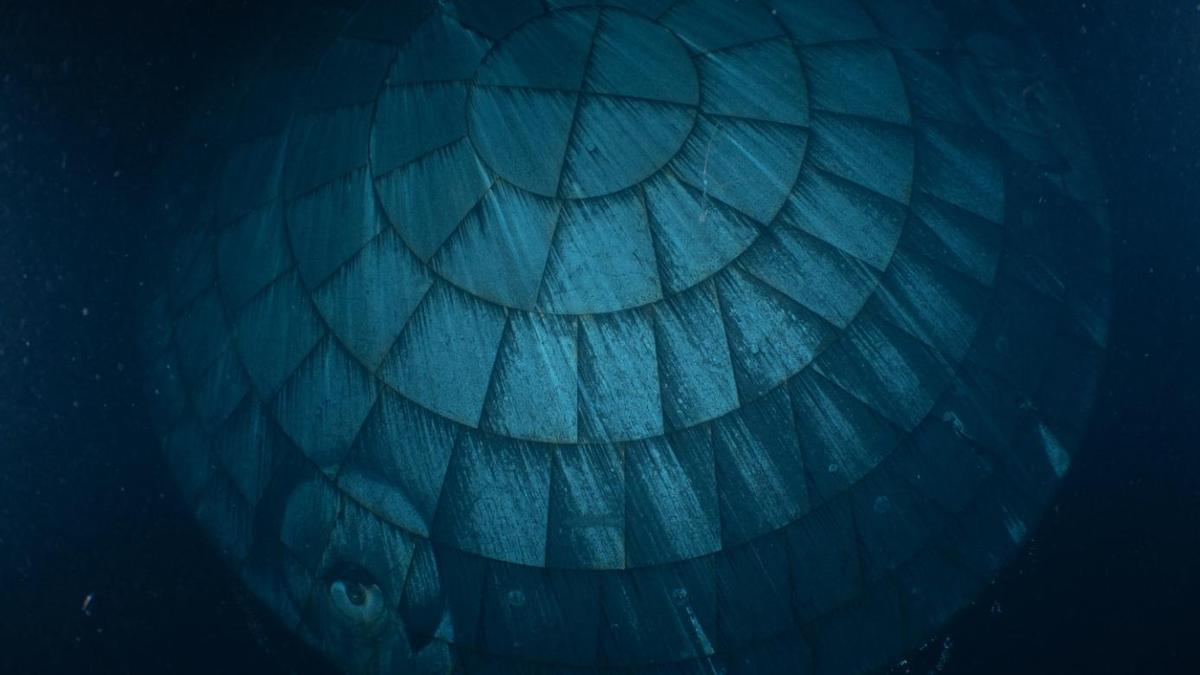
The heat shield is the primary failure point during atmospheric re-entry. Analysts examine the char depth and mass loss of the Avcoat material—a proprietary epoxy resin—to determine if the ablation occurred uniformly.
- Ablation Uniformity: Localized pitting or "spalling" indicates unexpected aerodynamic turbulence or material impurities.
- Thermal Soak Mitigation: Investigators measure how much heat penetrated the secondary structure. If the internal temperatures exceeded the design limit of approximately 250°F (121°C), the internal electronics and structural seals face a mandatory replacement cycle.
2. Micro-Meteoroid and Orbital Debris (MMOD) Impact Mapping
The exterior of the Orion capsule serves as a physical record of the orbital environment. Every microscopic crater is measured and logged to update statistical models of orbital debris density. This data determines whether the current shielding thickness is sufficient or if the "keep-out zones" around high-risk orbital altitudes need adjustment for the Artemis II flight path.
3. Load Path Verification and Stress Distribution
The spacecraft undergoes a series of non-destructive evaluations (NDE), including ultrasonic scans and X-ray imaging. The goal is to detect hairline fractures in the aluminum-lithium alloy frame. These fractures often originate at "stress risers"—points such as bolt holes or window apertures where the mechanical load concentrates.
Logistical Constraints as a Forcing Function for Launch Schedules
The movement of the Orion capsule is not merely a transport task; it is a complex engineering operation that dictates the critical path of the mission schedule. The "transportation vibration environment" poses a unique risk to the delicate avionics remaining inside the craft.
The Problem of Low-Frequency Oscillation
During transit, the vehicle is exposed to vibrations that differ significantly from the high-frequency acoustic loads of a rocket launch. Ground transport induces low-frequency oscillations (1-10 Hz) that can lead to "fatigue creep" in pre-stressed fasteners. To mitigate this, the spacecraft is mounted on a specialized isolation pallet that acts as a low-pass filter, absorbing energy before it reaches the primary structure.
Facility Throughput Bottlenecks
The return to the Neil Armstrong Operations and Checkout (O&C) Building initiates a sequential workflow:
- De-servicing: Removal of residual hazardous propellants and high-pressure gases.
- Instrumentation Retrieval: Downloading "black box" data that was not transmitted via telemetry.
- Refurbishment vs. Replacement: A cost-benefit analysis applied to every sub-component.
The O&C Building has finite floor space and clean-room capacity. The arrival of the Artemis II vessel creates a resource conflict with the assembly of the Artemis III and IV modules. Effective mission management requires a "just-in-time" approach to component arrival to prevent hardware stagnation on the assembly floor.
The Feedback Loop Between Artemis I and Artemis II
The Artemis II vessel is the beneficiary of the data harvested from its predecessor. The current analysis focuses on a specific anomaly identified during the uncrewed Artemis I re-entry: the unexpected charring behavior of the heat shield.
Resolving the Heat Shield Material Variance
During Artemis I, the Avcoat material wore away in a pattern that deviated slightly from the computational fluid dynamics (CFD) models. This discrepancy suggests a potential gap in our understanding of hypersonic plasma flows. The current inspection of the Artemis II hardware aims to confirm if structural modifications—such as tighter tolerances on the gap filler between heat shield tiles—have successfully addressed the issue.
Life Support Integration Complexity
Unlike previous iterations, the Artemis II module must be outfitted with the Environmental Control and Life Support System (ECLSS). The return to the launch site triggers the "ECLSS Integration Phase," which involves:
- Atmospheric Revitalization: Installing the amine-based swing beds that scrub CO2.
- Nitrogen/Oxygen Recharge Systems: Testing the high-pressure tanks for leak rates over a 10-day simulated mission duration.
- Waste Management System (WMS): Validating the mechanical interfaces of the toilet and hygiene systems in a vacuum-compatible configuration.
Quantifying the Risk of Reusability
While the Artemis II capsule is a "new" build, it incorporates components and design philosophies derived from previous test articles. The aerospace industry operates on a "Safety Factor" (usually 1.4x or 1.5x of the maximum expected load). Every time a vehicle is transported, handled, or integrated, a portion of its "fatigue life" is consumed.
The Fatigue Debt Equation:
The total structural health ($S_h$) of the spacecraft can be modeled as the initial integrity minus the sum of cumulative stresses:
$$S_h = I_0 - \sum (L_{launch} + L_{orbit} + L_{reentry} + L_{transport})$$
Engineers must ensure that $S_h$ remains significantly above the failure threshold before the crewed mission begins. The transport from the recovery site to the O&C Building represents a measurable, albeit small, increment in this sum ($L_{transport}$).
Strategic Infrastructure Dependencies
The success of the Artemis program relies on the "Mobile Launcher" and "Vehicle Assembly Building" (VAB) infrastructure. The return of the spacecraft is the trigger for the "Stacking Sequence."
The Multi-Element Integration Problem
The Orion capsule is only one part of the Flight Stack. It must eventually be integrated with:
- The European Service Module (ESM): Providing power and propulsion.
- The Space Launch System (SLS): The heavy-lift launch vehicle.
- The Interim Cryogenic Propulsion Stage (ICPS): Responsible for the Trans-Lunar Injection (TLI) burn.
The synchronization of these disparate supply chains is the primary driver of launch delays. If the ESM arrives from Europe late, the Orion capsule must be placed in "long-term storage," requiring constant nitrogen purging to prevent corrosion of the sensitive electronics.
Operational Imperatives for the Artemis II Crewed Mission
The data gathered during this current recovery and inspection phase will define the "Go/No-Go" criteria for the Artemis II launch. The following technical thresholds must be met with 100% certainty:
- Seal Hermeticity: The hatch seals must demonstrate a leak rate of less than 0.05 lbs of oxygen per day in a simulated vacuum.
- Avionics Redundancy: The flight computers must show zero "bit flips" or radiation-induced latch-ups during high-energy cosmic ray simulation testing.
- Ordnance Reliability: The pyrotechnic bolts responsible for separating the crew module from the service module must have their firing circuits validated for electrical continuity.
The return of the spacecraft is not a celebration but a forensic investigation. The primary objective is to move from "Design Intent" to "As-Built Verification." The next twelve months will be dominated by acoustic testing, where the entire capsule is vibrated at decibel levels equivalent to the SLS launch to ensure no wire harnesses or structural rivets loosen under the extreme sound pressure.
The strategic play is to leverage this "down-time" for the spacecraft to finalize the software build for the mission. While the hardware is being inspected for physical wear, the software team is running millions of Monte Carlo simulations to account for every possible trajectory deviation. The integration of "hardware-in-the-loop" (HITL) testing—using the actual returned capsule connected to flight simulators—is the only way to guarantee that the digital commands will result in the expected physical response during the lunar flyby. Failure to synchronize the physical hardware inspection with the digital twin simulations will lead to a bottleneck that no amount of overtime can resolve. Success requires the simultaneous validation of the physical vessel's structural health and the software’s ability to navigate the complex gravitational gradients of the Earth-Moon system.