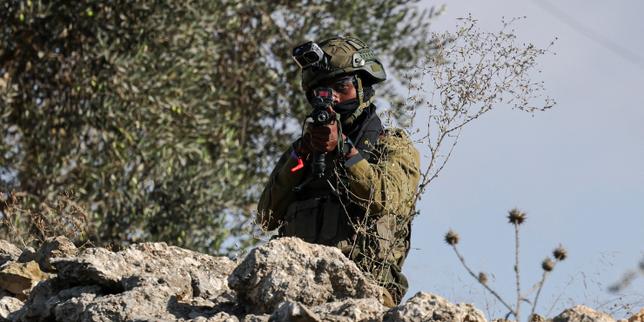
The annual olive harvest in the West Bank operates less as an agricultural cycle and more as a high-friction economic stress test. When visual documentation emerges of olive collection occurring under direct threat, public discourse typically fixates on the immediate spectacle of confrontation. This perspective misses the underlying systemic architecture. The friction surrounding the harvest is not merely a series of isolated security incidents; it functions as a calculated disruption of resource extraction, asset devaluation, and territorial attrition. To understand how localized disruptions cascade into systemic economic failure for Palestinian farmers, we must deconstruct the mechanics of seasonal access control, the cost function of agricultural security, and the long-term impact on asset depreciation.
The Seasonal Dependency Loop
Agricultural economies reliant on perennial crops like olives operate on long time horizons. A mature olive tree requires years of sustained investment in pruning, plowing, and soil management before yielding peak output. The harvest window itself is compressed, typically lasting from October through November. During this brief operational window, farmers must convert physical yield into annual revenue. If you found value in this piece, you should look at: this related article.
When access to agricultural plots is restricted, delayed, or conditioned upon external security permits and military coordination, the operational efficiency of the harvest drops precipitously. This introduces three distinct structural bottlenecks:
- Perishability and Quality Degradation: Olives must be pressed into oil quickly after picking to maintain low acidity and high market value. Delays caused by restricted movement or checkpoints transform premium-grade fruit into lower-value bulk inputs.
- Labor Force Compression: Harvesting requires dense, localized labor concentrations. When movement restrictions or security threats deter laborers from entering specific zones, the labor-to-yield ratio becomes inefficient, leaving fruit unpicked on branches.
- Yield Loss via Abandonment: Unharvested fruit rots, which simultaneously reduces immediate cash flow and suppresses the tree's productive capacity for the subsequent cycle.
The strategic objective of localized pressure is not merely to disrupt a single season's balance sheet, but to break the continuity of investment. When an asset becomes a liability due to high operational friction, rational economic actors alter their behavior. For another angle on this development, see the recent update from The New York Times.
The Cost Function of Agricultural Defense
For agricultural smallholders, profit margins are determined by input costs versus market returns. The introduction of external threats—ranging from physical damage to equipment and arson to direct harassment—alters the cost function entirely.
In a functioning market, security is a public good maintained by state infrastructure. When that infrastructure fails to protect property rights, the burden of defense shifts entirely to the individual producer. This creates a severe cost asymmetry:
- Capital Outlay for Defense: Farmers are forced to invest capital into passive defense measures, such as fencing, surveillance, or organizing collective volunteer protection networks. These expenditures yield zero productive return; they merely attempt to preserve existing assets.
- Opportunity Costs of Vigilance: Time spent coordinating security, negotiating military access permits, or guarding groves is time diverted from core agricultural maintenance.
- Insurance and Credit Failure: Traditional agricultural insurance markets do not price in political risk or targeted asset destruction. Consequently, farmers absorb total losses, eroding the liquid capital required to finance the next season's inputs.
When the cost of defending an asset exceeds the net present value of its future yield, economic abandonment becomes the default outcome.
Attrition Through Capital Depreciation
The long-term consequence of repeated harvest disruptions is the systemic devaluation of fixed capital in the region. Olive groves represent generational wealth and land tenure. Under international law and local legal frameworks, continuous cultivation has historically served as a mechanism of land retention.
Conversely, forced fallowness accelerates land expropriation through legal and physical mechanisms. If a plot is left uncultivated for consecutive seasons, it becomes politically and physically vulnerable to encroachment. The mechanics of this process follow a predictable trajectory:
Harvest Disruption -> Labor Shortage -> Yield Abandonment -> Loss of Cultivation Status -> Reduced Land Value -> Territorial Attrition
This sequence transforms a security issue into a structural redistribution of economic geography. By systematically increasing the transaction costs of farming, the productivity of Palestinian agricultural land is artificially suppressed. The ultimate metric of success for this dynamic is not the destruction of a single harvest, but the permanent detachment of the producer from the means of production.
Operational Forecast
Absent a structural shift in movement enforcement and property protection protocols, the trajectory of West Bank agriculture points toward accelerated polarization. Commercial-scale producers with sufficient capital reserves will increasingly mechanize or absorb localized supply chains to buffer against volatility. Conversely, smallholders dependent on family labor and unhedged cash flows will continue to experience margin compression, leading to the quiet liquidation of agricultural assets. The persistence of harvest-season threats functions as an efficient economic filter, steadily weeding out marginal producers and permanently altering the rural economy of the region.