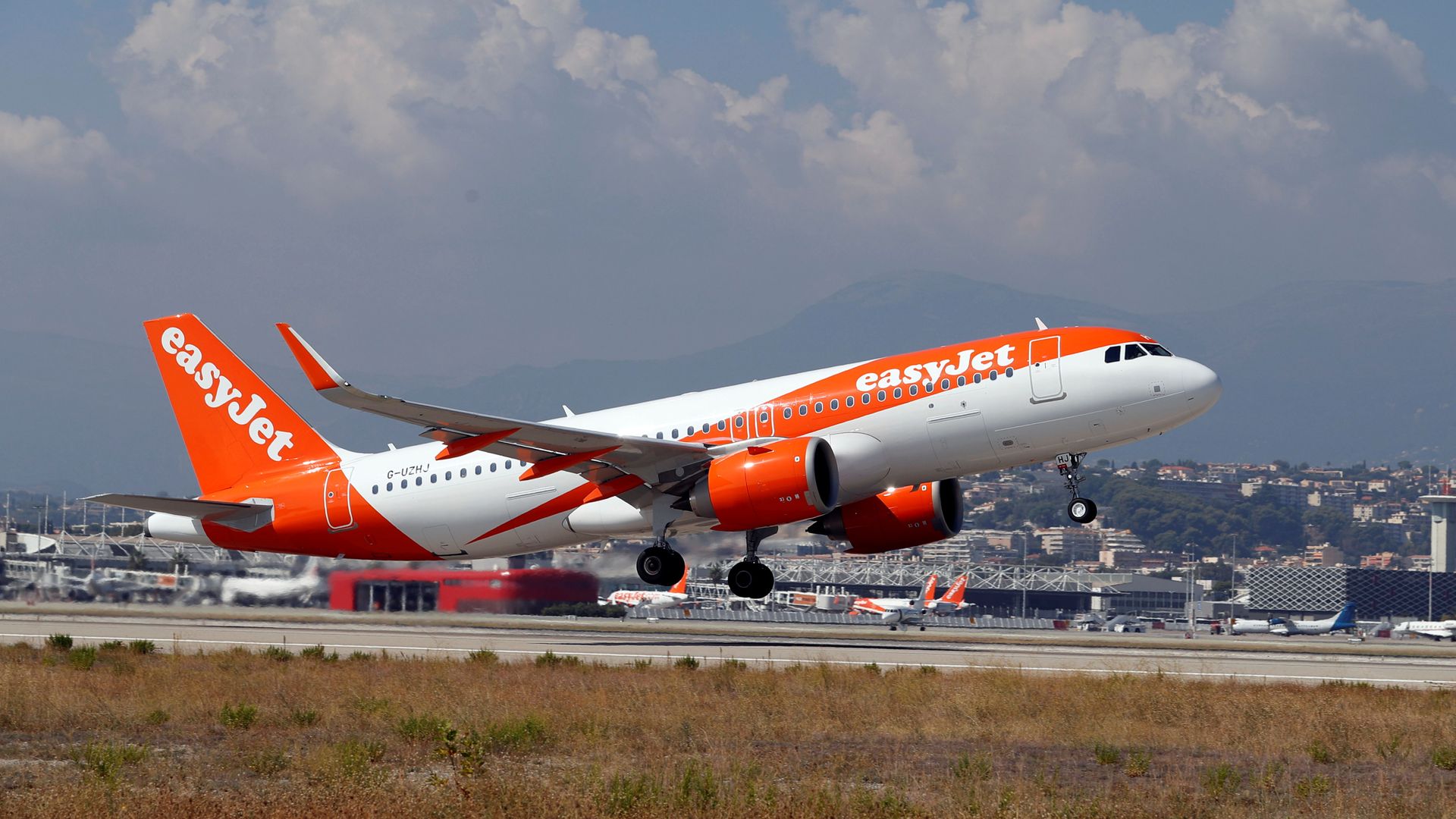
The formal agreement by easyJet to accept a 5.7 billion pound acquisition offer from private equity manager Apollo Global Management marks a critical juncture in the capitalization of European aviation. Valued at 7.15 pounds per share in cash, the transaction follows the withdrawal of a competing proposal from Castlelake. Evaluating this deal requires moving past headline acquisition figures to examine the structural mechanics of airline valuations, regulatory foreign ownership constraints, and the strategic arbitrage between public equity markets and private capital deployment.
The Public Valuation Discount and Private Equity Arbitrage
For years, London-listed equities have suffered from a structural valuation discount relative to their North American counterparts. Capital-intensive sectors like aviation face persistent market friction in public markets. Low-cost carriers operate under high operational sensitivity to fuel price volatility, geopolitical shocks, and macroeconomic cycles. Public equity markets frequently price these carriers at multiples that fail to capture long-term asset values or ancillary revenue growth, such as the rapid expansion of the easyJet holidays division.
Apollo’s offer of 7.15 pounds per share represents an approximate 80 percent premium over the undisturbed share price recorded before acquisition interest surfaced. From a corporate finance perspective, private equity funds target cash-generating asset bases where operational restructuring or long-term capital allocation can be executed away from quarterly earnings pressures. By taking the airline private via a court-approved scheme of arrangement, management gains the multi-year planning horizon necessary to fund fleet renewal, digital architecture updates, and holiday division scaling without the discount imposed by public market short-termism.
Navigating the Regulatory Control Matrix
The most complex structural hurdle of the transaction involves compliance with European Union aviation law. Under current regulations, carriers operating internal routes within the bloc must remain majority-owned and effectively controlled by EU or UK interests. Because Apollo is a US-headquartered private equity firm, a straightforward 100 percent acquisition would immediately strip easyJet of its vital operating licenses across member states.
To solve this regulatory bottleneck, the transaction introduces a multi-tiered ownership architecture:
- The Private Equity Ceiling: Funds managed by Apollo will hold a capped stake of up to 49.9 percent in Eagle Bidco, the acquiring vehicle.
- The Rollover Capital Class: Founder Sir Stelios Haji-Ioannou and his family, alongside other electing institutional holders, will retain a significant unlisted equity position, capturing between 45.1 and 49.9 percent of the ordinary capital.
- The Compliance Trust: An EU management trust will control up to 5 percent of the voting structure, ensuring that legal majority control satisfies the strict ownership mandates enforced by aviation regulators.
This design illustrates how cross-border private equity deals must engineer ownership caps to preserve operational licenses. The inclusion of the founder’s 15 percent stake as rolled-over equity rather than cash-out proceeds is an essential design choice, aligning historical governance with the new capital structure.
The Cost Function and Margin Pressures
Low-cost carrier profitability is governed by tight unit cost economics, commonly measured as Cost per Available Seat Kilometer excluding fuel, alongside fluctuating jet fuel expenses and airport gate fees. In recent periods, European carriers have absorbed severe cost spikes driven by regional conflicts, localized air traffic control strikes, and capacity constraints at primary hub airports.
Public markets punish airlines during these margin compression cycles because equity analysts extrapolate short-term cost spikes into perpetuity. Private equity operators, conversely, underwrite these cycles through a debt-and-equity lens, utilizing balance sheet flexibility to smooth cash flows. Under private ownership, easyJet can theoretically absorb capital expenditures for sustainable aviation fuel initiatives and fleet modernizations without triggering the immediate equity sell-offs typical of quarterly earnings misses.
Execution Risk and Transaction Timeline
The path to completion involves distinct regulatory and legal milestones before the planned closure in early 2027.
- Scheme Document Publication: By early September, the formal scheme document will be circulated, detailing the mechanics of the cash payout versus the unlisted share election for qualifying holders.
- Court and General Meetings: Shareholders must formally vote on the transaction across separate court-convened sessions. Given the board's unanimous recommendation and the founder's explicit backing, the voting hurdle has a high probability of clearance.
- Regulatory Sanction: Antitrust and civil aviation authorities in the UK and EU must review the ownership trust structure to verify that foreign influence does not breach operational control mandates.
If these milestones are met, easyJet will delist from the London Stock Exchange, concluding a multi-decade era of public ownership and setting a structural precedent for how foreign private capital restructures regulated European transport infrastructure.
Strategic Execution Playbook
To capitalize on the shift to private ownership, management must execute a three-phase operational pivot. First, decouple capital expenditure cycles from public equity guidance, shifting cash flows into high-margin ancillary segments like the package holiday business. Second, operationalize the EU trust governance framework to preempt regulatory challenges from civil aviation authorities regarding effective control. Third, optimize fleet utilization rates to counteract persistent air traffic management bottlenecks across European airspace without relying on external equity markets for liquidity injections.