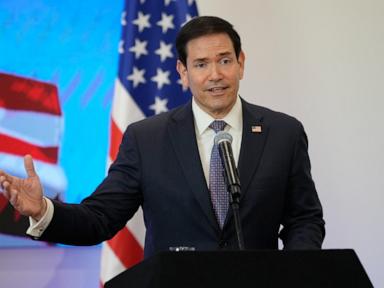
Geopolitical realignment in the Western Hemisphere is rarely driven by sudden diplomatic epiphanies; it is driven by the convergence of fiscal desperation, security failure, and executive centralization. The recent diplomatic circuit executed by United States Secretary of State Marco Rubio across Colombia, Ecuador, and Peru illustrates an operational shift in how Washington and regional conservative administrations approach transnational cocaine supply chains. By replacing ad-hoc law enforcement cooperation with synchronized executive mandates, the current U.S. administration aims to collapse the logistical vectors utilized by Andean cartels. Understanding the efficacy of this strategy requires deconstructing the economic and tactical frameworks governing drug interdiction, maritime logistics, and political risk in the region.
Ecuador occupies a uniquely vulnerable structural node in the global cocaine supply chain. Wedged geographically between Colombia and Peru—the world's primary raw-leaf producers—Ecuador transformed from a peaceful transit zone into a violent operational hub for cartels and domestic factions like Los Choneros. This transformation followed a predictable economic model: when local state capacity degrades, transaction costs for transnational criminal organizations plummet. Ports such as Guayaquil offer direct maritime access to North American and European container markets, turning Ecuadorian infrastructure into an indispensable asset for drug syndicates. President Daniel Noboa's administration recognized that conventional policing frameworks were mathematically incapable of counteracting cartel balance sheets backed by billions in illicit revenue. Consequently, Noboa's alignment with Washington's muscular security posture is not merely ideological; it is a forced operational hedge to prevent total state capture by criminal networks. You might also find this connected article insightful: The Final Flight From Paradise And The Silence That Follows.
The tactical component of this partnership relies on maritime interdiction economics. Cocaine export logistics depend on high-volume maritime transit vectors, ranging from semi-submersible vessels and fast boats to floating logistical refueling stations. The cost function of drug trafficking relies on redundancy: if a cartel deploys ten shipments and loses three, the profit margin on the remaining seven absorbs the loss. Recent U.S. military operations in the eastern Pacific Ocean and Caribbean Sea have sought to alter this equation by aggressively scaling kinetic interdictions. However, kinetic strikes against maritime targets carry severe political and legal externalities. While earlier phases of expanded operations involved lethal force resulting in hundreds of fatalities, the recent interception of an Ecuadorian vessel linked to Los Choneros demonstrated a tactical pivot: suspects were detained and transferred directly to Ecuadorian sovereign jurisdiction rather than neutralized at sea. This shift minimizes international legal friction while bolstering local judicial throughput.
The operational success of this bilateral architecture depends on three distinct pillars: intelligence fusion, asset forfeiture synchronization, and jurisdictional transfer protocols. Intelligence fusion addresses the asymmetrical information advantage traditionally enjoyed by cartels. By sharing real-time signals intelligence and maritime tracking data, U.S. military apparatuses can cue regional coast guards and naval forces before shipments clear territorial waters. Asset forfeiture synchronization targets the financial liquidity of transnational networks by mapping illicit capital flows through international banking channels, freezing accounts tied to designated entities. Finally, jurisdictional transfer protocols resolve the sovereignty dilemmas that historically paralyzed joint operations. When U.S. forces intercept assets on the high seas, transferring suspects to cooperative local authorities like those in Quito prevents protracted extradition battles and leverages domestic anti-terrorism legal frameworks. As highlighted in detailed reports by NBC News, the implications are widespread.
Despite these tactical alignments, structural vulnerabilities threaten long-term stability. Criminal cartels are adaptive entities capable of shifting supply chain nodes faster than bureaucratic state apparatuses can restructure enforcement. If maritime routes through Ecuador and Colombia face systemic bottlenecks, trafficking networks will predictably pivot toward subterranean infrastructure, air-drop logistics, or alternative coastal corridors in neighboring states with weaker governance metrics. Furthermore, reliance on conservative executive alignments introduces succession risk. When foreign policy shifts are tethered to specific political figures rather than institutionalized statecraft, regime changes can abruptly invalidate bilateral security pacts, as witnessed during the transition phases in Colombia.
Evaluating the durability of this counterdrug push requires monitoring specific operational benchmarks rather than diplomatic communiques. Analysts must track the frequency of interdiction versus total estimated outflow, the velocity of asset recovery through financial intelligence units, and the recidivism rates within high-security penitentiary systems that historically served as command centers for cartels. The current strategy represents a decisive attempt to reassert state dominance over critical logistics nodes. Whether it permanently alters the economics of transnational crime depends entirely on the institutionalization of these security frameworks before the next political cycle alters executive priorities across the Andes.