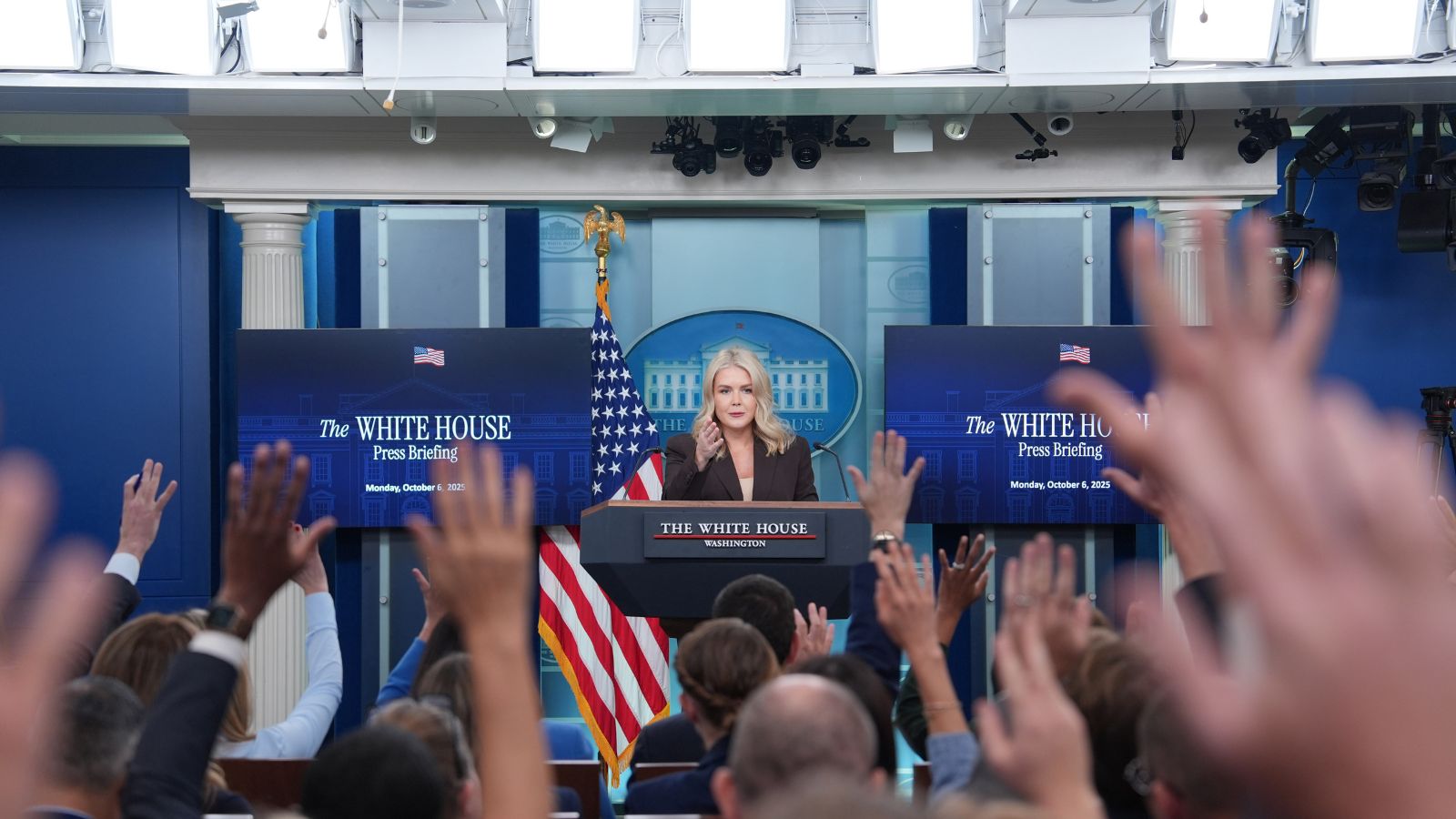
Public affairs architecture within executive branches relies on strict message discipline and calculated narrative deployment. When Karoline Leavitt steps down from the role of White House Press Secretary, an analytical examination of her tenure reveals how administrative messaging operationalizes foreign policy. Observers often misinterpret press briefings as mere reactive defense. In practice, public communication functions as an active enforcement mechanism for trade concessions and strategic alignment.
The intersection of bilateral trade negotiations and military flashpoints provides a clear testing ground for this dynamic. Analyzing how the administration framed economic adjustments alongside regional hostilities reveals a dual-track strategy. The first track employs tariff incentives and supply chain dependencies to alter target state behavior. The second track deploys public messaging to claim diplomatic arbitration rights over sovereign military outcomes.
The Mechanics of Economic Leverage
Trade diplomacy under the current administration operates through hard transactional boundaries. Bilateral frameworks are structured to extract immediate structural adjustments from partner nations. The renegotiation of tariff thresholds on Indian imports down from twenty-five percent to eighteen percent illustrates this exchange mechanism. The reduction was not a unilateral concession. Instead, it was tied directly to supply substitution mandates, specifically the cessation of Russian hydrocarbon imports and the commitment to multi-billion-dollar energy purchases from American markets.
This trade architecture establishes a closed-loop dependency matrix:
- Tariff concessions serve as the primary incentive vector.
- Sovereign supply diversification acts as the required compliance metric.
- Long-term capital commitments function as the security deposit for trade stability.
When public spokespersons translate these complex economic bargains into daily media soundbites, the underlying policy goals are simplified into absolute victories. The function of the press office is to present transactional statecraft as moral and strategic dominance. This transforms minute bureaucratic adjustments into sweeping narratives of bilateral realignment.
Narrative Attribution and Regional Conflict
The communication strategy surrounding the 2025 India-Pakistan military engagement, triggered by the Pahalgam attack and subsequent operations, exposes the friction between official Washington messaging and regional sovereignty. Following precision strikes against cross-border terrorist infrastructure, the White House repeatedly asserted that executive intervention and trade leverage forced a swift cessation of hostilities.
The divergence between public claims and operational reality highlights a recurring pattern in executive messaging:
- Attribution Maximization: The administration attributes bilateral military de-escalation to direct executive pressure and economic coercion.
- Sovereign Pushback: Target capitals reject third-party mediation narratives, maintaining that tactical decisions and direct military-to-military communication channels (such as Director General of Military Operations dialogues) dictated the ceasefire.
- Domestic Political Utility: The narrative serves domestic audiences by projecting omnidirectional diplomatic control, regardless of foreign pushback.
The press secretary's role in this dynamic requires maintaining this posture against institutional facts. By asserting that trade leverage brought a nuclear-armed border conflict to a halt, the administration constructs a unified theory of foreign policy where commercial tools solve security dilemmas. This messaging structure abstracts away the messy tactical realities of regional deterrence and replaces them with a clean narrative of presidential arbitration.
The Cost Function of High-Frequency Messaging
Managing an aggressive communications apparatus imposes severe operational costs. The position of White House Press Secretary under high-stakes, real-time geopolitical friction demands constant defense of contested narratives. Every briefing session requires balancing competing policy tracks across multiple theaters, from European security frameworks to Middle Eastern conflicts and South Asian deterrence dynamics.
The physical and psychological demands of sustaining this intensity create high turnover rates at the apex of public communication. When public-facing figures transition out of these roles, the underlying machinery adapts by shifting personnel into external advisory capacities. This ensures ideological continuity while allowing outgoing officials to mitigate personal burnout.
Evaluating the effectiveness of executive communications requires looking past the daily turbulence of the briefing room. The true metric of success is whether the public narrative successfully anchors the administration's leverage points in the minds of domestic voters and international competitors alike. Future diplomatic engagements will test whether this transactional model of trade and deterrence yields lasting structural compliance or merely temporary public relations victories.