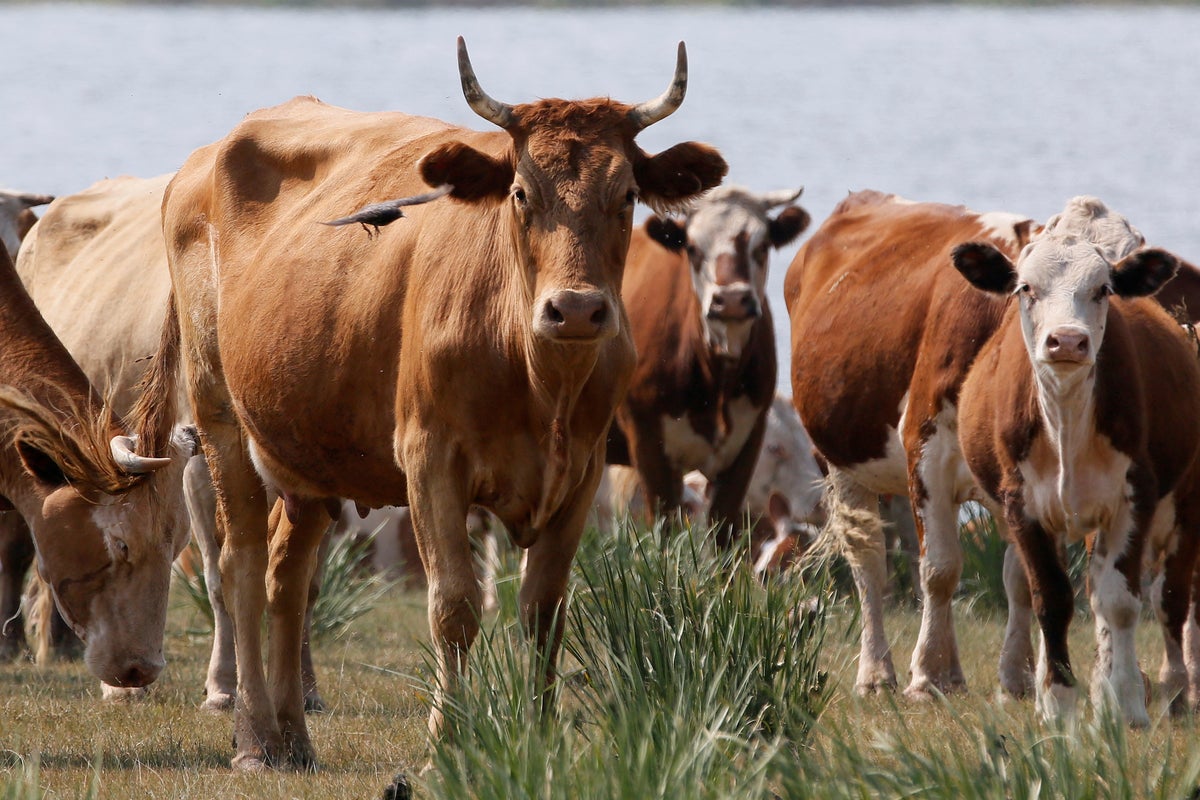
The theft and immediate slaughter of 70 head of cattle represents more than a localized crime; it is a sophisticated liquidation of biological capital that bypasses traditional market friction. When five suspects are apprehended for such an act, the focus typically rests on the arrest itself rather than the logistical infrastructure required to move, process, and monetize nearly 35,000 kilograms of highly perishable protein in a compressed timeframe. Understanding this phenomenon requires an analysis of the "Livestock Extraction Cycle"—a process where criminals trade long-term agricultural productivity for immediate, untraceable liquidity.
The Economic Architecture of Cattle Rustling
Stock theft has transitioned from opportunistic survivalism into a high-stakes supply chain operation. The theft of 70 animals is not a crime of passion or hunger; it is a calculated industrial event. To execute this, a criminal enterprise must solve for three primary variables:
- Extraction Velocity: The ability to move large, mobile assets across porous boundaries or into hidden processing zones before the owner or law enforcement identifies the breach.
- Processing Throughput: The transition from a "traceable asset" (a live animal with brands or tags) to an "untraceable commodity" (carcasses and primal cuts).
- Market Integration: The ability to funnel illicit protein into legitimate or semi-legitimate retail streams—butcheries, roadside stalls, or unscrupulous wholesalers—without triggering health or tax audits.
The loss of 70 cattle suggests a "Shock and Awe" extraction strategy. This involves neutralizing farm security, utilizing heavy-duty transport vehicles, and having a pre-coordinated slaughter site. The sheer volume implies that the suspects were not planning to sell live animals, which carry high risk due to unique identification marks, but were instead focused on the immediate destruction of the evidence through slaughter.
The Anatomy of the Slaughter Site
In the case of large-scale cattle theft, the crime scene is rarely the point of origin. Instead, it is a secondary "devaluation zone." Criminals seek remote areas where they can perform field dressing—the removal of internal organs and non-consumable parts—to reduce the weight of the load and increase the speed of the getaway.
This field-slaughter method introduces significant externalities:
- Biological Risk: Unregulated slaughter bypasses all veterinary inspections. Meat contaminated with bovine tuberculosis, brucellosis, or simple bacterial pathogens like E. coli enters the food chain.
- Value Erosion: A live cow is an appreciating asset capable of reproduction and milk production. A slaughtered cow is a depreciating commodity. The criminal logic ignores the Net Present Value (NPV) of the animal, focusing solely on the immediate "scrap value" of the meat.
- Environmental Degradation: The disposal of 70 sets of offal and blood in an unmanaged environment creates localized biohazards and attracts predators, further endangering surrounding livestock.
Logistics and Labor Division
Analyzing the arrest of five suspects reveals a likely hierarchical labor structure. Large-scale rustling cannot function with a flat organization. A five-person cell typically divides responsibilities into specific functional roles to maximize efficiency during the high-risk extraction phase.
The Scout and Navigator
The operation begins days or weeks before the theft. The scout identifies vulnerabilities in perimeter fencing, monitors the routine of farm patrols, and determines the location of the herd relative to extraction points. In the theft of 70 cattle, this individual also calculates the optimal time—usually moonless nights or periods of inclement weather—to minimize visibility.
The Gatherers
The heavy lifting involves moving 70 stressed, heavy animals. This requires knowledge of animal behavior (low-stress handling) or the use of aggressive tactics like dogs or motorized vehicles to force the herd into a bottleneck. The labor required to control 70 head of cattle is immense; a failure at this stage leads to "herd scatter," which increases the time spent in the high-risk zone.
The Slaughter Specialists
Once the cattle are secured, the transition from live asset to meat must be rapid. Professional rustlers often include individuals with butchery experience. They prioritize speed over "yield grade," often leaving behind valuable portions of the animal because the time required to harvest them exceeds the risk of being caught.
The Logistics Coordinator
This individual manages the fleet. Moving 70 cattle or their equivalent weight in meat requires significant horsepower. If the cattle were transported alive, it would require multiple large trailers or a single double-decker livestock hauler—vehicles that are difficult to hide. If slaughtered on-site, the transport shifts to refrigerated or heavy-duty closed vans.
The Cost Function of Livestock Loss
The financial impact on the producer is not limited to the market price of the animals. For a rancher, the theft of 70 cattle is a systemic shock to the business model.
The Total Economic Loss ($L_{total}$) can be modeled as:
$$L_{total} = (N \times M_v) + G_p + S_r + I_c$$
Where:
- $N$: Number of head stolen (70)
- $M_v$: Current market value per head
- $G_p$: Genetic premium (the loss of specific breeding lines that took years to develop)
- $S_r$: Security reinvestment costs (the immediate capital expenditure required to prevent a recurrence)
- $I_c$: Insurance complexity (premiums usually spike or coverage is dropped following a loss of this magnitude)
The "Genetic Premium" is the most devastating long-term loss. If these 70 cattle were part of a core breeding herd, the producer has lost the future value of all potential offspring. This effectively resets the agricultural clock by three to five years, as the producer must now source new stock and wait for them to reach reproductive maturity.
Law Enforcement Bottlenecks and Success Vectors
The arrest of five suspects indicates a failure in the criminals' "exit strategy." Typically, arrests in these cases occur at one of three critical failure points:
- The Transport Transit: Moving a high volume of animals or meat creates a distinct signature on road networks. Checkpoints or observant community members often flag suspicious vehicle loads.
- The Informant Network: Large operations require many "nodes"—drivers, butchers, and buyers. The more people involved, the higher the probability of a leak. Law enforcement often leverages "Stock Theft Units" that cultivate deep networks within the farming community.
- The Market Dump: Attempting to sell 35,000kg of meat suddenly creates a supply shock in local informal markets. Price drops or the sudden availability of high volumes of beef without paperwork alert authorities.
While the arrest is a tactical victory, it rarely addresses the "Root Buyer." The suspects arrested are usually the labor tier. The "Mid-tier Wholesaler"—the individual who provides the capital for the trucks and owns the cold storage facilities—frequently remains insulated from the crime.
The Strategic Shift to Bio-Metric Security
Traditional security measures—fences, gates, and manual patrols—have proven insufficient against organized syndicates. The theft of 70 cattle indicates that physical barriers were either bypassed or compromised through internal collusion.
A transition toward Active Agricultural Intelligence is required to mitigate this risk. This includes:
- Subcutaneous RFID Tags: Standard ear tags are easily removed with pliers during the slaughter process. Subcutaneous chips are harder to locate and remove in a hurry, providing a permanent digital "fingerprint."
- Geofencing and Accelerometer Alerts: Smart collars can detect "flight behavior"—the sudden, high-velocity movement of a herd that indicates they are being chased or driven. Automated alerts sent to the owner's mobile device can reduce the response time from hours to minutes.
- DNA Profiling: Maintaining a genetic database of the herd allows law enforcement to match meat found in a suspect's possession to the specific animals stolen, providing "irrefutable link" evidence in court.
Market-Side Intervention Strategies
The most effective way to dismantle livestock theft syndicates is to attack the "Revenue Realization" phase. If the meat cannot be sold, the incentive to steal disappears.
This requires a rigorous "Proof of Origin" protocol for all protein sellers. Currently, informal butcheries often operate with minimal oversight regarding the provenance of their carcasses. Implementing a digital ledger system that tracks an animal from birth to the retail shelf—frequently referred to as "Farm-to-Fork Traceability"—creates a barrier for illicit meat.
The second strategic play involves the "Cold Chain Audit." Illicit meat processing usually lacks proper refrigeration. Health inspectors who focus on temperature-controlled storage and microbial testing can effectively shut down the distribution nodes of rustling syndicates under the guise of public health enforcement, which often carries lower evidentiary hurdles than proving a direct link to a theft.
Forecasting the Evolution of Rustling
As rural areas become more interconnected and technology more accessible, rustling syndicates will likely adopt counter-surveillance techniques. We should expect the use of drones by criminals to scout herds and the use of signal jammers to neutralize farm-to-cloud security systems.
The arrest of these five suspects must be used as a data-gathering event. Interrogations and forensic analysis of their communications should be mapped to identify the "Logistical Hubs" they utilized. The objective is not just to prosecute the five individuals but to identify the specific butchers and transport providers who enabled the liquidation of 70 cattle.
The final strategic move for producers is the formation of "Security Cooperatives." A single farm cannot withstand a coordinated attack by a five-man syndicate. However, a cluster of farms operating on a shared mesh network of cameras and rapid-response teams creates a "Hardened Zone" that shifts the criminals' cost-benefit analysis toward easier targets. Success in the livestock industry now depends as much on supply chain security as it does on animal husbandry.