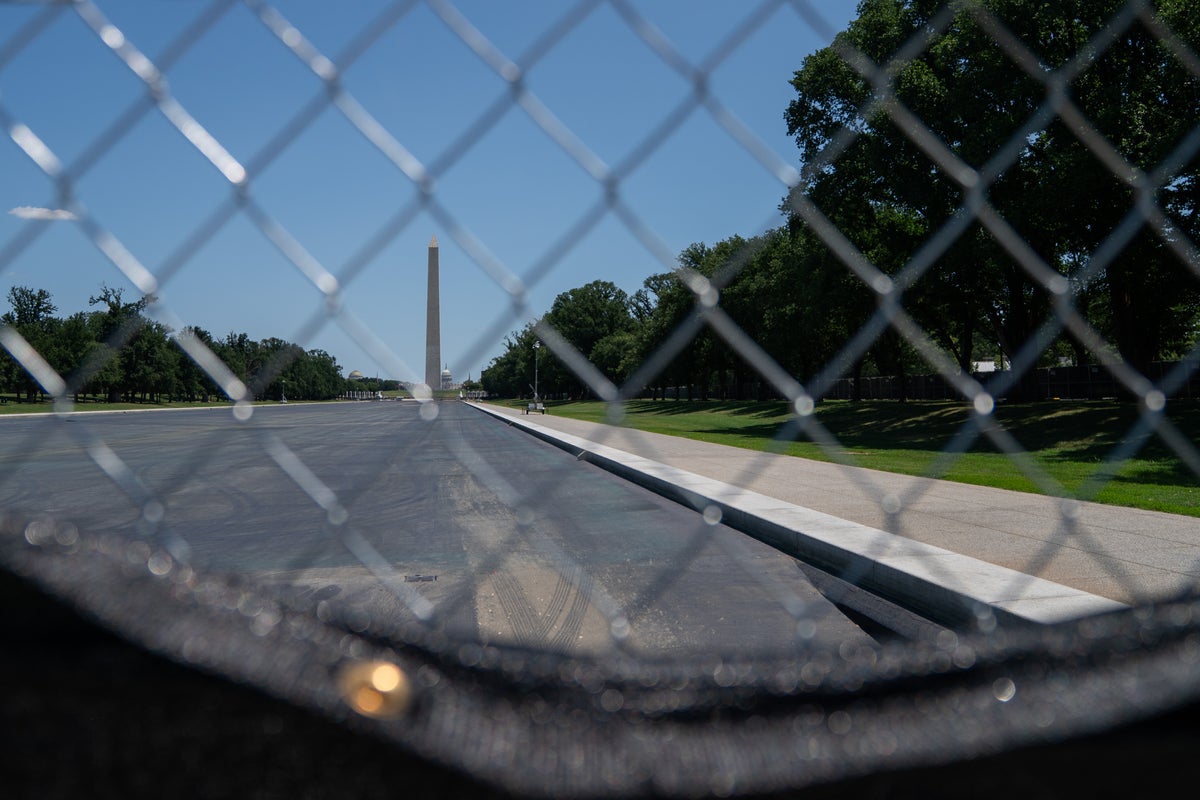
The physical deterioration of the Lincoln Memorial Reflecting Pool following its fast-tracked $16 million restoration represents a classic case study in civil engineering failure, accelerated procurement risk, and externalized accountability. Rather than reflecting external sabotage, the rapid degradation of the structure's newly applied surface—evidenced by extensive delamination, discoloration, and structural joint failure—points directly to systemic issues in material specification, surface preparation, and site execution under compressed timelines.
Analyzing the root causes of the pool's post-renovation failure requires separating physical evidence from political rhetoric, establishing clear failure mechanics, and examining the institutional breakdown of federal procurement protocols.
The Tripartite Failure Framework of Waterproofing Coatings
Polyurea and specialized elastomeric linings—the synthetic membrane materials deployed in fast-cure civil infrastructure projects—depend on a tight margin of environmental and mechanical variables to achieve a permanent bond with aged concrete substrates. When these coatings detach, the mechanism falls into one of three structural categories.
1. Interfacial Adhesive Failure (Substrate Debonding)
For an elastomeric liner to adhere to a massive concrete basin, the existing concrete must undergo mechanical profiling (typically shot-blasting or scarification) to clear laitance, organic contaminants, and previous sealants. Photos of large sheets peeling cleanly from the concrete surface indicate an interfacial bond failure. When a polymer layer pulls away without concrete aggregate clinging to its underside, it demonstrates that the bond strength never achieved the tensile threshold of the concrete itself. This is driven by three primary variables:
- Inadequate Hydro-Hydrophobic Surface Moisture Control: Concrete retains internal relative humidity. Applying a fast-curing membrane over concrete with a high moisture emission rate traps hydrostatic pressure beneath the non-permeable layer, causing osmotic blistering and eventual shear detachment.
- Surface Contamination: residual organic material, dust, or previous sealing agents prevent direct chemical adhesion between the polyurea/elastomeric matrix and the porous silicate structure.
- Ambient Dew Point Discrepancies: Applying moisture-sensitive coatings when the ambient temperature is within three degrees of the dew point causes invisible condensation on the concrete surface, instantly destroying adhesion at the micro-scale during application.
2. Cohesive Joint Failure and Expansion Drag
Civil structures of this scale rely on regularly spaced expansion joints to accommodate thermal expansion and contraction cycles. The Reflecting Pool's basin experiences significant linear movement between cold winter conditions and peak summer thermal expansion.
When elastomeric coatings are applied continuously across expansion joints without installing independent joint-bridging systems or bond-breaker tapes, the linear thermal movement of the concrete slabs concentrates localized stress directly above the joint gap. The coating undergoes severe elongation at an isolated point, exceeding its ultimate tensile strength. This produces clean, linear tears along structural seams—a phenomenon frequently mischaracterized as manual cutting or vandalism.
3. Surface Shear via Vehicle and Equipment Loading
Heavy pneumatic load exposure on unbonded or partially cured synthetic membranes introduces high horizontal shear forces. Driving heavy motorcade vehicles or heavy equipment across a thin, flexible polymer membrane over concrete creates localized point loads. If the membrane lacks 100% mechanical adhesion to the substrate underneath, the tire torque generates lateral shear stress, tearing the liner at its weakest points and creating localized delamination zones along vehicle tracks.
Procurement Mechanics and Time-Cost-Quality Degradation
The failure of the project stems fundamentally from an aggressive compression of the standard engineering timeline combined with non-competitive procurement pathways.
       [ No-Bid Direct Award ]
                  │
                  ▼
   [ Compressed Execution Window ]
                  │
  ┌───────────────┴───────────────┐
  ▼                               ▼
[ Omitted Substrate Prep ]   [ Improper Environmental Curing ]
  │                               │
  └───────────────┬───────────────┘
                  ▼
     [ Interfacial Bond Failure ]
                  │
                  ▼
    [ Structural Basin Draining ]
The Compression Risk Coefficient
Standard civil restoration projects of national monuments require an extended pre-qualification phase, environmental impact testing, substrate core sampling, and multi-stage mock-up trials. Under standard Federal Acquisition Regulation (FAR) guidelines, a project involving structural lining must follow a predictable sequence:
- Substrate moisture and pH testing across all grid zones.
- Mechanical profiling to International Concrete Repair Institute (ICRI) Concrete Surface Profile (CSP) standards.
- Primer application with designated cure windows contingent on ambient humidity.
- Primary membrane application under strictly controlled ambient conditions.
- Quality assurance adhesion testing (pull-off strength testing per ASTM D4541).
When a project timeline is compressed from months down to weeks to meet external deadlines, the steps most frequently compromised are surface preparation and cure-time verification. Omitting these mandatory hold-points exponentially increases the probability of coating failure.
No-Bid Sole-Source Contracting Dynamics
Bypassing competitive bidding eliminates critical peer-review checks embedded in standard public works projects. In competitive bidding, competing engineering firms evaluate the technical specifications, point out flawed material choices, and submit risk assessments. Sole-source, direct-award contracting removes this systematic stress-testing mechanism. When contractors with limited large-scale aquatic experience are selected under expedited frameworks, technical oversight shifts from rigorous third-party engineering audits to internal contractor self-reporting.
The Economics and Legalities of Evidence Destruction in Civil Remediation
The ongoing remediation efforts create a secondary operational crisis: the potential spoliation of forensic evidence required for both criminal prosecution and contractual cost-recovery disputes.
When a party claims damage via external sabotage (vandalism), physical evidence must remain intact for forensic examination. Draining, stripping, and re-applying materials over disputed areas before independent metallurgical, forensic, and chemical analysis can occur introduces severe legal exposure.
Forensic Sampling Protocols Required to Prove Sabotage
To legally prove criminal damage via box cutters or mechanical slicing versus material failure, forensic teams must conduct micro-structural analysis along the tear margins:
- Microscopic Cut Analysis: A clean manual slice with a steel blade leaves microscopic striations along the edge of the polymer coating, along with clean-cut synthetic fibers.
- Tensile Shear Analysis: A failure caused by expansion-joint stress or adhesive peeling shows elongated, deformed polymer chains at the tear boundary, accompanied by jagged micro-fractures consistent with tension failure rather than shear cutting.
- Substrate Core Residue: If a blade was drawn across the lining with enough force to cut a multi-hundred-foot gash, the steel blade would leave trace metal transfers and scoring within the concrete aggregate beneath the liner.
Rushing to strip and recoat the basin without certified joint-sampling protocol invalidates physical evidence, effectively eliminating the government's ability to defend civil damages claims against contractors or sustain criminal property destruction charges in court.
Recommended Action Plan for Basin Stabilization and Risk Mitigation
To resolve the structural issues of the Lincoln Memorial Reflecting Pool and halt escalating taxpayers' costs, management must abandon temporary cosmetic measures and implement an institutional engineering remediation framework:
- Halt Immediate Remediation Pending Forensic Audit: Freeze all resurfacing and stripping operations for 14 calendar days to allow independent forensic engineers and defense/prosecution experts to harvest randomized core samples and edge cross-sections along the expansion joints.
- Conduct Complete Substrate De-coating: Acknowledge that localized patch-repairs on a compromised membrane will inevitably fail at adjacent seams. The existing synthetic layer must be stripped in its entirety down to raw structural concrete.
- Execute High-Pressure Water Jetting and Profiling: Mechanically profile the concrete substrate to achieve a minimum ICRI CSP-5 surface profile, removing all residual adhesives, silanes, and organic contaminants.
- Install Independent Joint Systems: Discontinue continuous membrane application across structural movement gaps. Install mechanical, elastomeric expansion joint seals designed specifically for submersed high-movement concrete structures prior to applying primary waterproofing layers.
- Implement Mandatory Hold-Point QA/QC Protocol: Enforce ASTM D4541 pull-off strength testing on designated mock-up panels and mandate strict ambient moisture limits verified by independent third-party inspectors before approving final sign-off.


