The kinetic impact on strategic transportation hubs reveals a fundamental failure mode in perimeter defense economics: the asymmetrical cost of hardening versus penetration. When an aerial projectile breaches an active civilian-military dual-use facility, the resulting casualties and operational paralysis are not merely tactical anomalies; they are predictable outcomes of reliance on localized point defense over distributed structural resilience. Deconstructing the mechanics of such attacks requires an examination of kinetic energy distribution, structural load transfer failures, and the systemic vulnerabilities inherent in high-throughput logistical nodes.
The Mechanics of Kinetic Failure in Semi-Hardened Structures
Civilian airports and associated infrastructure are engineered for throughput, not survivability. Their architectural taxonomy prioritizes expansive glass facades, open-span steel roofs, and high-density passenger concourses. These design choices create extreme vulnerability to blast overpressure and fragmentation.
When a projectile detonates within or adjacent to such a facility, three distinct phases of destruction unfold:
- The Primary Blast Wave: High-velocity overpressure fronts exceed the yield strength of non-reinforced perimeter walls and glazing systems. In terminal environments, glass behaves as secondary shrapnel, exponentially increasing laceration and trauma metrics across a wide radius.
- Structural Load Reallocation: Open-span steel trusses rely on continuous load paths. The removal or buckling of a single primary support column via blast shear forces triggers progressive collapse, where adjacent members take on loads exceeding their safety margins.
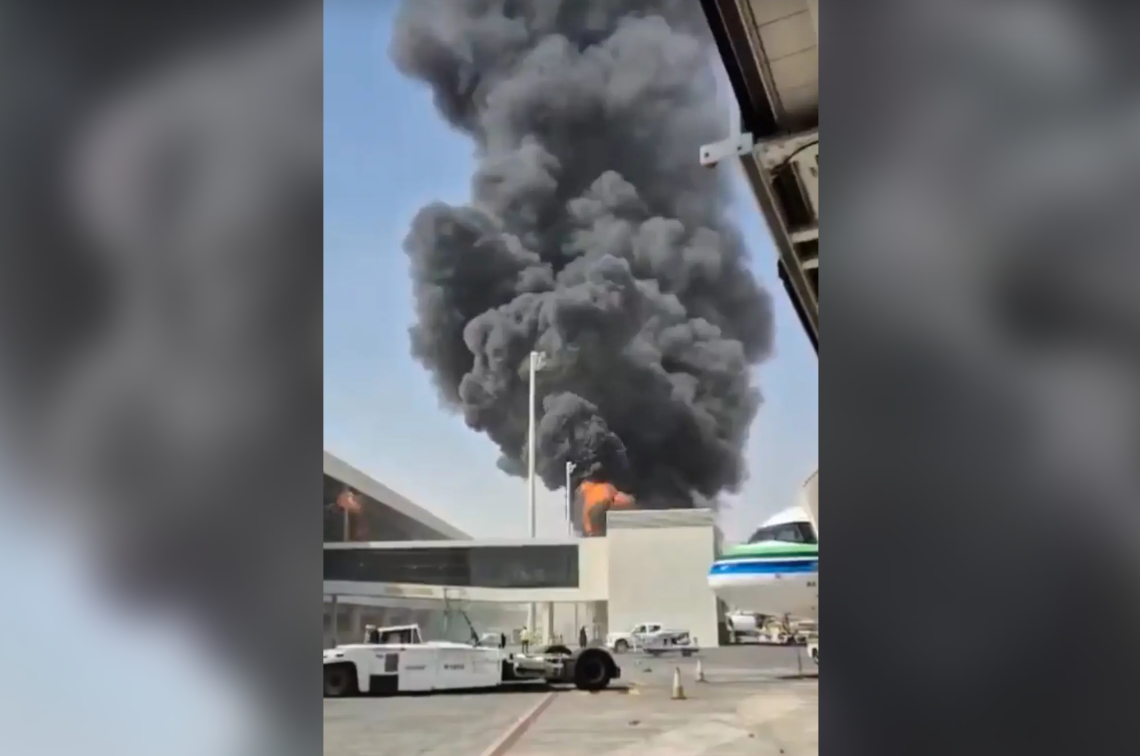
- Secondary Thermal and Toxic Hazards: Aviation fuel and building infrastructure materials combust, generating dense particulate smoke that compromises localized egress routes and overwhelms mechanical ventilation systems.
The casualty distribution—specifically high ratios of wounded relative to fatalities in open areas—correlates directly with the lack of internal compartmentalization. Modern terminal design favors fluid movement, which inadvertently acts as an unobstructed vector for blast propagation and thermal expansion.
Economic and Logistical Cascades
The interruption of operations at a regional aviation hub triggers an immediate contraction in secondary and tertiary economic activities. The cost function of such an attack extends far beyond immediate reconstruction expenditures:
- Capacity Bottlenecks: Diverting air traffic forces regional alternates to operate above nominal thresholds, degrading turnaround efficiency and inflating fuel consumption metrics across commercial carriers.
- Supply Chain Degrade: Dual-use facilities often handle priority cargo and logistical components. A disruption halts time-sensitive freight movement, introducing friction into regional distribution networks.
- Insurance and Risk Premium Inflation: Underwriters recalibrate risk assessments for regional transit assets, driving up hull and liability insurance premiums for all operators utilizing the corridor.
These compounding factors demonstrate that the objective of kinetic targeting against logistical nodes is rarely the destruction of physical capital alone; it is the systemic imposition of operational friction.
Architectural and Operational Countermeasures
Mitigating the vulnerabilities exposed by high-impact strikes on civilian infrastructure requires a shift from reactive security to systemic hardening. Standardizing perimeter defense around low-signature architectural frameworks is economically unviable, but targeted interventions can alter the damage function:
- Blast-Mitigating Glazing: Retrofitting high-occupancy zones with laminated polycarbonate or reinforced security films prevents catastrophic fragmentation, transforming lethal shrapnel into contained shards.
- Compartmentalization and Hardened Egress: Introducing blast doors and reinforced fire breaks prevents the lateral spread of overpressure and thermal plumes, preserving critical evacuation corridors.
- Redundant Logistical Architecture: Decentralizing baggage handling and passenger processing lowers the concentration risk, ensuring that a single point of failure does not paralyze the entire facility.
Security protocols must evolve past passive access control to address kinetic resilience. Without a structural redesign of high-density transit nodes, the economic and human cost of asymmetrical targeting will continue to escalate.