Alexander Stubb is playing the fear card because it is the only card left in the European establishment's deck. When the Finnish President suggests that the economic fallout from West Asia—specifically the boiling tensions involving Israel, Iran, and the Red Sea—could dwarf the impact of the Russia-Ukraine war, he isn't just being cautious. He is being intellectually lazy.
The "lazy consensus" among the Davos set is that any flare-up in the Middle East is an immediate existential threat to the global economy. They see a spark in Lebanon or a drone in the Strait of Hormuz and immediately start sketching out $150 oil scenarios. They are fighting the last war. They are trapped in 1973.
I have spent two decades watching markets react to geopolitical "shocks." Most of them are ripples, not tsunamis. The Russia-Ukraine war was a structural break in European energy security. It dismantled a forty-year-old pipeline architecture. To compare a regional maritime skirmish or a proxy war to the total decoupling of the world's largest gas supplier from its primary market is more than a stretch. It’s a fantasy.
The Commodity Trap: Why Oil Isn't the Weapon It Used to Be
The primary argument for Stubb’s alarmism is the "energy chokepoint" theory. The logic goes: war in West Asia equals closed shipping lanes, which equals a global inflationary spiral that makes the 2022 price hikes look like a warm-up.
Here is why that logic fails.
- The US Shale Shield: In 1973, the US was a desperate importer. Today, the United States is the largest oil producer in history, pumping over 13 million barrels per day. The "swing producer" power has shifted from Riyadh to West Texas.
- The China Demand Deficit: You cannot have a 1970s-style price shock when your largest global consumer is facing a multi-decade property secular stagnation. China’s appetite is suppressed. Without the Chinese engine screaming at full tilt, an oil embargo or a supply disruption doesn't hit the same way.
- The Spare Capacity Buffer: OPEC+, specifically the Saudis and the UAE, are sitting on massive amounts of shut-in production. They are more afraid of $40 oil than they are of $100 oil, because $100 oil accelerates the very energy transition that threatens their long-term survival.
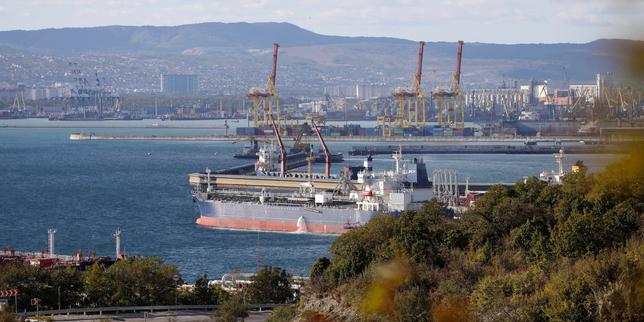
When Stubb talks about "economic implications," he ignores the fact that the Russia-Ukraine conflict actually removed supply from a rigid system. In West Asia, we are talking about potential disruptions to transit. Transit can be rerouted. It costs more, yes. It adds two weeks to a voyage around the Cape of Good Hope. But it is a logistical headache, not a systemic collapse.
The Inflation Boogeyman is a Supply Chain Lie
We keep hearing that the Red Sea crisis is the new "Great Supply Chain Disruption."
Let's look at the math. Doubling the cost of shipping a container from Shanghai to Rotterdam sounds terrifying. But shipping costs are a rounding error in the final shelf price of a flat-screen TV or a pair of sneakers. During the post-COVID 19 era, freight rates didn't just double; they went up 10x. The world didn't end.
The Russia-Ukraine war hit the inputs: neon gas for chips, wheat for bread, and gas for heavy industry. It hit the very bottom of the Maslow’s Hierarchy of Needs for the global economy. West Asia, in its current configuration, hits the middlemen.
If you are a logistics manager at a mid-sized retail firm, you are having a bad year. If you are the CEO of a German industrial giant that relied on cheap Russian baseload power to keep your chemical plants from freezing, you are having a bad decade. There is no comparison.
The "People Also Ask" Fallacy: Is This World War III?
People keep asking: "Will the Middle East conflict trigger a global depression?"
The honest, brutal answer is: No, unless the US and Iran decide to commit mutual economic suicide by closing the Strait of Hormuz for six months. Even then, the tech-heavy, service-oriented economies of the West are far less "oil-intensive" than they were forty years ago.
The energy intensity of GDP—the amount of energy needed to produce one dollar of economic output—has plummeted. We are more efficient. We are more electrified. We are more decoupled from the very commodities that the West Asia conflict threatens.
The Geographic Myopia of Northern Europe
Stubb is looking at this through a very specific, nervous lens. For Finland and the Baltics, the Russia-Ukraine war was local. It was about borders. It was about NATO.
By claiming the West Asia conflict is "bigger," he is trying to pivot the narrative toward a globalized threat that requires more centralized European Union power and more aggressive defense spending. It is a political maneuver disguised as economic analysis.
The Russia-Ukraine war forced Europe to spend hundreds of billions on LNG infrastructure and energy subsidies in a single year. It permanently increased the cost of doing business in Europe. West Asia is a series of volatile incidents that cause temporary spikes in insurance premiums. One is a heart attack; the other is a recurring migraine.
The Real Risk Nobody Admits
The real danger isn't the oil price. It’s the fragmentation of the dollar. If the conflict in West Asia deepens, it won't be a supply shock that kills the West; it will be the acceleration of non-dollar trade settlements between the BRICS+ nations. When the "Global South" sees the West picking sides in a regional religious and ethnic conflict, they don't just protest. They build parallel financial systems.
The "economic implication" Stubb should be worried about isn't the price of gas at a Finnish pump. It’s the fact that half the world is currently figuring out how to trade with each other without using a SWIFT system controlled by Washington.
That is a slow-motion car crash that makes a spike in Brent crude look like a minor fender bender.
Stop Monitoring the Strait of Hormuz; Start Monitoring the Treasury Yields
If you want to know if the world is ending, stop looking at maps of the Middle East. Look at the US 10-Year Treasury yield.
Geopolitical conflict usually triggers a "flight to safety." If West Asia were truly the existential economic threat Stubb claims, we would see a massive, sustained rally in bonds and a collapse in "risk-on" assets.
Instead, we see a market that treats every missile strike like a buying opportunity. The market isn't "ignoring" the risk; it has priced the risk and found it lacking. It knows that as long as the oil keeps flowing—even if it takes the long way around—the global engine keeps humming.
Stubb’s warning is the siren song of a legacy politician who needs the world to feel more dangerous than it actually is to justify his own relevance.
The Russia-Ukraine war changed the world. The West Asia conflict is just reminding the world that it’s a messy place. Don't confuse a bloody, tragic regional war for a global economic reset.
Stop buying the hype. Focus on the data. The biggest threat to your portfolio isn't a Houthi rebel; it’s a central banker who believes the same debunked consensus as Alexander Stubb.