External observers routinely misread Kim Ju Ae’s public appearances as a straightforward coronation, ignoring the deep structural friction a female succession creates within North Korea’s patriarchal power architecture. While Western analysts track her physical proximity to Kim Jong Un at missile launches and military banquets, North Korean defectors evaluate the phenomenon through lived operational experience of the regime's internal control mechanisms. Their consensus exposes a critical vulnerability: elevating a young daughter accelerates the timeline of dynastic continuity at the severe cost of ideological legitimacy and elite buy-in. Understanding this divergence requires mapping the exact friction points between Kim Jong Un’s dynastic branding strategy and the socio-political reality inside the Democratic People's Republic of Korea.
The Structural Anatomy of Defector Skepticism
Defectors do not view North Korean leadership changes through the lens of Western political science; they analyze them as survivors of an absolutist patronage system. When evaluating Kim Ju Ae, their skepticism rests on three distinct structural pillars rather than mere cultural conservatism.
1. The Patriarchal Constraint of the Mount Paektu Bloodline
The foundational mythos of the Kim dynasty relies on the Suryong (Supreme Leader) system, which merges Confucian filial piety with Stalinist totalitarianism. Historically, legitimacy flows exclusively through the male patrilineal line—from Kim Il Sung to Kim Jong Il, and then to Kim Jong Un. Defectors consistently emphasize that North Korean society remains rigidly patriarchal, not merely by tradition, but by state-enforced social engineering. Men dominate the Korean People's Army (KPA), the Workers' Party of Korea (WPK), and the Ministry of State Security.
Introducing a female heir disrupts the core symbolic logic of the regime. For decades, state propaganda framed the Supreme Leader as the stern yet benevolent "father" of the socialist family. Replacing the paternal archetype with a young girl—referred to in state media initially as "beloved child" and later as "respected child" or a "great person of guidance" (hyangdo)—forces an ideological recalibration that older military cadres and ordinary citizens struggle to internalize. Defectors point out that while women drive the informal jangmadang (market) economy, political and military authority remain strictly gendered. A female commander-in-chief contradicts every social hierarchy citizens are conditioned to obey from birth.
2. The Optics of Privilege Amid Systemic Scarcity
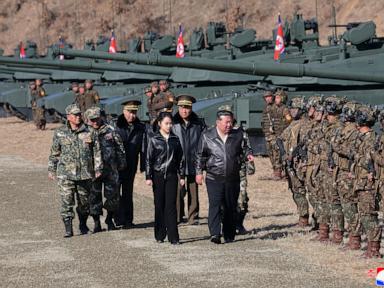
The second pillar of defector analysis centers on the widening socio-economic chasm between the ruling family and the general populace. Defectors who endured the Arduous March (the 1990s famine) or recent pandemic-era border closures react visceral to the visual staging of Kim Ju Ae. State media broadcasts images of her wearing expensive Christian Dior coats, dining at lavish banquets, and inspecting strategic weaponry alongside her father.
To an outside analyst, these images project dynastic stability and modernity. To a former resident of Hamgyong or Ryanggang province, they trigger acute cognitive dissonance. Ordinary North Koreans face chronic food insecurity, arbitrary state extraction, and severe punishment for consuming foreign media—including the exact Western luxury styles displayed by the Kim family. Defectors note that this blatant display of aristocratic excess erodes the regime's carefully curated image of shared sacrifice. When Kim Jong Un wept during a 2020 military parade over economic hardships, the performance aimed to manufacture empathy. Parading a visibly well-fed, designer-clad pre-teen through missile silos achieves the exact opposite effect, breeding quiet resentment among citizens forced to tighten their belts to fund the nuclear program.
3. The Competency Deficit and Generational Compression
In North Korean political culture, legitimacy requires both bloodline and demonstrated revolutionary merit, even if the latter is fabricated. Kim Il Sung possessed genuine anti-Japanese guerrilla credentials. Kim Jong Il spent decades building his power base within the WPK Organization and Guidance Department before assuming total control. Even Kim Jong Un, despite a rushed transition between 2009 and 2011, was an adult male swiftly awarded four-star general rank and vice-chairmanship of the Central Military Commission to manufacture a veneer of operational authority.
Kim Ju Ae possesses zero institutional footprint. Born around 2012 or 2013, she lacks the age, military rank, or party apparatus experience necessary to command loyalty from hardened septuagenarian generals. Defectors highlight that North Korean elites respect raw coercive power and institutional mastery. Watching four-star generals kneel to whisper to a child or applaud her presence at strategic rocket tests reads to insiders not as organic reverence, but as coerced theater. This creates an authority vacuum: if Kim Jong Un were to suffer a sudden health crisis before she reaches adulthood and consolidates institutional control, the resulting regency would almost certainly fracture into lethal factionalism.
The Regime’s Strategic Logic: Why Kim Jong Un Is Taking the Risk
If elevating Kim Ju Ae generates ideological friction, popular resentment, and elite skepticism, why is Pyongyang executing this campaign with such intensity? Analyzing the regime's behavior reveals a calculated risk-management strategy driven by three operational imperatives.
- Securing Fourth-Generation Nuclear Deterrence: Kim Jong Un’s primary strategic objective is permanently linking the survival of the Kim bloodline to North Korea’s nuclear arsenal. By debuting his daughter at the November 2022 test-fire of the Hwasong-17 intercontinental ballistic missile, he established an explicit visual equation: nuclear weapons exist to guarantee the safety of future generations, personified by his own child. This framing attempts to rebrand nuclear deprivation as a noble, paternal sacrifice rather than a policy failure.
- Preempting Succession Ambiguity: Kim Jong Un’s own succession was notoriously chaotic following his father’s 2008 stroke. The compressed timeline forced him to execute his uncle, Jang Song Thaek, and assassinate his half-brother, Kim Jong Nam, to eliminate rival power centers. Given Kim Jong Un’s well-documented health vulnerabilities—including severe obesity, heavy smoking, and a family history of cardiovascular disease—waiting until his children reach their late twenties poses an unacceptable existential risk to the dynasty. Early exposure habituates the military and party elite to the next generation long before a crisis occurs.
- Neutralizing the "Invisible Child" Problem: Intelligence assessments from South Korea’s National Intelligence Service (NIS) suggest Kim Jong Un has other children, potentially including an older son who remains entirely hidden from public view. If an older son exists, he may suffer from physical or developmental issues that render him unsuitable for the rigorous public demands of leadership, or Kim may simply view his daughter as possessing superior temperament and charisma. Alternatively, Ju Ae may be serving as a political lightning rod—a public decoy absorbing elite scrutiny while a male heir is groomed quietly behind closed doors.
Fact Versus Hypothesis in Pyongyang Watching
Rigorous analysis requires separating verified operational facts from analytical projections. Much of the commentary surrounding North Korean succession conflates state propaganda signals with confirmed internal decisions.
Confirmed Operational Facts:
- Kim Ju Ae has made dozens of high-profile public appearances since November 2022, overwhelmingly concentrated in the military and strategic weapons sectors.
- State media vocabulary describing her has systematically escalated from neutral familial descriptors to honorifics historically reserved exclusively for the Supreme Leader and designated successors.
- South Korea’s intelligence apparatus officially assesses her as the most likely successor at this stage, while maintaining that variables remain fluid.
- Defector surveys and interviews conducted by South Korean research institutes consistently show high levels of surprise, skepticism, and disapproval regarding a female successor among those who grew up inside the system.
Analytical Hypotheses (Unverified):
- The Decoy Theory: The hypothesis that Ju Ae is merely a shield protecting an unseen male heir remains speculative. No concrete intelligence confirms the public viability of an older brother, and the sheer scale of ideological capital invested in Ju Ae makes a sudden pivot costly.
- The Kim Yo Jong Regency: Many analysts project that Kim Jong Un’s powerful sister, Kim Yo Jong, would serve as regent if Kim died prematurely. While plausible given her current role in foreign policy and propaganda, defectors warn that North Korean political history shows regents rarely relinquish power peacefully, and her own ambition could clash with her niece's survival.
- Imminent Health Crisis: While Kim Jong Un’s health metrics are poor, attributing Ju Ae’s emergence solely to an immediate, terminal medical emergency lacks hard evidence. The campaign aligns equally well with long-term institutional conditioning.
The Elite Compliance Trap
The central flaw in Western reporting on this topic is assuming that public displays of loyalty equal genuine ideological alignment. In totalitarian systems, preference falsification is a survival mechanism. Senior KPA officers bow to Kim Ju Ae because failing to do so results in immediate purge, exile to political prison camps, or execution.
However, coerced compliance creates a brittle system. Defectors who held mid-to-high-level positions within the bureaucracy explain that North Korean cadres are intensely pragmatic. They tolerate the Kim family's absolute rule because the system reliably distributes privilege, hard currency, and status to loyalists. When the leadership enforces a succession plan that violates deep-seated cultural norms and lacks an adult power broker to enforce discipline, elite confidence erodes privately even as public applause grows louder.
This dynamic creates an Elite Compliance Trap: the more aggressively Kim Jong Un forces the military to venerate a child, the more he highlights the artificiality of the regime's meritocracy. Younger officers, who lack the visceral revolutionary nostalgia of their grandfathers, view the state through a transactional lens. If the regime cannot guarantee economic stability, and its ideological narrative strains credulity by demanding obedience to a teenager, the underlying social contract weakens.
Operational Limitations of Defector Intelligence
While defector perspectives provide indispensable corrective context against naive Western interpretations, relying on them exclusively introduces specific analytical blind spots.
- Temporal Lag: The vast majority of North Korean defectors currently residing in South Korea escaped prior to the 2020 pandemic border shutdown. North Korean society has undergone rapid structural shifts over the past six years, including a severe crackdown on foreign information via the Reactionary Ideology and Culture Rejection Act and the state's aggressive re-monopolization of food distribution. Defectors are analyzing the current regime using a mental model of a society that existed five to ten years ago.
- Demographic Skew: Roughly 70 to 80 percent of defectors are women, and the overwhelming majority originate from northern border provinces like North Hamgyong and Ryanggang. Very few hail from Pyongyang’s core elite class—the exact demographic whose loyalty actually determines succession outcomes. A borderland market trader’s view of gender roles and dynastic legitimacy differs significantly from that of a WPK Central Committee department director.
- Selection Bias: Defectors are, by definition, individuals who rejected the system enough to risk death escaping it. Their baseline hostility toward the Kim regime can occasionally color their assessments, leading them to overestimate popular discontent or underestimate the state's capacity to manufacture genuine compliance through generational indoctrination.
Strategic Intelligence Indicators to Monitor
To move beyond speculative commentary on Kim Ju Ae, intelligence analysts and policymakers must shift from tracking her wardrobe and photo-ops to monitoring concrete institutional milestones. A genuine transition from symbolic mascot to operational successor requires specific structural developments:
- Formal Institutional Titles: Watch for her appointment to an official, non-honorific post within the Workers' Party of Korea, specifically within the Organization and Guidance Department (OGD) or the Propaganda and Agitation Department (PAD), once she reaches late adolescence. Without OGD control, she has no mechanism to purge rivals.
- Independent Public Guidance: Monitor whether state media begins reporting on her conducting "on-the-spot guidance" at factories, farms, or military units without Kim Jong Un present. Independent inspection tours are the definitive operational threshold for a North Korean heir apparent.
- Idolatry Infrastructure: Track the emergence of dedicated revolutionary history museums, mandatory study sessions for party members focusing on her childhood brilliance, or songs explicitly praising her leadership rather than merely her filial devotion to her father.
- Neutralization of Lateral Threats: Observe the political trajectory of Kim Yo Jong and senior KPA marshals. As Ju Ae approaches adulthood, any credible succession requires systematically sidelining adult relatives who possess independent patronage networks.
Until these institutional markers materialize, Kim Ju Ae remains a high-stakes ideological experiment rather than a guaranteed fourth-generation ruler. Intelligence assessments and diplomatic strategies should treat her prominence not as proof of Pyongyang's unshakeable dynastic confidence, but as a leading indicator of the regime's underlying anxiety regarding its long-term survival.