Right now, as you read these first few sentences, nine babies were just born into a war zone. By the time you finish this paragraph, that number will likely double.
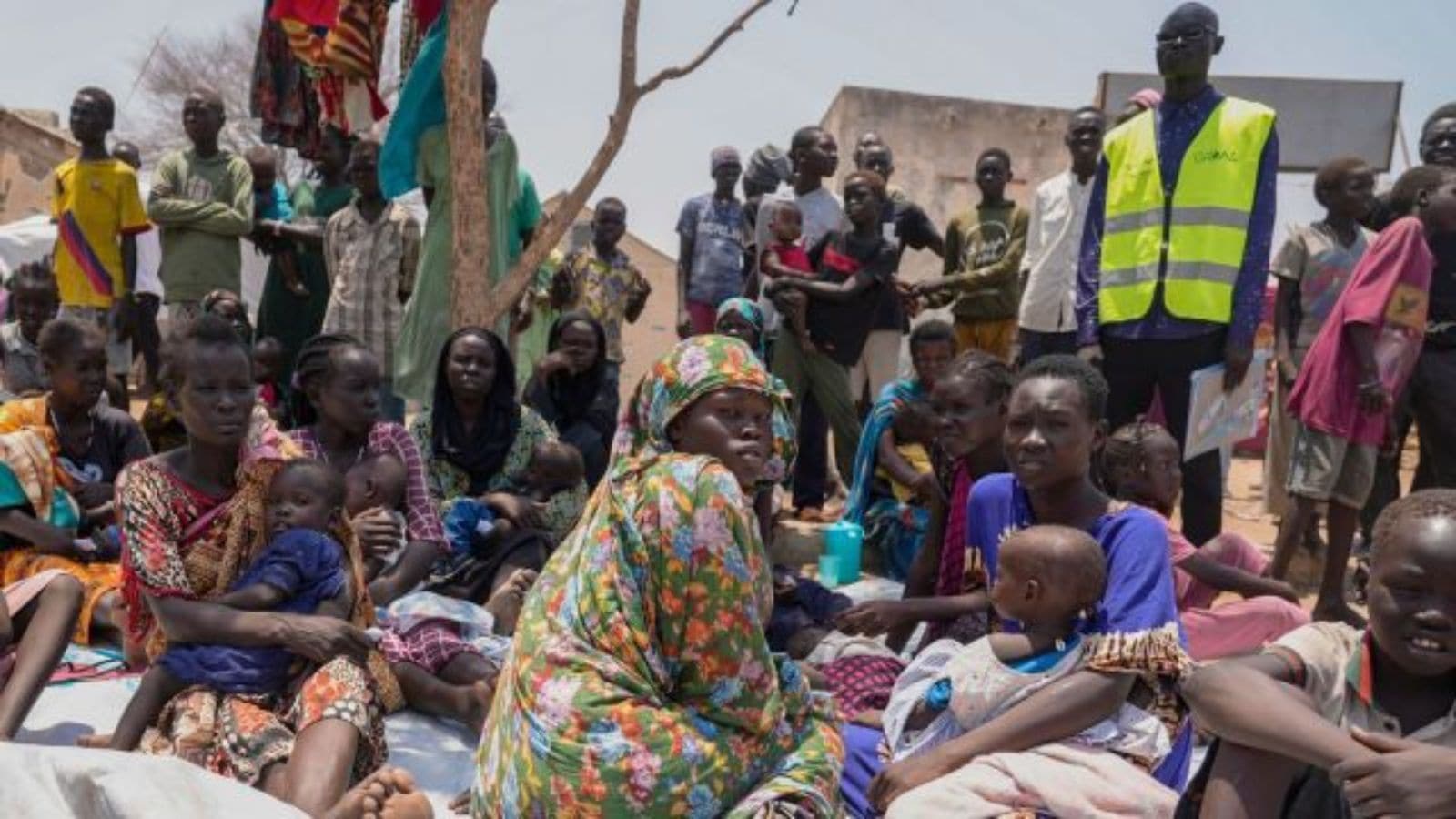
In Sudan, life doesn't wait for the shelling to stop. New data from the Sudanese Ministry of Health and analysis by Save the Children reveals a haunting statistic: since the conflict ignited three years ago, three children have been born every single minute into the middle of a civil war. We’re talking about 5.6 million infants entering a world where "home" is a plastic tarp and "healthcare" is a luxury most can’t afford.
You might think a hospital is the safest place to give birth, but in Sudan, a hospital is often a target. Since April 2023, the World Health Organization (WHO) has verified over 200 attacks on health facilities. When the labor pains start, mothers aren't choosing between a midwife or an epidural; they're choosing between staying in a basement or risking a sniper's bullet to find a doctor who might not even have clean water.
The Brutal Reality of Maternal Survival
It's easy to get lost in the millions, so let's look at what that "three babies a minute" actually looks like on the ground. Most of these births happen in overcrowded displacement camps or under-resourced clinics that lack electricity. Imagine trying to perform an emergency C-section by the light of a fading cell phone while the walls shake from nearby drone strikes. That’s not a hypothetical scenario; it’s the daily routine for the few medical staff left in Port Sudan and the Darfur region.
The consequences are exactly as grim as you’d expect. Maternal mortality in Sudan has jumped by 11% since the war began. In 2022, the rate was already high at 263 deaths per 100,000 live births. By 2025, that number climbed to 295. Basically, being pregnant in Sudan is now one of the most dangerous things a woman can do.
The system isn't just "strained"—it's fundamentally broken. About 70% to 80% of health facilities in conflict zones are completely non-functional. The ones that remain open are running on fumes. They don't have enough oxygen, they don't have enough blood for transfusions, and they definitely don't have enough food for the mothers who are often too malnourished to even breastfeed.
Why the Birth Rate Matters During a Famine
You’d think a war would slow down birth rates, but it rarely works that way. Families are on the move, and access to contraception or reproductive health services has vanished along with the pharmacies. These 5.6 million "war babies" are entering a country where famine is no longer a threat—it's a reality.
- Infant Mortality: The UN estimated the infant mortality rate at 42.9% in 2024.
- Acute Malnutrition: Over 800,000 children are projected to suffer from severe wasting this year.
- Disease Outbreaks: Cholera is currently reported in all 18 states of Sudan.
If a baby survives the birth, they immediately face a gauntlet of threats. Without routine vaccinations—which have largely collapsed—diseases like measles and polio are making a terrifying comeback. If you're a parent in a displacement camp, you're not just worrying about the next bomb; you're worrying about a mosquito bite or a glass of dirty water killing your newborn.
The Logistics of a Ghost Healthcare System
The international community loves to talk about "humanitarian corridors," but the reality on the ground is a mess of red tape and violence. At the end of March this year, the closure of the Chad-Sudan border cut off a vital artery for medical supplies into Darfur. This wasn't just a political move; it was a death sentence for infants who needed specialized nutrition and medicine.
We've seen a sharp increase in drone attacks on civilian infrastructure since the start of 2026. Over 500 civilians were killed in just the first ten weeks of this year. When a drone hits a stabilization center—the very places designed to treat malnourished kids—it wipes out the only hope for thousands of families in the surrounding area.
I've talked to aid workers who say the hardest part isn't the danger; it's the feeling of being able to do so little with so much need. When three babies are born every minute, you can't just set up a few tents and call it a day. You need a massive, sustained injection of cash and actual, safe access to the interior of the country.
How to Actually Help Beyond the Headlines
Don't just read the stats and move on. The scale of this is so big it feels paralyzing, but there are direct ways to influence the outcome for these families.
- Support Local Responders: While big NGOs do great work, local "Emergency Response Rooms" (ERRs) are often the only ones actually reaching the hardest-hit neighborhoods. Look for organizations that partner directly with these grassroots Sudanese groups.
- Pressure for Access: The main bottleneck isn't just money; it's the blocked borders. Advocacy groups like Save the Children and the NRC are constantly pushing for the reopening of supply routes.
- Focus on Maternal Health: Support charities specifically providing "clean delivery kits." These are simple packs containing plastic sheets, soap, and sterile blades that allow for a safer birth even in a tent or a basement.
This conflict has reached its 1,000-day mark recently, and the world seems to have looked away. But for those three babies born this minute, the war is just beginning. They deserve a chance at a first birthday.
Stop treating this as just another "crisis in Africa." This is a collapse of the most basic human right: the right to be born safely. Demand that your representatives prioritize Sudan in the 2026 humanitarian budget. Every minute we wait is three more lives at risk.