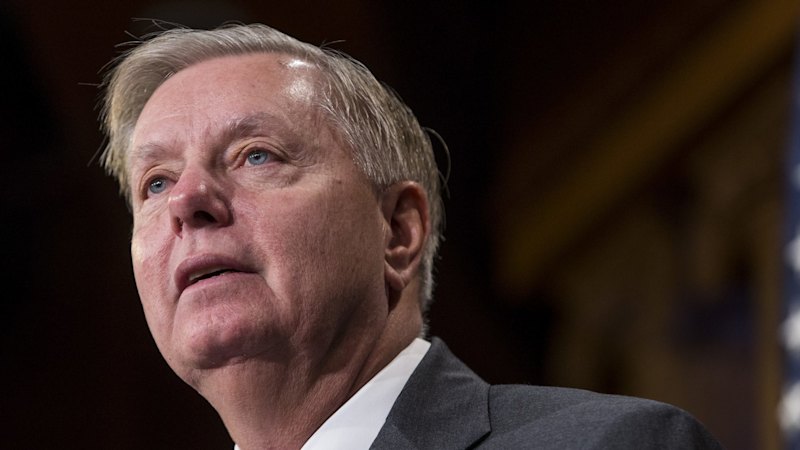
The sudden death of Senator Lindsey Graham leaves a massive, hawk-sized crater in American politics. His office dropped a bombshell statement confirming the 71-year-old South Carolina Republican passed away following a "brief and sudden illness." Reports indicate he suffered chest pain at his D.C. home shortly after returning from a high-profile trip to Ukraine, which rapidly escalated into a fatal cardiac arrest.
Just like that, one of the most polarizing, influential, and adaptable figures on Capitol Hill is gone.
Donald Trump immediately lamented the loss on Truth Social, calling Graham a "true American Patriot". Ukrainian President Volodymyr Zelenskyy expressed deep sadness, noting Graham had visited the war-torn nation ten times. Israeli Prime Minister Benjamin Netanyahu mourned losing "one of its greatest friends." Love him or hate him, Graham was always right in the middle of the action, serving as the ultimate political chameleon and a foreign policy heavyweight.
The Chameleon of Capitol Hill
You can't talk about Graham without addressing his incredible political pivots. He spent years as the wingman to the late Senator John McCain. Together with Joe Lieberman, they were the "Three Amigos," roaming the globe to push a fiercely interventionist, hawkish foreign policy. During that era, Graham was a standard-bearer for traditional Republican internationalism.
Then came the 2016 primary. Graham famously blasted Donald Trump as a "race-baiting, xenophobic, religious bigot" who should "go to hell." Trump fired back by reading Graham's personal cellphone number on live television. It looked like an irreparable blood feud.
But politics makes strange bedfellows, and Graham proved more pragmatic than most. Once Trump won the White House, Graham didn't just accept the new reality; he mastered it. He became a regular on Trump's golf courses and one of the most prominent "Trump whisperers" in Washington. Even after a brief, dramatic break on January 6, 2021—where he declared "count me out"—he managed to work his way back into the inner circle. He knew how to survive, and he knew how to maintain access to power.
What Happens to South Carolina and the Senate Now
The immediate political fallout is massive. Graham was right in the middle of running for a fifth Senate term. Now, South Carolina Governor Henry McMaster faces the critical task of appointing a temporary replacement to fill the seat.
Because Graham’s seat was already scheduled for the upcoming midterm ballot, voters will choose a permanent successor very soon. This throws a massive wrench into the Republican strategy for retaining or building a Senate majority. Expect an absolute scramble within the South Carolina GOP as ambitious politicians vie for the appointment and the sudden opening on the ballot.
A Vacuum in Foreign Policy
Graham’s death leaves a massive void in the GOP's foreign policy debate. He was an unapologetic hawk during a time when his party shifted heavily toward isolationism. He fought tooth and nail for Ukraine aid, just wrapped up a meeting with Zelenskyy to introduce a new Russian sanctions bill, and consistently pushed for an incredibly aggressive stance against Iran.
Without Graham pushing from the inside, the traditional interventionist wing of the Republican party loses its loudest, most media-savvy defender.
If you want to understand where the party goes next, keep a close eye on Governor McMaster’s upcoming appointment. The choice will signal whether the establishment holds the line on internationalism or cedes more ground to the populist, isolationist wing of the party. Watch the upcoming special primary debates in South Carolina, because whoever clinches that nomination will inherit a massive platform on the global stage.