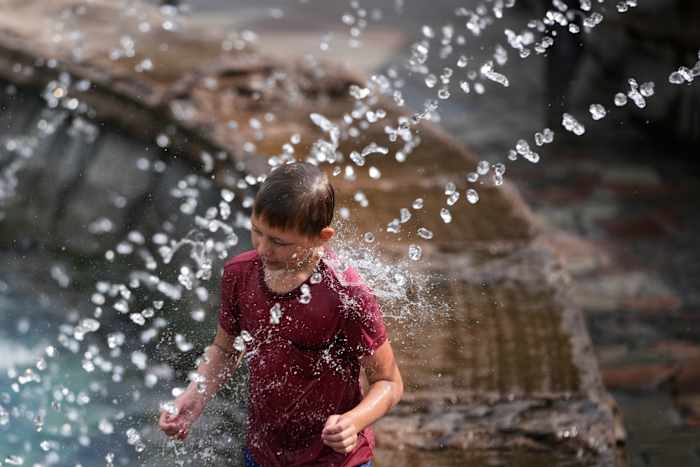
The air used to taste like sunscreen, damp grass, and the faint metallic tang of a garden hose left running in the sun. July meant open windows. It meant cicadas screaming through the humid afternoons and porch lights flickering on to catch fireflies before bedtime. We treated warmth as an invitation. The season of long light belonged to us, stretching out like an endless hallway where nobody checked the clock.
That hallway is bricked up now.
Step outside today at three in the afternoon, and the heat does not merely greet you. It hits you. It is a physical weight, pressing against your chest, turning asphalt soft and rendering the shade of a maple tree as useless as a paper umbrella in a hurricane. We are only halfway through 2026, yet the casual, carefree rhythm of the traditional American summer has fractured into something anxious, calculated, and defensive.
We check the air quality index before we check our text messages.
Meteorologists and climate data analysts track the climbing mercury with clinical precision, noting the historic persistence of urban heat domes and record-breaking wet-bulb temperatures. But numbers on a screen fail to capture the quiet erosion of daily life. They do not show the empty neighborhood parks during peak afternoon hours. They do not account for the children whose entire July is spent indoors, tracing the cool glow of a tablet screen because stepping onto the playground asphalt risks actual blistering.
Consider a hypothetical neighborhood in the Midwest, though it could be anywhere from Austin to Philadelphia. Let us call her Elena, a mother of two working out of a converted bedroom. In previous decades, her summers were defined by organized chaos. Neighborhood kids spilled through her back door, demanding popsicles before vanishing into the sprinkler spray until dinner.
This year, Elena’s back door stays locked.
Her electric bill arrived yesterday, a terrifying document that looked more like a car payment than a monthly utility statement. The central air conditioning unit has been running non-stop for weeks, humming a desperate, vibrating tune in the side yard just to keep the indoor temperature below eighty degrees. When Elena looks out the kitchen window at the scorched lawn—crisp, yellow, and dormant under a merciless sun—she feels a strange, modern grief. She is mourning a season she is currently sitting inside of.
The economic toll of this meteorological shift remains staggering, though hidden in plain sight. Grid operators issue urgent conservation warnings, begging residents to raise their thermostats between peak hours of two and seven in the evening. Cities open municipal cooling centers, transforming libraries and community gyms into emergency shelters for the elderly and the unhoused. Construction workers start their shifts at four in the morning, racing the sun before the air turns into a blowtorch. Delivery drivers slide ice packs into specialized vests, treating their daily routes like high-altitude mountaineering expeditions.
We have adapted, of course. Humans are endlessly resourceful creatures, capable of molding our habits around almost any catastrophe if given enough time. Yet adaptation should not be confused with living.
We have retreated behind triple-paned glass. We have traded the spontaneous neighborhood block party for the solitary, recirculated air of indoor climate control. The shared public square, once the beating heart of community life during the warm months, has been privatized by necessity. If you want to walk outside without risking heat exhaustion, you do so at dawn, moving like a ghost through quiet, empty streets before the sun clears the rooftops.
The social consequences of this retreat are profound. Isolation thrives in the shadow of extreme weather. When the natural environment becomes hostile, public spaces empty out. People stop running into their neighbors at the corner store because they ordered delivery to avoid stepping into the glare. The casual, low-stakes friction of community life—chatting across a fence, sharing a patch of shade at a public pool, watching kids chase each other until the streetlights glow—vanishes. In its place comes a sterile, indoor existence mediated by screens and heavy insulation.
Even recreation has transformed into a luxury good. Families with the financial means retreat to air-conditioned mountain cabins or escape to the coast, leaving those tethered to urban heat islands to fend for themselves against the asphalt glare. The classic American summer vacation, once a universal rite of passage, has become stratified by socio-economic lines of who can afford to escape the furnace.
The historical context of our current predicament makes the reality even harder to swallow. For generations, the warm months symbolized abundance, freedom, and health. Medical professionals once prescribed fresh air and sunlight as the ultimate cure for the indoor maladies of winter. Now, dermatologists and epidemiologists issue urgent warnings about UV intensity and heat stroke, flipping the script of our ancestral relationship with the sun.
We are left navigating an unprecedented psychological friction. We yearn for the nostalgic warmth of childhood memories that simply no longer exist in physical reality. The weather of our youth was an accomplice to our freedom; the weather of today is an adversary demanding constant vigilance.
Think about the last time you stood outside at dusk, waiting for nothing at all. Not rushing to your car, not checking your phone for severe weather alerts, not sweating through your clothes within thirty seconds. Just standing. Breathing. Feeling the day wind down without an air conditioner roaring in your ear.
That silence is becoming a relic.
Until we address the systemic drivers behind this atmospheric crisis, our summers will continue to shrink. We will build thicker walls, buy stronger units, and retreat further into our temperature-controlled caves. But the heat outside is patient. It waits at the door, pressing against the glass, reminding us that we cannot indefinitely outrun the sky.
The afternoon sun beats down on the empty street. A lone plastic bag tumbles across the burning pavement, stirred by a hot, dry gust of wind. Inside, behind closed blinds, millions of people wait for the sun to drop below the horizon, wondering when the livin' stopped being easy, and if it will ever be that way again.