A Quiet Dawn in Queensland
The dew hits the grass at Cattle Creek long before the first light spills over the Great Dividing Range. Jim stands on the back porch, a tin mug of dark tea warming his calloused palms. He smells the eucalyptus, the damp soil, and the sweet breath of three hundred head of Angus cattle grazing quietly in the valley below.
Jim is real in every way that matters, even if we call him a hypothetical proxy for thousands of Australian farmers scattered across Queensland, New South Wales, and the Victoria hinterlands. His life runs on weather forecasts, soil pH levels, and the steady, rhythm of the trade cycle. He does not spend his evenings reading executive orders published seven thousand miles away in Washington, D.C.
He shouldn't have to.
Yet, when a pen stroke falls across heavy parchment in the Oval Office, the vibration travels through international shipping lanes, under the Pacific Ocean, and rattles the china in Jim’s homestead kitchen.
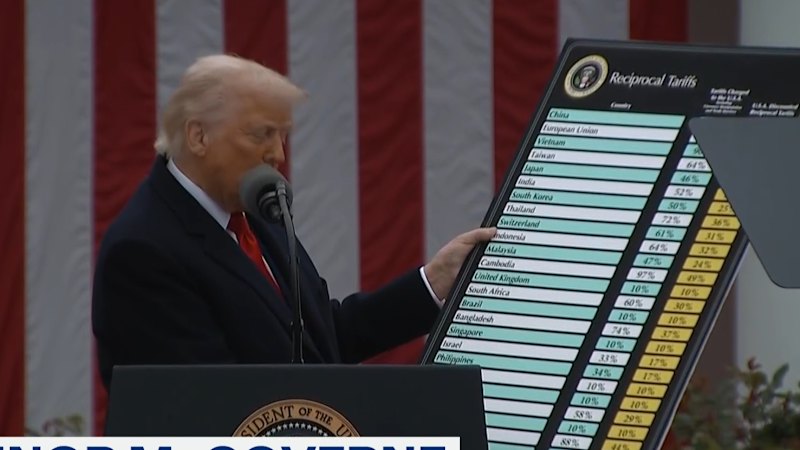
The announcement was swift, loud, and uncompromising: fresh American tariffs slapped across key Australian exports. Beef, aluminum, steel, wine—the collateral damage of a revived protectionist doctrine aimed at shielding domestic American industries. On paper, it looks like simple trade mathematics. A percentage point added here, an import levy increased there.
On the ground, it feels like a sudden drought in the middle of a flood.
The Illusion of Distance
We like to think trade policy is an abstract chess match played by men in tailored suits sitting under pristine chandeliers. We talk about trade deficits, border adjustments, and supply chain rationalization as if these are clean, sterile concepts.
They are not. Trade is meat on a hook. Trade is raw metal stacked high on freight barges floating down the Spencer Gulf. Trade is a family sitting around a laminate kitchen table, staring at a spreadsheet and realizing that the profit margin on a year’s worth of backbreaking labor just evaporated before the morning sun reached the fence line.
Consider how an international tariff actually moves through the blood vessels of an economy.
When the United States applies a new tax to Australian beef or steel, the importer in Los Angeles or Philadelphia pays the difference at the dock. To protect their own bottom line, that American importer demands a lower price from the Australian exporter. The exporter, pinched at the port, squeezes the processor. The processor cuts what they pay to the local sale yards.
And at the very end of that long, cold chain stands Jim, leaning against a wooden fence post, being told his herd is suddenly worth twenty percent less than it was on Sunday.
Pain travels downhill. It always has.
The Ghost of 1930
History holds a long, bitter memory for moments like this.
Nearly a century ago, the United States passed the Smoot-Hawley Tariff Act, desperately trying to wall off its domestic market during the onset of the Great Depression. The logic back then was identical to the logic echoing off the microphones today: protect our workers, buy American, keep foreign goods out.
What followed was a slow-motion catastrophe. Nations retaliated. Trade walls shot up across every continent. Global commerce crashed into the seabed, deepening an economic nightmare that took a world war to dismantle.
Yet, we return to the same dry well time and again.
The temptation of protectionism is powerful because it offers a clear, visible hero and a simple villain. A political leader can point to a domestic factory floor and say, "I saved your job today by taxing the foreign competitor." It is visible. It makes for a great ten-second television clip.
What remains invisible is the Australian farmer who cancels an order for a new tractor. The dock worker in Geelong whose shifts are cut from five days to three. The small-town mechanic who doesn't hire an apprentice this year because the local agricultural supply store isn't spending money on fleet maintenance.
One man's protected job becomes three other families' quiet crisis.
Steel, Wine, and the Weight of Unfairness
The sting is particularly sharp in Australia because of a quiet, unwritten understanding that has bound the two nations together for decades. Australia has fought alongside the United States in every major conflict for over a century. The bilateral relationship is routinely described in parliament and Congress as unshakeable, an ironclad alliance built on shared blood and common values.
Then comes the ledger.
When economic anxiety spikes in Washington, that shared history is often set aside for domestic political convenience. The shock for Australian exporters isn't just financial; it's psychological. It is the realization that no matter how deep the diplomatic friendship runs, a foreign election cycle will always trump an old alliance.
Take the Australian wine industry, already battered by recent years of global trade disruption and shifting climate patterns. A boutique winemaker in the Barossa Valley spends a decade cultivating a loyal market in Chicago steakhouses. She pours her life into the soil, balancing oak profiles and weather spikes, relying on stable trade agreements to keep her shipments moving across the ocean.
Suddenly, a new tariff lands. Her wine becomes ten dollars more expensive per bottle overnight on a shelf in Illinois. The restaurant owner replaces her Shiraz with a domestic bottle from Napa Valley.
The trade route dies not because her wine got worse, but because a policy draft needed to win votes in a rust-belt district half a world away.
The Domino Effect on the Main Street
Walk down the main street of any regional Australian town—places like Tamworth, Wagga Wagga, or Rockhampton. You can gauge the health of global trade simply by watching how people spend their Saturdays.
When trade tariffs hit foreign ports, the money stops circulating long before the official economic figures are published in Canberra.
- The local baker sees fewer workers dropping in for a morning pie and coffee.
- The hardware store owner notices farmers patching up twenty-year-old equipment instead of buying new tools.
- The community sports club struggles to find local business sponsors for the upcoming junior rugby season.
It is a slow, quiet contraction. No sirens blare. No dramatic headlines capture the exact moment a small rural business decides to hold off on hiring a second shop assistant. It is simply a collective pulling back, a hesitation born of uncertainty.
Standing on the Edge of the Paddock
Up on the ridge, the sun has cleared the trees now. Jim walks out to his truck, the engine turning over with a familiar diesel rattle. The cattle are moving toward the water trough, indifferent to foreign tax codes, border levies, and diplomatic cables.
Australia will adapt, as it always does. Exporters will look north to expanding markets in Southeast Asia. Government representatives will board flights to negotiate trade diversions. Farmers will tighten their belts, repair the old fences one more time, and wait out the political storm.
But as Jim drives down the gravel driveway, dust kicking up behind his tires, the core reality remains stark.
We live in an interconnected world where a leader's political calculation in an election year can quietly drain the vitality out of a small valley on the other side of the planet. The tariffs may be paid in dollars at a port in California, but the true cost is borne in sweat, stress, and survival on a dusty road in Queensland.
The gate swings shut behind the truck, its iron latch clicking into place with a dry, definitive snap.


