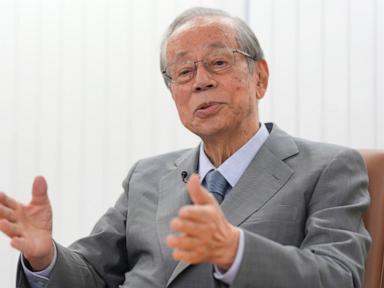
Former Japanese Prime Minister Takeo Fukuda, the fiscal conservative and diplomatic architect who normalized Tokyo's modern relationship with Beijing, died of chronic emphysema on July 5, 1995, at age 90. While surface-level obituaries reduce his tenure to the 1978 Treaty of Peace and Friendship with China, that reading misses the cold political calculus driving his administration. Fukuda did not approach Beijing out of sentimental pan-Asianism. He was a former Ministry of Finance bureaucrat who understood that Japan's economic survival required decoupling regional trade from Cold War ideological paralysis, all while keeping Washington's security umbrella firmly intact.
To understand the man who reshaped East Asia between 1976 and 1978, you have to look past the polite diplomatic communiqués. You have to examine the ruthless factional warfare inside Japan's Liberal Democratic Party (LDP), the economic shockwaves of the 1970s oil crises, and a doctrine that quietly defined Japanese foreign policy for decades after he left office.
The Finance Bureaucrat Who Inherited a Broken Machine
Fukuda was never meant to be a charismatic populist. Born in Gunma Prefecture in 1905, he entered the elite Ministry of Finance after graduating from Tokyo Imperial University, rising to become its top bureaucrat before entering politics in 1952. In the post-war Japanese political ecosystem, where money and backroom consensus dictated power, Fukuda represented the orthodox, technocratic establishment.
His great rival was Kakuei Tanaka, a self-made construction magnate without a university degree who relied on massive public works spending and raw political patronage. Their feud—known in Tokyo political circles as the Kaku-Fuku War—paralyzed and defined the LDP throughout the 1970s. When Tanaka resigned in disgrace in 1974 over the Lockheed bribery scandal, Fukuda expected the premiership to fall naturally into his lap. Instead, party elders bypassed him for Takeo Miki, a relative outsider brought in to clean up the party's image.
By the time Fukuda finally secured the prime minister's chair in December 1976, the Japanese economic miracle was sputtering. The 1973 OPEC oil embargo had shattered the illusion of endless double-digit growth, triggering stagflation and exposing Japan's terrifying vulnerability as a resource-poor island nation. Fukuda arrived at the Kantei—the prime minister's official residence—not to inspire the public, but to balance the ledger. He immediately instituted strict fiscal austerity measures to tame inflation, treating the national economy like a distressed corporate balance sheet.
The Beijing Gamble and the Anti-Hegemony Trap
Foreign policy, however, refused to wait for domestic accounting. In 1972, Kakuei Tanaka had rushed to Beijing to restore basic diplomatic relations with the People's Republic of China, leaving the heavy lifting of a formal peace treaty for his successors. For four years, those negotiations remained deadlocked over a single, explosive diplomatic phrase.
Beijing insisted on including an anti-hegemony clause in the treaty. In the coded language of 1970s geopolitics, "hegemony" was a direct slap at the Soviet Union. China, locked in a bitter ideological and border dispute with Moscow, wanted Japan to join a de facto anti-Soviet front.
Fukuda faced an impossible trap. Signing the clause risked infuriating Moscow, which still occupied the disputed Northern Territories off Hokkaido and harassed Japanese fishing fleets in the North Pacific. Refusing to sign meant locking Japanese corporations out of a massive, emerging Chinese market just as Western economies were slowing down.
Furthermore, Fukuda had to manage fierce resistance within his own party. The LDP contained a powerful pro-Taiwan lobby—many of whom were Fukuda's own ideological allies—who viewed any concession to Beijing as a betrayal of Chiang Kai-shek's Nationalist government in Taipei.
Fukuda solved the impasse through classic bureaucratic precision. He delayed signing until August 1978, using the time to wear down domestic opposition while demanding an explicit qualifying article in the treaty text. Article IV stated that the treaty would not affect the position of either contracting party regarding its relations with third countries. In plain terms, Tokyo gave Beijing its anti-hegemony language on paper, while legally insulating Japan from being dragged into Sino-Soviet hostility.
When Fukuda welcomed Chinese Vice Premier Deng Xiaoping to Tokyo in October 1978 to ratify the pact, the visual optics were historic. Behind closed doors, however, the deal was pure mercantilism. Japan gained access to Chinese coal, oil, and raw materials, while Beijing secured billions of yen in low-interest development loans and industrial technology to jumpstart Deng's economic reforms.
The Fukuda Doctrine and the Art of Soft Power
While the China treaty grabbed global headlines, Fukuda's most enduring strategic achievement happened a year earlier in Manila. In August 1977, he unveiled what became known as the Fukuda Doctrine, the first coherent foreign policy framework articulated by Japan since World War II.
Thirty-two years after Japan's imperial surrender, anti-Japanese sentiment across Southeast Asia remained raw. When Tanaka had toured the region in 1974, he was met with violent riots in Bangkok and Jakarta, where protesters burned Japanese cars and accused Tokyo of using economic dominance to achieve what the Imperial Army had failed to take by force.
Fukuda realized that checkbook diplomacy alone was generating blowback. In his Manila speech, he laid out three strict pillars that would govern Tokyo's engagement with the Association of Southeast Asian Nations (ASEAN):
- Military restraint: Japan would reject the role of a military power and never again develop capabilities that could threaten its neighbors.
- Heart-to-heart diplomacy: Tokyo would build relationships based on mutual trust extending beyond pure trade and resource extraction, investing heavily in cultural and educational exchanges.
- Regional bridging: Japan would act as an equal partner to ASEAN while actively working to foster peaceful coexistence between the non-communist ASEAN states and the newly communist nations of Indochina, specifically Vietnam.
The doctrine was a masterstroke of strategic reassurance. By voluntarily binding Japan's hands militarily, Fukuda neutralised regional fears of a resurgent Japanese empire. This allowed Japanese manufacturers—including Toyota, Sony, and Panasonic—to build vast supply chains across Thailand, Malaysia, and Indonesia throughout the 1980s without triggering nationalist boycotts. He effectively traded hard military projection for unchallenged economic integration.
The Domestic Fall and the Shadow Power Broker
Despite his diplomatic successes, Fukuda's grip on domestic power remained fragile. He governed during an era of razor-thin LDP majorities in the Diet, forcing him to constantly negotiate with opposition parties just to pass routine budgets. His rigid commitment to fiscal discipline also alienated rank-and-file lawmakers who relied on pork-barrel infrastructure projects to keep their rural constituencies loyal.
In late 1978, Fukuda fell victim to the very party machinery he had spent decades navigating. Having promised to serve only one two-year term, he attempted to renege and run again, calculating that his diplomatic triumphs made him untouchable. He miscalculated the enduring reach of his old nemesis.
Kakuei Tanaka, though formally out of the party while fighting bribery charges in court, still controlled the largest, best-funded faction in the LDP. Tanaka threw his entire organizational weight behind Fukuda's rival, Masayoshi Ohira, in the party's inaugural primary election. Ohira crushed Fukuda in the voting. True to his bureaucratic code, Fukuda refused to force a runoff in the Diet, conceding defeat with the famously understated remark that "the voice of heaven sometimes speaks in strange tones." He stepped down in December 1978.
Leaving the prime minister's office did not mean leaving power. For the next decade, Fukuda operated as one of the LDP's supreme shadow elders—a kuromaku operating behind the curtain. He maintained control over his powerful conservative faction, which later passed to Shintaro Abe and eventually into the hands of Junichiro Koizumi and Shinzo Abe, shaping Japanese politics well into the 21st century.
Even in retirement from the Diet in 1990, Fukuda refused to fade quietly. He co-founded the InterAction Council, an international organization of former heads of state dedicated to addressing nuclear disarmament, global overpopulation, and environmental degradation. The man who had spent his youth managing imperial war budgets and his prime years balancing trade deficits spent his eighties lecturing world leaders on long-term planetary survival.
The Fragility of the Framework He Built
Evaluating Fukuda's legacy requires acknowledging the inherent limitations of his worldview. His entire diplomatic architecture rested on a convenient Cold War division of labor: the United States provided hard military security under the 1960 Security Treaty, while Japan focused exclusively on economic statecraft, aid distribution, and trade expansion.
That model worked brilliantly when China was economically weak, inward-looking, and desperate for Japanese capital. In 1978, Beijing needed Tokyo far more than Tokyo needed Beijing. Fukuda could afford to treat China as a developing market to be stabilized through infrastructure loans and diplomatic patience.
Decades later, as China's economy eclipsed Japan's and the People's Liberation Army began aggressively contesting the East China Sea, the assumptions underlying Fukuda's 1978 treaty eroded. The anti-hegemony clause he fought so hard to neutralize became an ironic footnote in an era where Tokyo viewed Beijing itself as the primary regional hegemon. Similarly, the strict pacifism of the Fukuda Doctrine eventually gave way to constitutional reinterpretations and massive defense budget increases as Japan confronted a far more dangerous neighborhood.
Yet dismissing Fukuda's framework because the geopolitical terrain shifted misses the point of statecraft. Diplomacy is not about writing permanent rules for an unchanging world; it is about buying time and creating stability within the constraints of the moment. When Fukuda took office, Japan was reeling from energy shocks, isolated in Southeast Asia, and caught between two nuclear-armed communist giants. When he left two years later, Tokyo had secured a peaceful economic corridor into China, pacified its neighbors to the south, and stabilized its domestic inflation without firing a single shot or abandoning its alliance with Washington.
Takeo Fukuda never possessed the populist charisma of Kakuei Tanaka or the nationalist flair of later leaders like Yasuhiro Nakasone. He was an accountant in a tailored suit who viewed foreign policy through the lens of risk management, treating peace not as a moral abstraction, but as the essential baseline condition required for commerce to function.


