The water comes out of the chrome spout cold, clear, and unthinking. You wash your face. You boil the kettle for tea. You water the drooping fern on the windowsill. It is a domestic rhythm as old as pipes, trusted as gravity. But behind the wall, behind the street, beneath the asphalt of millions of driveways, something heavy is groaning under its own weight.
Consider a hypothetical resident named Arthur, living in a terraced house in south London. Arthur has lived through recessions, political shifts, and the unpredictable tantrums of the British weather. He pays his utility bill automatically every month, a quiet debit that disappears from his bank account without requiring a second glance. To Arthur, water is not a commodity or a financial asset. It is simply a background condition of living.
Yet, that background condition is facing a monumental fracture.
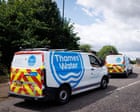
Thames Water, the corporate behemoth responsible for quenching the thirst of fifteen million people, is standing at the edge of a financial precipice. The numbers bandied about in boardrooms and newsrooms sound like abstract fiction. Two point four billion pounds. That is the staggering sum the company is now asking for to avoid collapsing under its own debt before this year ends or early next year.
Stop for a moment and let that number land. Two billion, four hundred million pounds.
It sounds like the budget for a blockbuster film or a government defense initiative. Instead, it is the price tag of keeping the taps turned on for a quarter of the United Kingdom.
How did a utility company, supplying a resource that literally falls from the sky on a depressingly regular basis, find itself begging for survival?
The roots of this crisis stretch back decades, a tangled history of privatization, heavy borrowing, and infrastructure that belongs in a museum rather than the twenty-first century. Imagine an old Victorian house where the plumbing hasn't been touched since Queen Victoria was on the throne. The pipes are iron and lead, rusted on the inside, choked with decades of mineral deposits. Now imagine forcing modern water pressure through those ancient veins while the population swells by millions.
Leaks. Thousands of them. Millions of litres of treated, drinkable water vanishing into the London clay every single day before it ever reaches Arthur's kettle.
For years, the model chugged along. Private owners collected dividends while loading the balance sheets with debt, assuming the invisible hand of the market would somehow continuously patch the leaks. But gravity eventually catches up to everyone. Interest rates rose. Inflation bit hard. The cost of maintaining a crumbling subterranean labyrinth skyrocketed. And suddenly, the ledgers did not balance.
If a tech startup fails, an app disappears from your phone. If a clothing brand goes under, you buy your sweaters somewhere else. But water is a natural monopoly. You cannot simply switch providers because you are dissatisfied with their customer service or their debt-to-equity ratio. When a water company threatens to go bust, the stakes shift from corporate finance to public safety.
What does a utility collapse actually look like on the ground?
It does not mean the taps stop instantly tomorrow morning, like a Hollywood disaster film where the city runs dry in an afternoon. The reality is far more insidious. It looks like deferred maintenance turning into emergency shutdowns. It looks like boil-water advisories stretching across entire postcodes because filtration plants lack the cash for vital upgrades. It looks like public bailouts where taxpayers are forced to rescue the very institutions that privatized profits while socializing risk.
Arthur doesn't know the exact debt ratios or the intricate mechanics of regulatory capital values. He only knows that his water bill has crept upward year after year, while headlines flash warnings about sewage spills in the very rivers that wind past his city. He feels a quiet, nagging frustration. The contract feels broken. You pay your bills, you trust the infrastructure, and yet you read that the system is teetering on insolvency.
The debate now is not just about billions of pounds on a spreadsheet. It is about accountability, ownership, and the basic responsibilities we owe to future generations. Water is not just a product to be traded; it is the absolute baseline of human survival. When the pipes are neglected, the neglect echoes through every home, hospital, and school.
The tea kettle whistles on Arthur's stove. He pours the water, unaware of the boardroom panic miles away, unaware that the invisible machinery keeping his daily life running is currently gasping for air. But the noise in the pipes is getting louder. And eventually, the bill always comes due.