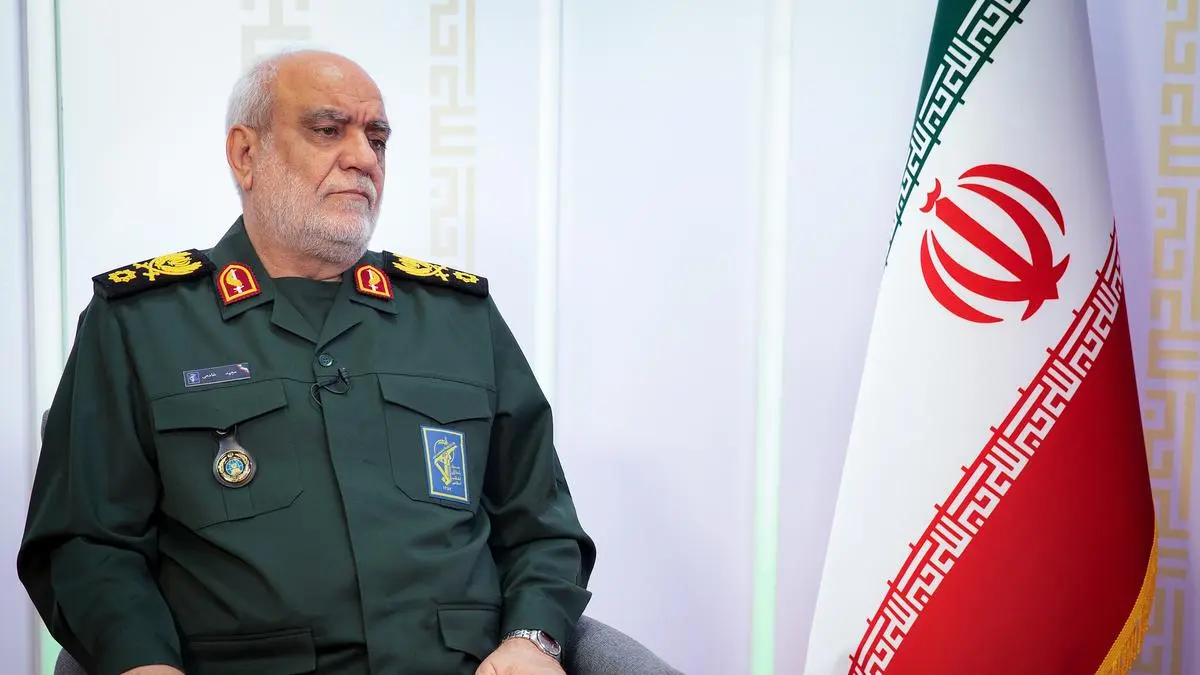
Israel just took a massive swing at the heart of Iran’s overseas operations. In a surgical strike that leveled a building in Damascus, the Israel Defense Forces (IDF) reportedly killed the head of the Islamic Revolutionary Guard Corps (IRGC) intelligence unit in Syria. This isn't just another headline about a regional skirmish. It’s a direct decapitation of the logistical and intelligence brain trust that connects Tehran to its proxies in Lebanon and beyond.
If you’ve been following the shadow war between these two powers, you know the stakes. But this specific hit marks a shift from containment to active dismantling. Tehran is reeling, and the ripple effects will hit every corner of the Levant.
The Man in the Crosshairs
The target was no mid-level operative. Reports identify the individual as a top-tier general within the IRGC’s Quds Force, the elite wing responsible for unconventional warfare and military intelligence outside Iran’s borders. For years, this office managed the "land bridge" — a corridor of influence stretching from Iraq through Syria to the Mediterranean.
He wasn't just sitting in an office. He was the architect of movement. He coordinated the flow of precision-guided missiles to Hezbollah and managed the positioning of Iranian-backed militias along the Golan Heights. By removing him, Israel hasn't just killed a soldier; it’s burned a library of institutional knowledge and personal connections that took decades to build.
How the Strike Went Down
Witnesses in Damascus described a series of massive explosions that reduced a multi-story annex adjacent to the Iranian embassy to rubble. This kind of precision requires high-level human intelligence on the ground. You don't hit a moving target like an intelligence chief with satellite imagery alone. Someone talked.
The timing is equally critical. The meeting involved several senior IRGC officials and leaders from Palestinian Islamic Jihad. Israel’s message is loud and clear. There are no safe houses left in Damascus. If you're planning operations against Israeli soil, the walls around you are thinner than you think.
Why This Isn't Just Another Border Skirmish
Most analysts look at these strikes as a game of tit-for-tat. That's a mistake. This is about "The Strategy of the Circles." Israel is working to strip away Iran’s outer layers of defense. By hitting the Quds Force in Syria, the IDF is forcing Iran to rethink its entire presence in the country.
Syria has long been the primary transit point for advanced weaponry. Without a functional intelligence head to navigate the complex web of Syrian military politics and Russian air defense zones, that transit point becomes a bottleneck. Iran’s "forward defense" strategy relies on these men to stay invisible. Now, they're exposed.
The Hezbollah Connection
You can't talk about the IRGC without talking about Hezbollah. The group in Lebanon is Iran’s most potent proxy, and they rely on the Quds Force intelligence unit for early warning systems and strategic planning.
When an intelligence chief is removed, the flow of information stops. Hezbollah's leadership now has to wonder how much the Israelis actually know. If the IDF could find a top general in a "secure" Damascus neighborhood, they can find anyone. This creates a paralysis of leadership. Orders get second-guessed. Communications are cut for fear of intercepts. The "Axis of Resistance" is suddenly looking over its shoulder.
Tehran’s Impossible Choice
Iran is now backed into a corner. They have two options, and both are bad.
They can retaliate directly, which risks a full-scale regional war they aren't prepared to fight while their economy is in tatters. Or, they can do nothing, which signals weakness to their proxies in Iraq, Yemen, and Lebanon. If the "Big Brother" in Tehran can't protect its own generals, why should a Houthi rebel or a Basij militia member keep following orders?
The Intelligence Failure
The most embarrassing part for Supreme Leader Ali Khamenei isn't the loss of life. It’s the breach. The IRGC prides itself on being an impenetrable security apparatus. Yet, Israel continues to strike with pinpoint accuracy. This suggests a deep, systemic leak within the Iranian or Syrian security structures.
The paranoia following this strike will be intense. Expect purges. Expect internal investigations. While Iran is busy hunting for "Zionist spies" within its own ranks, its ability to project power abroad will naturally diminish.
What Happens Tomorrow
Don't expect the IRGC to just pack up and go home. They’ll replace the chief, but the new guy won't have the same trust or the same years of "boots on the ground" experience.
Israel has signaled that the "War Between Wars" has entered a high-octane phase. They're no longer content with hitting truck convoys or warehouses. They're going for the people who sign the orders.
If you’re watching the news for what’s next, look at the Lebanese border. Hezbollah’s reaction will tell you exactly how much pain this strike caused. If they stay relatively quiet, it means the intelligence blow was so severe they need time to regroup. If they escalate, we’re looking at a very long, very hot summer in the Middle East.
Keep an eye on the diplomatic fallout in the UN, too. But honestly? The real action is happening in the dark, in safe houses and secure tunnels where the survivors of this strike are currently trying to figure out who gave them up.
Pay attention to these three things over the next 48 hours:
- The official funeral ceremonies in Tehran and the rank of the attendees.
- Any sudden shifts in Russian "neutrality" regarding Syrian airspace.
- Retaliatory drone launches from IRGC-backed groups in Iraq or Yemen.
The map just changed. Israel drew a new line in the sand, and it’s a line that goes straight through the heart of the Quds Force.