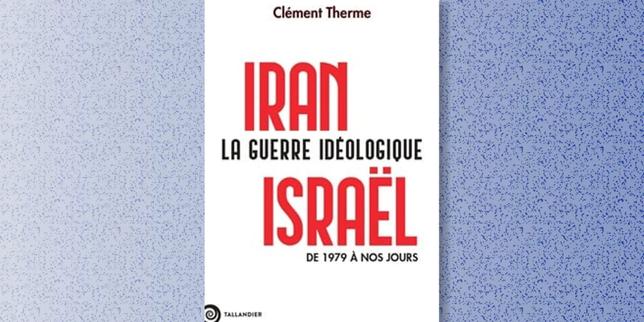
The current shadow war between Iran and Israel looks like an ancient, permanent religious conflict, but its modern roots tell a completely different story. Before 1979, the two nations maintained a quiet strategic partnership built on shared intelligence, energy pipelines, and mutual distrust of neighboring Arab states. The transformation from pragmatic cooperation to existential hostility was not an inevitable clash of civilizations. It was a calculated political realignment driven by regional power vacuums, ideological redefinition, and a series of tragic diplomatic miscalculations.
To understand the current drone strikes and intelligence operations in the Middle East, one must look past the religious rhetoric. The rift began as a structural shift in regional power dynamics that completely reshaped the geopolitical map of the Middle East. Expanding on this topic, you can also read: The Manila Gambit and the Strategic Calculation behind the Quad Convergence.
The Pragmatic Marriage of Necessity
During the reign of Shah Mohammad Reza Pahlavi, Iran and Israel operated under what Israeli strategists termed the Doctrine of the Periphery. Formulated by Israel’s first prime minister, David Ben-Gurion, this foreign policy strategy sought alliances with non-Arab states on the geopolitical margins of the Middle East—primarily Turkey, Ethiopia, and Iran—to counter the threat of pan-Arab nationalism led by Egypt's Gamal Abdel Nasser.
The partnership was surprisingly deep. Teheran supplied Israel with critical petroleum following the 1967 and 1973 regional wars, utilizing the covert Eilat-Ashkelon pipeline. In return, Israel provided military hardware, agricultural technologies, and training for the Shah’s intelligence services. Experts at Al Jazeera have shared their thoughts on this trend.
It was never a warm public romance. Iranian diplomats kept the relationship low-profile to avoid alienating Arab neighbors and domestic populations. Yet, behind closed doors, intelligence officials moved freely between Tel Aviv and Teheran. Both capitals viewed radical pan-Arab movements as an immediate threat to their security and regime survival.
The Revolution That Changed Everything
The 1979 Islamic Revolution dismantled this quiet arrangement overnight. Ayatollah Ruhollah Khomeini understood that to establish the newly declared Islamic Republic as a legitimate leader in the broader Muslim world, Iran needed a unifying cause. The Palestinian struggle provided the ultimate vehicle for regional influence.
Khomeini officially cut diplomatic ties, handed the Israeli embassy in Teheran over to the Palestine Liberation Organization, and labeled Israel the "Little Satan." Ideology replaced realpolitik as the official state currency.
Yet geopolitical reality initially resisted ideological purity. During the Iran-Iraq War in the 1980s, security pragmatists in Tel Aviv still viewed Saddam Hussein’s Iraq as a far greater threat than Khomeini’s fledgling regime. Israel covertly facilitated arms sales to Teheran, believing that keeping Iran fighting was essential to maintaining a balance of power in the region.
That tactical indulgence proved to be a major miscalculation.
The Cold Calculation of Proxy Warfare
As the Iraqi threat waned following the 1991 Gulf War, the strategic calculus collapsed. Iran had spent the 1980s quietly building a network of non-state actors, most notably Hezbollah in Lebanon, designed to project military force directly onto Israel’s northern border.
By the early 1990s, the battle lines hardened. The United States’ destruction of Iraq's military capability inadvertently removed Iran’s primary regional buffer, leaving Teheran and Tel Aviv as the two dominant military powers vying for dominance.
1950s–1970s: Doctrine of the Periphery (Secret Intelligence & Oil Logistics)
1980s: Tactical Realignment (Arms Sales during Iran-Iraq War)
1990s–2000s: Asymmetric Containment (Rise of Hezbollah and Proxy Warfare)
2010s–Present: Direct War (Nuclear Sabotage, Drones, Direct Strikes)
Iran’s doctrine shifted toward Forward Defense. Rather than fighting enemies on Iranian soil, Teheran created a ring of fire around Israel using armed regional proxies. This strategy gave the Islamic Republic significant strategic leverage without risking a direct military conflict with a nuclear-armed power.
Israel responded with the Campaign Between the Wars, a sustained intelligence and military effort aimed at disrupting Iranian weapon transfers, sabotaging nuclear development facilities, and targeted assassinations of key scientists and commanders.
The Illusion of a Cold War
For decades, both nations relied on strict rules of engagement to keep the conflict contained within the shadows. Intelligence operations, cyber weapons like the Stuxnet virus, and covert targeted operations allowed both sides to claim victories without triggering full-scale conventional warfare.
That era of strategic restraint has collapsed.
The expansion of Iran’s nuclear capabilities, combined with direct missile exchanges and open strikes on diplomatic facilities, has erased the old boundaries. The strategic depth that once protected both nations from direct confrontation is gone.
What remains is a volatile security paradox. Iran views its military network and missile capabilities as essential deterrence against Western-backed regime change. Israel views those exact same capabilities as an existential threat that must be dismantled. Neither side can back down without compromising its core national security premises.
The rupture between Iran and Israel was not born out of ancient hatreds, but out of deliberate political choices made in Teheran, Tel Aviv, and Washington. The pragmatic alliance of the mid-twentieth century proved that national interests can easily bridge cultural and religious divides. Modern history shows that once those interests are redefined by radical ideology and regional ambition, rebuilding trust becomes virtually impossible.