The assumption in Washington and Jerusalem was that a decapitation strike would trigger a domino effect of internal collapse and outward submission. When Operation Epic Fury launched in February 2026, the strategic architecture relied on the belief that the Islamic Republic was a hollow shell, ready to shatter under the weight of precision munitions and the assassination of Supreme Leader Ali Khamenei. Instead, the world is witnessing the opposite. By April 2026, the "short, sharp" military campaign has mutated into a global economic heart attack, proving that Donald Trump and Benjamin Netanyahu did not just misread Iranian resolve—they fundamentally misunderstood the leverage of a desperate regime with its back to the wall.
The Mirage of the Quick Win
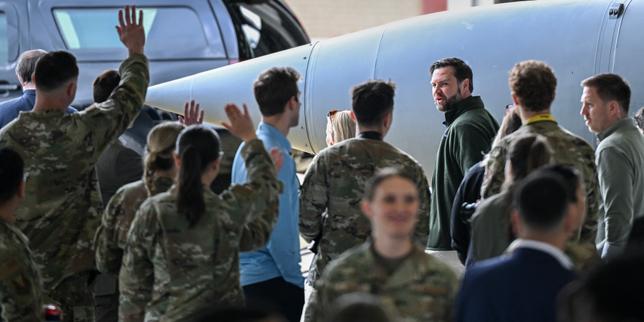
For decades, hawks in the West argued that the Iranian public was a tinderbox waiting for a foreign match. The theory was simple: destroy the nuclear sites, take out the top tier of the IRGC, and the people would rise to claim a Western-style democracy. This narrative ignored the rallying effect of foreign invasion. While internal dissent in Iran was real and often bloody throughout 2025, the arrival of American B-21 bombers and Israeli F-35s over Tehran shifted the domestic calculus.
The military success of the initial strikes is undeniable on paper. Iran’s formal navy is largely at the bottom of the Persian Gulf. Its air defenses are swiss cheese. Yet, the tactical brilliance of the strikes has been overshadowed by a strategic failure to account for asymmetric retaliation. Iran did not need a navy to win; it only needed to stop the world from breathing.
The Hormuz Noose
The closure of the Strait of Hormuz on February 28, 2026, was dismissed by some analysts as a bluff that the U.S. Navy could easily call. They were wrong. By using "smart" sea mines, swarming drone boats, and mobile shore-based missile batteries, Iran has effectively neutralized the passage of 20% of the world’s oil supply.
The economic fallout is not a distant threat; it is a current reality.
- Global Oil Prices: Crude has surged past $150 a barrel, a price point that acts as a tax on every human being on the planet.
- The Fertilizer Crisis: One-third of the raw materials for global fertilizer production—urea and phosphates—pass through the Strait. With the spring planting season underway in the Northern Hemisphere, the blockage points toward a catastrophic crop failure by autumn.
- Logistical Paralysis: Major hubs like Dubai airport have ceased normal operations as insurance premiums for aviation and shipping in the Gulf have reached prohibitive levels.
Trump’s demand that energy-dependent nations "build up some courage" and clear the Strait themselves has fallen on deaf ears. Instead of a coalition of the willing, the U.S. finds itself increasingly isolated. Even traditional allies in Europe and Asia are bypassing Washington to cut side deals with Tehran or Beijing to secure energy corridors.
The Martyrdom Trap
The assassination of Ali Khamenei was intended to be the final blow. In the logic of the Trump-Netanyahu alliance, a regime without its head cannot function. This was a projection of Western hierarchical thinking onto a revolutionary structure designed to thrive on martyrdom.
Instead of a vacuum leading to a pro-Western coup, the vacuum was filled by a "War Council" of hardline IRGC commanders who have no interest in the diplomatic niceties of the past. The regime has traded its nuclear aspirations for immediate, scorched-earth survival. They have named a price for reopening the world’s economy: the total withdrawal of U.S. forces from the Persian Gulf and $500 billion in "reparations."
It is a price Washington cannot pay, yet it is a price the global market is starting to demand be negotiated.
Domestic Blowback and the Midterm Shadow
In the United States, the "victory" lap has been cut short by the reality of $4.50-per-gallon gasoline and spiking inflation. Recent polling shows nearly 60% of Americans now view the intervention as excessive. The political shield provided by a quick victory in Venezuela earlier in the year has evaporated. Iran is not Venezuela; it is a regional power with decades of experience in "active resistance" and a proxy network that, while damaged, remains capable of hitting targets from the Levant to the Hindu Kush.
Netanyahu, similarly, faces a paradox. While he has successfully removed the immediate threat of a nuclear-armed Iran, he has replaced it with a permanent state of high-intensity regional war. The "normalization" with Arab states that the Abraham Accords promised is now on life support as Gulf monarchies watch their own oil infrastructure become targets in a conflict they never asked for.
The Reality of Strategic Overextension
The U.S. currently has over 50,000 troops deployed in the theater, with more arriving daily. This is the definition of strategic overextension. While the Pentagon can win any individual battle, it cannot "win" the geography of the Middle East.
The miscalculation was the belief that force would lead to a predictable outcome. In reality, force has only stripped away the illusions of stability, leaving a fragmented region where the only entity with the power to restart the global economy is the very regime the U.S. and Israel tried to erase. The "Maximum Pressure" campaign has reached its logical conclusion: a world where everyone is under pressure, and no one has an exit ramp.
The silence from Tehran is not a sign of defeat. It is the sound of a regime that has realized its own destruction is the most powerful weapon it ever possessed.