The air in a courtroom doesn’t smell like justice. It smells like old paper, floor wax, and the quiet, electric hum of air conditioning fighting against the humid weight of a Florida afternoon. Somewhere in a tall building in Fort Lauderdale, a stack of legal documents sits on a mahogany desk, representing a collision between two of the most powerful forces on the planet: the reach of a global media empire and the vengeful memory of a former president.
At the center of this storm isn't a weapon or a stolen secret. It is a pause. A cut. A few seconds of video edited for a news broadcast.
Donald Trump calls it "deceptive editing." The BBC calls it journalism. A judge calls it a motion to dismiss. But for the rest of us, sitting outside the velvet ropes of the legal gallery, this $10 billion lawsuit is a high-stakes autopsy of how we decide what is true in an age where everyone has their own version of the facts.
The Anatomy of a Soundbite
Imagine you are a video editor. It is January 2021. The world is vibrating with the aftershocks of the Capitol riot. You have hours of footage, a ticking clock, and exactly ninety seconds of airtime to tell a story to millions of people. You have to choose which words stay and which words fall to the cutting room floor.
This is the invisible labor of the news. Every day, thousands of "ellipses" are created. We trim the "umms," the throat-clearing, and the tangential rants to get to the meat of the matter. Usually, this is a service to the listener.
But what happens when the edit changes the soul of the sentence?
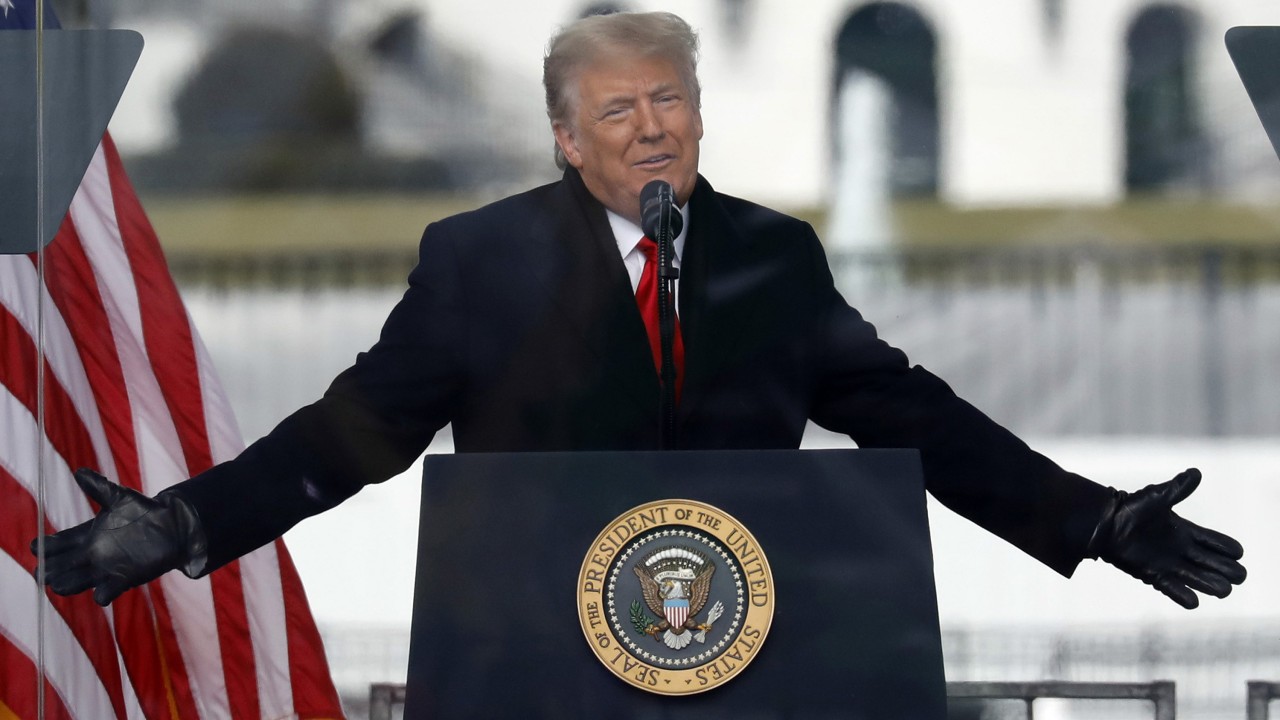
In the lawsuit filed by Donald Trump, the grievance is surgical. He argues that the BBC intentionally manipulated his speech from January 6 to make it sound like he was inciting violence while scrubbing away his calls for peace. To Trump, this wasn't just a summary; it was a hit job. He isn't asking for an apology. He is asking for $10 billion—a number so large it feels less like a request for damages and more like an attempt to buy the entire concept of silence.
The BBC’s response, filed recently in a Florida court, is a masterclass in the "Leave us alone" defense. They aren't just arguing that they were right; they are arguing that the court shouldn't even be looking at the footage.
The Jurisdictional Ghost
The BBC is a British institution, as synonymous with the UK as Big Ben or a rainy Tuesday in London. Yet, here they are, being dragged into a Sunshine State courtroom. Their primary defense is a legal shield known as "forum non conveniens"—a fancy Latin way of saying, "You’re in the wrong place, mate."
They argue that a Florida court has no business adjudicating a dispute involving a British broadcaster and a speech delivered in Washington, D.C. They want the case tossed out before a single witness even takes the stand. It’s a classic defensive maneuver. If you can’t win the fight, make sure the fight never happens in your backyard.
But the underlying tension isn't about geography. It’s about the First Amendment versus the right to a reputation.
In the United States, public figures have a notoriously high mountain to climb if they want to win a libel case. They have to prove "actual malice." They have to prove that the BBC didn't just make a mistake or a biased edit, but that they did it with the specific, burning intent to lie.
Think about how hard that is to prove. You have to get inside the mind of that hypothetical video editor. You have to find an email or a recording where someone says, "Let’s twist his words so he looks like a villain." Without that smoking gun, most of these cases die in the crib.
The Price of a Narrative
Ten billion dollars.
Let that number sit in your mouth for a second. It is an ego-sized figure. It is enough money to build a fleet of aircraft carriers or end thirst in a medium-sized country. When a plaintiff asks for that much, they aren't looking for a settlement. They are looking to send a message.
The message here is simple: The media is on trial.
For years, the relationship between the press and the presidency was a tense but functional dance. There were rules. There was a shared reality, even if the interpretations of that reality differed. That dance ended years ago. Now, it is a street fight.
By suing the BBC, Trump is targeting a symbol of the "globalist" media. The BBC represents the old guard—the measured, posh, authoritative voice of the establishment. To his supporters, this lawsuit is David taking a slingshot to a $10 billion Goliath. To his critics, it is a cynical attempt to use the legal system as a megaphone for a grievance that has no merit.
Consider the stakes for the reporters on the ground. If a broadcaster can be sued into bankruptcy for how they edit a speech, the "chilling effect" becomes a deep freeze. Editors will stop taking risks. They will stop summarizing. They will simply play raw footage, terrified that a three-second cut could lead to a decade of litigation.
The result? A public that is even more overwhelmed by noise, unable to find the signal.
The Florida Factor
Why Florida? Because Florida has become the experimental lab for a new kind of American law. It is a place where judges are increasingly open to challenging the status quo of media protections. It is a friendly harbor for the Trump legal team.
The BBC’s motion to dismiss is an attempt to close that lab door. They are betting that the law, in its cold and impartial majesty, will see this for what they claim it is: a meritless attempt to punish a news organization for doing its job.
Yet, there is a human element to this that the legal briefs ignore. There is a deep, cultural exhaustion. People are tired of being told what to think by voices they don't trust. Whether you love Trump or loathe him, there is a universal feeling that "the edit" is where the truth goes to die. We see it on TikTok, we see it on cable news, and we see it in the way we talk to each other. We are all editors now. We all cut the parts of the story that don't fit our narrative.
The BBC is defending its right to curate the news. Trump is defending his right to not be curated.
The Invisible Jury
As the judge weighs the BBC’s motion, the real trial is happening in the court of public perception. This isn't just about January 6. It’s about who owns the history of January 6.
If the case is dismissed, it will be hailed as a victory for the free press. It will also be used as "proof" by the other side that the system is rigged to protect the elites. If the case proceeds, it will be a circus—a multi-year, multi-million dollar interrogation of how the news is made.
There is no "win" here that heals the divide.
The documents in Fort Lauderdale will eventually be signed. A ruling will be issued. The $10 billion will either remain a theoretical threat or become a terrifying reality for every newsroom in the world. But the damage to the idea of a "shared truth" is already done.
We are living in the era of the $10 billion ellipsis. We are arguing over the gaps between words, while the world burns in the spaces where we used to agree.
The judge looks down at the bench. The lawyers adjust their ties. The clock on the wall ticks forward, indifferent to the drama. In the end, the law doesn't care about feelings, and it doesn't care about narratives. It cares about jurisdiction, precedents, and the cold, hard logic of the written word.
But out in the hallway, and in the living rooms across the ocean, the story is far from over.
Would you like me to look into the specific legal precedents the BBC is citing to justify their motion to dismiss?