Rosin dust clings to everything.
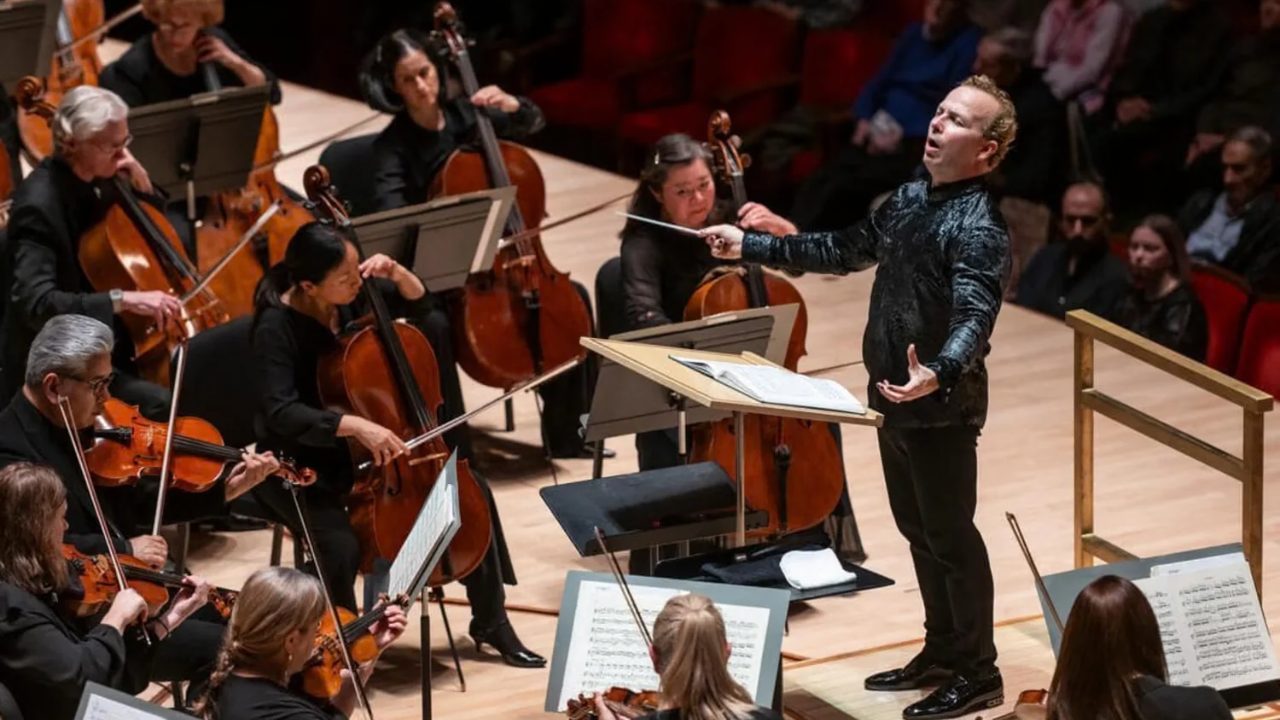
It settles on the lacquer of a century-old violin bow, coats the sleeve of a black tuxedo, and turns the dry air of an unfamiliar concert hall into something faintly sweet and sharp, like crushed pine needles after a storm. When you spend enough years standing near the back of a stage or sitting three rows back from the woodwinds, you stop hearing music as notes on a page. You start hearing it as pressure. You feel the low brass vibrate in your sternum before your ear registers pitch. You watch a conductor’s left hand tremble slightly at the end of a long phrase, holding back a hundred musicians on the razor’s edge of silence.
Silence is expensive.
Global touring is expensive. Commissioning works that have never been played before—works whose rhythms might confuse a room on Tuesday and thrill it on Friday—is expensive, risky, and slow. Yet when the Philadelphia Orchestra prepares for its fourteenth tour to China alongside a ten-and-a-half-million-dollar gift earmarked for global tours and new music, the headline makes it sound like an accounting entry. A sum of money. A tally mark on a ledger.
Numbers do not breathe. People do.
A ten-and-a-half-million-dollar commitment does not sit inside a vault waiting to admire itself. It turns into cargo crates stamped with fragile warnings. It turns into visas approved after months of quiet diplomacy, hotel lobbies where jet-lagged string players drink tea at midnight, and late-night rehearsals where a composer rewrites twelve bars in pencil because the cellos sounded too polite. It turns into the stubborn refusal to let distance shrink the human map down to screens and algorithms.
The Weight of a Fourteenth Return
Returning fourteen times is not an accident. It is a habit built across decades of friction, curiosity, and repair.
I have sat in concert halls where the applause felt polite, almost cautious, like two strangers shaking hands across a wide table. You can feel the invisible glass between performers and listeners during the first movement. Everyone is checking the room temperature. The musicians are listening to how the hall eats or returns sound; the audience is deciding whether this foreign ensemble belongs in their evening or merely passes through it.
Then something shifts. Often it is small. A principal oboist bends into a phrase with a warmth that needs no translation. A section of violas locks into a groove so steady and deep that people in the balcony lean forward without realizing they moved. Music does not erase political tension or cultural difference in an afternoon—claiming otherwise is cheap sentimentality—but it creates a shared clock. For ninety minutes, a thousand people breathe at roughly the same pace.
To understand why a fourteenth tour matters, consider a hypothetical listener—let’s call her Mei—sitting in a fifth-row seat in Shanghai or Beijing. (This is a hypothetical character created to illustrate how a listener experiences a live tour, though the concert settings and long history of exchange are real.) Mei works in logistics. Her days are measured in delays, tariffs, spreadsheets, and messages sent across time zones where everyone seems slightly irritated. She does not come to the hall expecting a miracle. She comes because live sound feels real in an era when so much of her life happens through glass.
When the string section draws a single sustained note across the hall, Mei notices her shoulders drop two inches. She is not thinking about cultural diplomacy. She is thinking about how strange it is that air can carry that much weight without breaking.
Fourteen trips mean the orchestra is no longer a novelty arriving with a postcard version of itself. Familiarity changes the stakes. When you visit a place for the first time, people forgive your stumbles because you are a guest. When you return for the fourteenth time, you are known. Your sound is remembered. Your habits are expected. Expectations raise the bar, and they also deepen trust.
Why New Music Needs Courage
Touring is one half of the gift. New music is the other, and it is the quieter, riskier bet.
Think of a symphony orchestra like a great ocean vessel. It takes years to build a crew that knows how to read the swell together, how to trim sails without shouting, how to ride out crosswinds without panic. A classical canon—Beethoven, Brahms, Mahler, Ravel—is like a well-charted sea lane. Everyone knows where the reefs are. Audiences know what they are buying when they buy a ticket to a familiar masterpiece.
New music is open water.
When a composer writes a piece today, there is no guarantee that listeners will love it on first hearing. Sometimes the harmonies feel jagged. Sometimes a rhythmic pattern trips you up right when you expected a resolution. There is a real vulnerability in asking people who paid good money for an evening of beauty to stretch their ears toward something unfamiliar.
I have watched audiences squirm during a world premiere. I have also watched a room go dead silent in a different way—not out of boredom, but out of shock—when a contemporary score hits a nerve that old music never quite touched. Writing and performing new work requires time that commercial pressure rarely grants. Rehearsing a brand-new score takes extra hours, extra copies of parts, extra patience when a passage that looked brilliant on a laptop screen turns out to be nearly impossible to play cleanly at tempo.
Money cannot buy genius, and no grant can force a composer to write a truthful piece. What ten and a half million dollars can buy is breathing room. It gives the orchestra the freedom to say yes to works that might not fill a hall on name recognition alone. It tells living artists that their voice belongs on the same stage as the dead masters.
Without new music, an orchestra slowly turns into a museum. A museum can be lovely, even sacred, yet museums look backward by nature. A living art form has to risk sounding like the present moment, messy and unfinished as that moment may be.
The Invisible Ledger Behind Every Tour
If you have never moved a hundred musicians across an ocean, it is easy to underestimate how fragile the logistics are.
Every instrument has a temper. Heat warps wood; dry cabin air dries out joints; sudden humidity swells fingerboards and loosens tension until a violin that sang in Philadelphia sounds stubborn and flat after a long flight. Double basses travel in massive cases that require careful handling at every transfer. Percussionists pack instruments that look like small hardware stores—marimbas, timpani, gongs, cymbals, blocks of wood chosen for specific acoustic ring.
Then come the human details. A horn player gets a cold two days before a major concert. A stage manager has to renegotiate lighting cues in a hall whose rigging works differently from home. Translators, local stagehands, administrators, and tour managers solve a hundred tiny crises before the doors even open, usually without anyone in the audience noticing a single seam.
Let’s introduce another hypothetical figure to make the behind-the-scenes strain concrete: Thomas, a seasoned orchestra stage manager. (Again, Thomas is a composite stand-in for the real logistics crews who make international tours happen.) Thomas knows the sound of a zipper failing on a garment bag at 6:00 a.m. better than he knows his own coffee order. On an international tour, his job is to absorb chaos so the musicians can walk onstage calm. When funding for global touring is tight, Thomas feels it in compressed schedules, tighter turnarounds, and fewer margin hours when something goes wrong.
When a major gift supports global tours, it protects that margin. It means the trip is built to breathe rather than merely survive.
And there is a deeper truth here that makes me uneasy, even as I admire the generosity behind it: relying on philanthropic gifts to sustain international cultural exchange reveals how precarious public and market support for deep art can be. Ticket sales alone rarely cover the true cost of ambitious programming or long-distance travel. Even great institutions live with financial anxiety. Admitting that doesn’t diminish the gift—it makes it more urgent. A gift of this size is a vote of confidence in an art form that moves slowly in a culture obsessed with speed.
What Happens When We Listen Across Distance
Why spend millions moving people and instruments across the globe when we can stream almost anything in high definition before breakfast?
Because a screen flattens scale.
On headphones, a flute and a tuba can sit at roughly the same perceived volume. In a real hall, the sound travels physically through space. You hear how a melody rises from the woodwinds, gets answered by the strings, and swells until the whole room seems to ring. More than that, you are in the room with other human beings who made the same choice you did to show up at a set hour and pay attention.
Attention is scarce now. Most of us carry a small rectangle in our pocket engineered to slice our focus into thirty-second fragments. Sitting still for ninety minutes while a hundred people play acoustic instruments without amplification feels almost radical. It asks you to wait. It asks you to notice subtle shifts in tone color—how a muted trumpet sounds distant and ghostly, how a pizzicato bass line feels like footsteps on a wooden floor.
When an American orchestra plays in China—its fourteenth tour—it participates in a long, complicated conversation that predates any single headline. Cultural exchange is rarely a straight line from point A to point B. Misunderstandings happen. Nuances get lost. Tastes differ. Yet showing up repeatedly over decades builds a kind of muscle memory between cultures. People stop seeing one another solely as abstractions in news reports and start seeing individuals working hard at a difficult craft.
Consider what happens next when a young student in either country watches a rehearsal or hears a piece written by a contemporary composer. Maybe the student doesn’t become a professional musician. Maybe they become an architect, a doctor, a programmer, or a teacher. Still, they carry a memory of how collective effort can sound—how dozens of distinct voices can hold tension together without drowning each other out.
The Cost of Standing Still
There is a temptation in times of global strain to pull inward, to play only what is safe, to stay home and conserve energy.
That temptation makes sense on paper. Staying put is cheaper. Repeating familiar programs is less stressful. Nobody gets surprised when you play the hits.
Yet art that only looks inward grows thin. A musician who never steps outside their familiar room risks mistaking habit for truth. An audience that never hears music from outside its usual expectations risks confusing comfort with depth.
The Philadelphia Orchestra’s fourteenth China tour, paired with a ten-and-a-half-million-dollar gift for global tours and new music, pushes against that inward pull. It treats connection as work worth funding. It treats the future of orchestral music not as a fragile relic to be wrapped in bubble wrap, but as a living workshop where new pieces can be tested, shaped, and shared far from home.
I do not pretend that a concert tour solves geopolitical rifts or guarantees universal harmony. Anyone who promises that is selling a fairy tale. Real life is messier than a symphony. Agreements stall, tempers flare, and history leaves scars that don’t vanish because a violin section played an encore.
Still, I know what it feels like to sit in the dark as the final chord fades. For two or three seconds after the bow leaves the string, nobody moves. Nobody checks a phone. Nobody speaks. The room holds the sound in its rafters, letting it decay into quiet, and in that brief, shared hush, strangers feel a little less distant from one another.
Then the conductor lowers their arms, and the sound of hands coming together fills the air—loud, imperfect, unmistakably human.