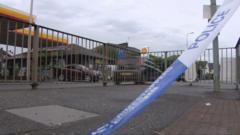
A vehicle is a weapon. When a criminal decides to use two tons of steel to target a law enforcement officer, the legal line shifts from simple evasion to attempted murder. We often see police chases on the news and think about the property damage or the speed. We rarely talk about the moment a suspect makes a conscious choice to aim that car at a human being.
The recent case of a man who tried to murder a police officer with a stolen car highlights a massive gap in how we perceive road safety and criminal intent. This wasn't a tragic accident. It wasn't a "loss of control." It was a deliberate act of violence. When you're behind the wheel of a stolen vehicle, every decision you make is already outside the law. But deciding to accelerate toward a person in uniform changes everything for the victim, the perpetrator, and the justice system.
Why Using a Vehicle as a Weapon is Increasing
Criminals are getting desperate. Data from the National Insurance Crime Bureau (NICB) shows that vehicle thefts have hit record highs in recent years, often fueled by social media trends and sophisticated relay attacks. Once a car is stolen, it becomes a disposable tool for further crimes.
Police officers face their highest risk during traffic stops and roadside investigations. When an officer stands on the asphalt, they're vulnerable. A suspect in a stolen car knows that a "successful" escape often depends on incapacitating the person trying to stop them. It’s a split-second calculation where the suspect decides their freedom is worth more than the officer's life.
I've looked at the reports. The patterns are consistent. The suspect usually has a history of fleeing. They feel cornered. Instead of surrendering, they use the stolen car's mass and speed to clear a path. This isn't just "resisting arrest." In the eyes of the law, using a vehicle in this manner meets the criteria for assault with a deadly weapon or, as seen in recent high-profile cases, attempted murder.
The Legal Threshold for Attempted Murder in Transit
Proving someone intended to kill with a car is harder than you'd think. Prosecutors have to show "specific intent." If a driver swerves to miss a spike strip and hits a cop, a defense lawyer will argue it was a botched maneuver. But if the driver stays on a straight path, accelerates, and makes no attempt to brake while aiming at the officer, the narrative shifts.
The Elements of Intent
- Targeting: Was the vehicle steered directly toward the officer?
- Acceleration: Did the driver speed up upon seeing the person?
- Opportunity to Avoid: Did the driver have space to go around but chose not to?
- Prior Statements: Did the suspect threaten violence before or during the pursuit?
Courts are starting to take a harder line. We're moving away from treating these as "traffic incidents." If you point a gun and pull the trigger, the intent is clear. If you floor the gas pedal while aiming at a human chest, the result is the same. The legal system is finally catching up to the reality that a stolen Ford F-150 is just as lethal as a .45 caliber handgun.
The Physical and Psychological Toll on Law Enforcement
Being "rammed" or targeted by a car creates lasting trauma. It’s not just the broken bones or the internal injuries. It’s the sheer helplessness of seeing a grill and headlights rushing toward you at 60 mph. Many officers who survive these attacks never return to the force.
The physical damage is often catastrophic. We’re talking about "crush injuries" and traumatic brain injuries (TBI) that require years of rehab. The stolen car aspect adds another layer of complexity. Since the car is stolen, there's rarely valid insurance to cover the officer's personal liability or long-term care beyond basic workers' comp. It’s a mess.
The Stolen Car Epidemic and Public Safety
We have to address why there are so many stolen cars on the road to begin with. Modern cars are supposed to be harder to steal, yet "keyless entry" has become a massive vulnerability. Thieves use cheap devices bought online to mimic key fobs. Within seconds, they’re in.
Once they have the car, the "joyride" mentality often turns into a "nothing to lose" mentality. They know the police are coming. They know they're in a "hot" car. This creates a high-adrenaline environment where logical thinking goes out the window. The car becomes an extension of their desperation.
How We Stop the Escalation
Better tech isn't enough. We need policy changes. Some departments have moved to "no-chase" policies to reduce the risk of high-speed collisions, but that's a double-edged sword. If criminals know the police won't chase, they're emboldened to steal more cars and drive more recklessly.
We need to focus on:
- Harsher Sentencing for Vehicle-Based Assault: It shouldn't be a "lesser" charge just because the weapon has four wheels.
- Mandatory Tracking for Fleet Vehicles: Making it easier to disable stolen cars remotely would end many of these pursuits before they turn deadly.
- Officer Training: Enhanced "tactical retreat" training for roadside stops can save lives, though you can't always train away a surprise attack.
If you're a car owner, stop leaving your fobs near the front door. Use a Faraday bag. It sounds paranoid until your SUV is being used as a battering ram against a patrol car.
The man who tried to murder a police officer with a stolen car didn't just break the law; he violated the basic social contract that keeps us safe. We can't treat these incidents as outliers. They're a symptom of a broader disregard for life and a legal system that sometimes forgets how much damage a car can do.
Protect your property. Support the officers on the front lines. Demand that "attempted murder" stays the charge when a vehicle is the weapon. There's no room for leniency when someone decides to turn a daily commute tool into a death machine. If you're ever in a situation where you see a pursuit or a suspicious vehicle, move as far off the road as possible. Don't be a spectator. A stolen car in the hands of a desperate person is a missile, and you don't want to be in its trajectory.