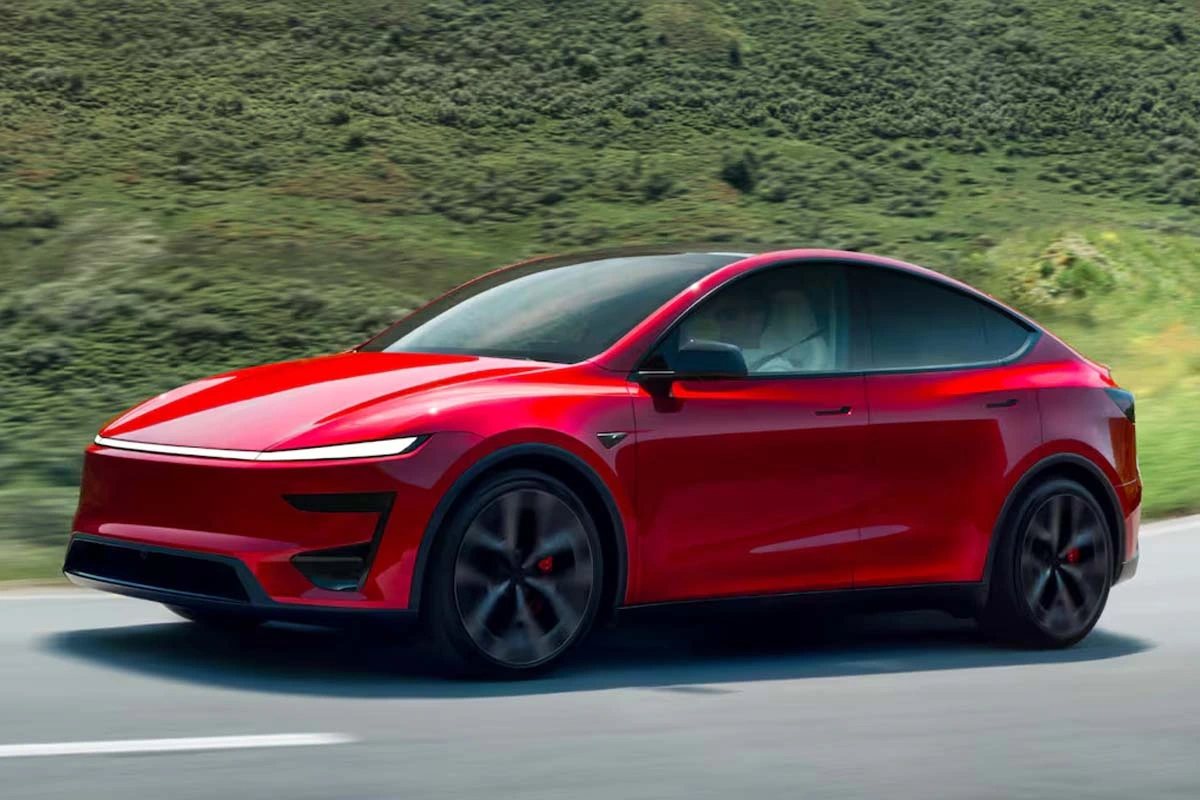
Wall Street loves a tidy narrative. Give the herd a shiny object, point to a slowing delivery metric, and watch the panic ripple across the trading desks. The latest panic-peddling headline claims Elon Musk is slashing Tesla sales targets while secretly plotting a merger with SpaceX to rescue the struggling automaker.
It is a masterpiece of financial fiction. It is also completely wrong.
Lowering a sales target is not a sign of surrender. It is a strategic retreat from the low-margin volume trap that destroyed legacy automotive. Meanwhile, the idea of a Tesla-SpaceX merger misunderstands the fundamental architecture of both companies. You do not weld a reusable orbital launch provider to a terrestrial vehicle manufacturer because delivery numbers dipped in a given quarter. You do not mix capital-intensive consumer assembly lines with deep-space R&D unless your goal is to destroy the balance sheet of both entities.
I have spent years watching institutional analysts miss the structural shift because they are too busy staring at quarterly delivery cards. They treat Tesla like a glorified Ford with a better PR team. That error in categorization guarantees they will miss the actual transition happening right beneath their feet.
The Volume Trap That Broke Detroit
Every legacy carmaker is currently bleeding cash trying to chase unit volume. They build sprawling factories, lock themselves into union labor agreements, and flood rental fleets with subsidized inventory just to keep the assembly lines moving. When demand softens, they slash prices, crush their residual values, and watch their operating margins evaporate.
That is the game Wall Street wants Tesla to play. They want Elon Musk to commit to arbitrary multi-million unit quotas every single year, regardless of market saturation, interest rates, or capital efficiency.
Smart operators do the opposite. When the cost of capital spikes and consumer credit tightens, you pull back. You stop forcing units into a stagnant market. You protect your cash flow. You redirect engineering talent away from stamping out minor body panel variances and toward software, energy storage, and autonomy.
Lowering the sales target is not a crisis response. It is a margin defense.
Look at the gross automotive margins excluding regulatory credits. While every traditional manufacturer operates in constant fear of single-digit margins, Tesla treats vehicles as hardware platforms designed to carry high-margin software suites. If you sell fewer cars today but retain pricing power and protect your balance sheet, you win the decade. If you chase vanity volume by turning your cars into rental-fleet commodity trash, you become General Motors with a sleek touch screen.
Why the SpaceX Merger Theory Falls Apart
The merger rumor is even lazier. It relies on a simplistic corporate arithmetic: Company A has slowing momentum, Company B prints headlines about rockets, therefore combining them creates a mega-entity that defies gravity.
In reality, merging Tesla and SpaceX would be an administrative and regulatory nightmare that achieves zero operational synergy.
SpaceX is a private defense contractor and launch provider operating under government oversight, heavy national security clearances, and specialized aerospace capital structures. Tesla is a publicly traded consumer discretionary and energy infrastructure company subject to the whims of retail traders, quarterly earnings calls, and global automotive safety regulations.
Throwing them into the same corporate blender does not unlock hidden value. It creates a governance disaster. Musk already divides his attention across a portfolio of complex entities. Binding their balance sheets together would trigger immediate pushback from institutional shareholders on both sides who signed up for very different risk profiles.
Investors who own Tesla want exposure to electric mobility, grid-scale energy storage, and artificial intelligence through autonomous driving. Investors who manage private equity allocations for SpaceX want exposure to orbital payload delivery, global broadband infrastructure via Starlink, and interplanetary transport systems.
Merging them solves no engineering problem. It only satisfies the narrative addiction of financial journalists who need a dramatic plot twist to justify their weekly column inches.
The Real Shift is Energy and Autonomy
If you want to understand where the actual enterprise value of Tesla resides, stop looking at the car dealership parking lot.
The automotive business is the hardware wedge. It proved the manufacturing capability and funded the initial R&D. But the real inflection point is happening in two entirely different sectors: stationary energy storage and neural-network-driven autonomy.
Megapack deployments are scaling at a pace that makes automotive delivery growth look pedestrian. Grid operators across the globe are facing unprecedented demand surges driven by data centers, electrification, and aging grid infrastructure. They need massive battery installations to smooth out intermittent renewables. Tesla's energy division operates with high visibility, strong margins, and minimal consumer-facing warranty friction compared to passenger vehicles.
Simultaneously, the autonomous software stack is moving past the point of linear iteration. The transition from rule-based code to end-to-end neural networks trained on millions of real-world fleet miles is an exponential curve. Competitors are still trying to map cities with expensive lidar rigs and geofenced HD maps. Tesla is treating autonomy as a generalized vision problem solved by compute and data volume.
When you price a company based purely on how many sedans it shipped last quarter, you miss the transition from a hardware manufacturer to an AI and energy utility platform.
The Uncomfortable Truth About the Contrarian Bet
Every contrarian position comes with a downside, and mine is no exception.
The risk of pulling back on sales targets and pivoting hard toward autonomy and energy is execution risk on a massive scale. If the regulatory approval for uncrewed autonomous fleets stalls indefinitely, or if the humanoid robotics program turns out to be an expensive distraction, the valuation loses its speculative cushion.
Furthermore, ignoring near-term volume leaves room for aggressive competitors, particularly in international markets where state-backed manufacturers can absorb severe financial losses to capture market share.
If you measure success by unit count alone, my thesis looks vulnerable. But investing is not about winning a quarter-to-quarter popularity contest with sell-side analysts. It is about identifying where the economic moat is actually widening.
Tesla does not need a bailout from SpaceX. It does not need to chase hollow volume targets to appease short-sighted commentators. It needs to execute on autonomy, scale energy storage, and ignore the noise.


