The Illusion of Structural Readiness
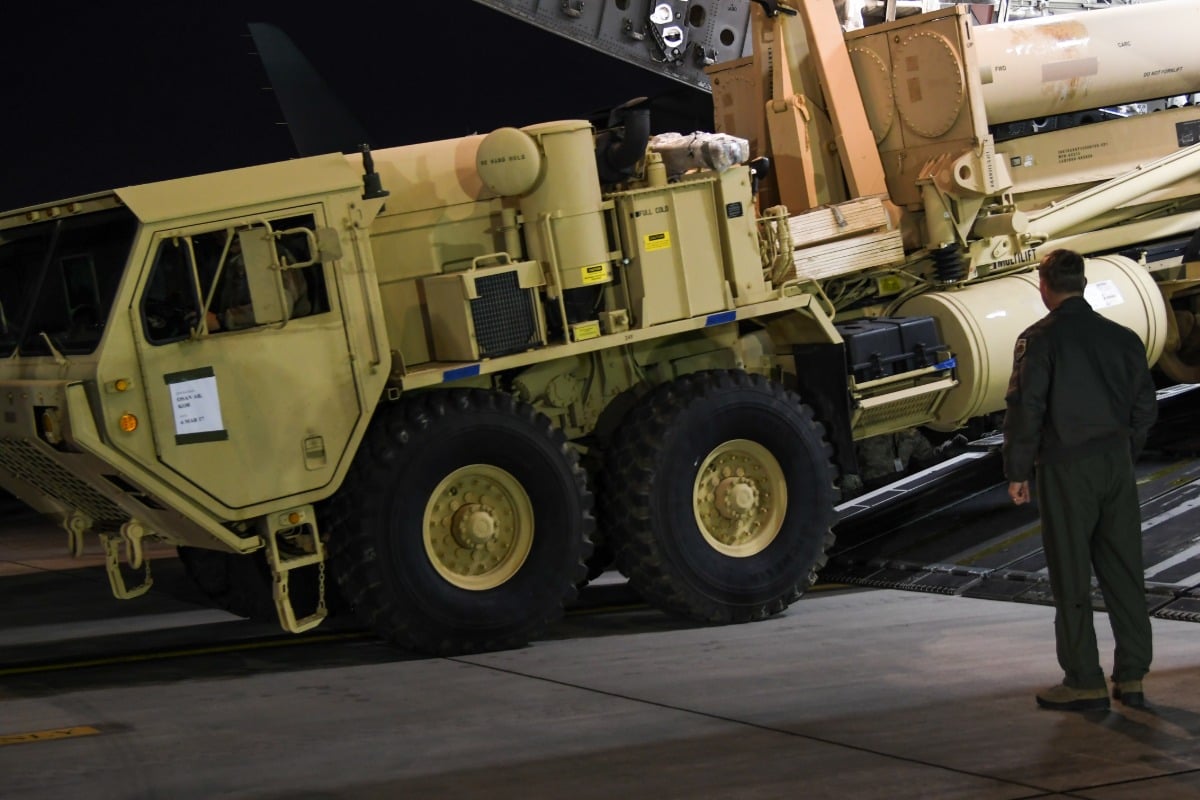
The return of all six Terminal High Altitude Area Defense (THAAD) mobile launchers to their permanent installation in Seongju, South Korea, satisfies the visual requirements of regional deterrence. However, tracking the transport frames obscures the true metric of strategic readiness: the physical interceptor inventory.
A missile defense battery without interceptors is a non-functional asset. Recent logistics anomalies—specifically the temporary transfer of these identical transport erector launchers to Osan Air Base and the concurrent arrival of heavy C-5 and C-17 transport aircraft—expose a structural reallocation of munitions from the Indo-Pacific to the Middle East theater.
The deployment of a THAAD system relies on three distinct layers: the AN/TPY-2 radar network, the fire control infrastructure, and the kinetic hit-to-kill interceptor missiles. While the first two components remain structurally fixed on the Korean peninsula, the variable in this defense equation is the volume of available interceptor rounds. Operational statements confirm that while the launch structures are back in position, their primary payload has been drawn down to offset deep inventory depletion incurred during global multi-theater conflicts. This systemic reallocation alters the localized calculus of deterrence against asymmetric threats.
The Interceptor Deficit Function
The fundamental limitation of modern missile defense is an imbalance in production economics: the cost and assembly duration of a high-altitude kinetic interceptor vastly exceed the production costs of the tactical ballistic missiles they are designed to neutralize.
[North Korea: Mass SRBM Production] ---> Focuses on Volumetric Saturation
                                                vs.
[United States: Complex THAAD Assembly] -> Constrained by Monolithic Industrial Base
This disparity reveals a critical structural bottleneck. The manufacturing pipeline for THAAD interceptors is characterized by an inelastic supply curve, sustained by specialized aerospace supply chains with multi-year lead times. When a geopolitical crisis requires intensive defense expenditure in one geographic zone, the required interceptors must be diverted from active theater inventories elsewhere.
This consumption dynamic produces what can be termed a regional capacity deficit. The regional defense model assumes a static minimum payload threshold—a predefined baseline of interceptors required to survive an initial volley of hostile short- and medium-range ballistic missiles. Reductions below this baseline degrade the system's operational viability.
- Volumetric Saturation: An adversary can overwhelm a defense site simply by launching more incoming targets than there are ready interceptors in the area.
- The Salvo Rationing Dilemma: Command structures are forced to selectively choose which inbound threats to engage, sacrificing secondary infrastructure to preserve limited defensive resources for primary targets.
Asymmetric Theater Variables
The drawdown of interceptors occurs alongside qualitative shifts in regional strike capabilities. The assumption that high-altitude terminal defense guarantees airspace denial is challenged by modern missile engineering.
The Quasi-Ballistic Trajectory Threat
A prime example is the North Korean Hwasong-11A (designated externally as the KN-23). This solid-fueled tactical ballistic missile operates on a quasi-ballistic flight profile, flattening its trajectory below an altitude of approximately 50 kilometers. By maintaining a flight path within the denser layers of the upper atmosphere, the system uses aerodynamic control surfaces to execute terminal pull-up maneuvers and unpredictably shift course.
Flight Altitude Maxima
--------------------------------------------------
80-150 km: THAAD Optimal Engagement Envelope
--------------------------------------------------
50 km:     Atmospheric Interface / Maneuver Zone (Hwasong-11A flattens profile)
--------------------------------------------------
20-40 km:  Patriot (PAC-3) Engagement Zone
This operational window exposes a distinct defensive gap. The THAAD interceptor relies on an exoatmospheric kinetic kill vehicle that requires target tracking and interception to occur at higher altitudes, generally between 80 and 150 kilometers. By staying below this altitude threshold during its midcourse phase, a quasi-ballistic missile bypasses the optimal intercept zone of high-altitude systems.
This forces lower-tier assets, like the Patriot (PAC-3) batteries, to handle the engagement. However, these lower-tier networks have a much smaller area of coverage, protecting only localized targets rather than broad regional zones.
Multi-Axis Launch Diversification
The shift toward solid-propellant missile designs removes the early warning windows once provided by liquid-fuel deployment procedures. Modern solid-fueled systems are deployed via diverse, highly mobile launch platforms, including wheeled four-axle transport vehicles, tracked chassis, rail-car containers, and hardened silo systems. This mobility makes pre-emptive tracking difficult and increases the likelihood of simultaneous, multi-axis salvos that can easily exhaust a depleted interceptor inventory.
Regional Autonomy Trends
The reality of a shared, finite U.S. munitions inventory has fundamentally altered how regional allies approach their security. Strategic planning can no longer assume that American defense production will scale instantly to meet simultaneous crises across multiple continents.
                    [Global Interceptor Pool]
                           /         \
              Allocated to             Allocated to
           Middle East Crisis       Indo-Pacific Theater
          (Immediate Consumption)   (Deterrence Baseline)
This resource competition accelerates a clear shift toward localized defense production. South Korea’s systematic development of its Long-Range Surface-to-Air Missile (L-SAM) system is a direct response to these inventory constraints. The L-SAM framework is designed to intercept high-altitude ballistic threats, creating an indigenous, independent intercept tier to reduce systemic reliance on foreign logistics chains.
However, developing a sovereign defense network is a long-term engineering effort with significant near-term limitations:
- Integration Bottlenecks: Merging separate radar and fire-control systems across sovereign and allied networks requires deep software alignment to prevent friendly fire or duplicated engagements.
- Industrial Scaling Lag: Transitioning an indigenous interceptor design from successful prototype testing to full-rate production requires years of factory tooling and precision chemical propellant manufacturing.
Redefining Allied Deterrence
To preserve stability given these hard inventory constraints, command structures must shift from static defensive positions to dynamic, integrated defense models. The presence of physical launch vehicles is a useful visual signal, but actual security requires managing the underlying logistics equation.
The primary strategic priority must be expanding manufacturing capacity for critical defense components, specifically by establishing co-production lines for interceptor assemblies within allied nations. At the same time, regional defense networks must evolve from isolated, point-defense systems into an integrated, multi-layered framework. By linking radar tracking data across different nations and combining high, medium, and low-tier intercept assets, allies can maximize the efficiency of every defensive round. This logistical and technical integration is essential to counter the volumetric advantages of modern missile production and maintain reliable deterrence.