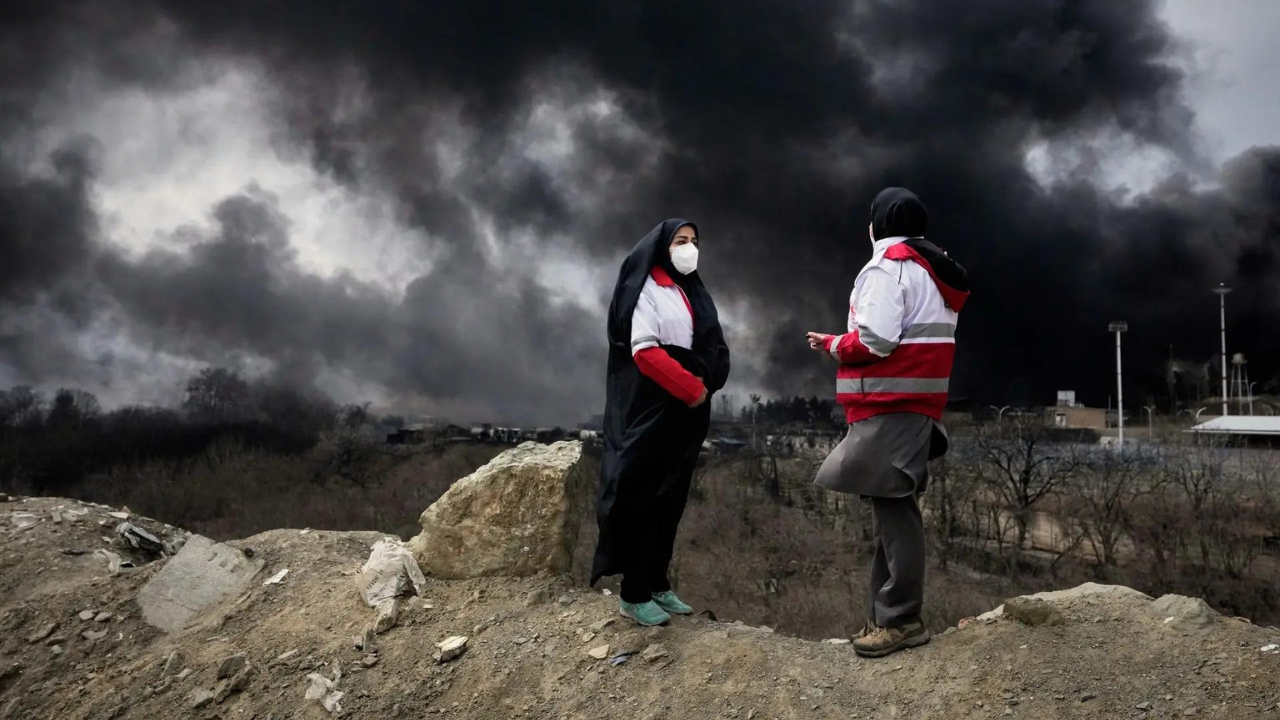
The mainstream media loves a predictable script. When military friction flares up in the Middle East, the commentary machinery instantly churns out the same tired narrative: an inevitable, escalating cycle of "eye-for-an-eye" vengeance. Analysts map out targets, calculate missile ranges, and warn of an impending regional conflagration.
It is a neat, cinematic framework. It is also entirely wrong. You might also find this connected coverage useful: The Myth of the Iran Crisis Phase and Why the Pentagon Wants You to Buy It.
The lazy consensus views geopolitical friction as a series of emotional, hot-headed impulses. It treats sophisticated state actors like schoolyard brawlers trading punches until someone gets knocked out. This superficial analysis misses the cold, calculating reality driving both Washington and Tehran.
What the public witnesses is not unhinged escalation. It is a highly calibrated, deeply synchronized choreography designed to satisfy domestic audiences while explicitly avoiding a broader conflict. As reported in recent reports by TIME, the effects are widespread.
The Illusion of Unchecked Escalation
To understand why the standard "tit-for-tat" analysis fails, we have to look at the mechanics of modern statecraft. True military escalation is unpredictable, expensive, and politically ruinous for both sides. Neither the United States nor Iran desires an open-ended, conventional war.
When a strike occurs, the immediate reaction from commentators is to predict the collapse of regional stability. But look closer at the actual execution of these maneuvers.
- Advance Signaling: Major military actions are rarely total surprises to the adversary. Backchannel communications, often routed through neutral intermediaries, ensure that both sides understand the boundaries of an upcoming action. The goal is to allow the strike to land without forcing the opponent into a corner where full-scale war is the only option left.
- Target Selection: Look at what actually gets hit. Headlines scream about major strategic assets, but the reality on the ground usually involves remote infrastructure, empty storage facilities, or well-warned command posts. The targets are chosen precisely because they can be destroyed without inflicting the kind of catastrophic damage that triggers total mobilization.
- Calculated Rhetoric: The public declarations following these events are carefully written. One side claims absolute victory and total destruction of enemy capabilities; the other claims the damage was negligible and their defensive posture remains unbroken. Both narratives are true enough to satisfy their respective domestic bases, allowing both leadership teams to claim success and de-escalate.
This is not a failure of deterrence. It is the definition of managed friction.
Deconstructing the Deterrence Myth
The core flaw in the standard foreign policy playbook is the belief that a single, massive strike can permanently alter an adversary's long-term behavior. We see this assumption repeated constantly: "If the US just hits hard enough, Iran will stop its regional activities." Or conversely: "If Iran strikes back with enough force, the US will exit the theater."
I have spent years analyzing regional security architectures, and if there is one undeniable truth, it is that deeply ingrained strategic objectives do not evaporate because a few warehouses were turned to rubble.
Iran's regional strategy is built on decades of asymmetric doctrine. It is cheap, resilient, and deeply integrated into local political landscapes. A kinetic strike from a conventional superpower cannot erase the political and social realities that give rise to these networks. Thinking you can bomb away an asymmetric strategy is like trying to cure a systemic infection with a hammer.
Similarly, the American presence in the region is tied to global maritime security, energy corridors, and long-standing alliance commitments. It does not shift overnight because of a localized drone or missile strike.
When you strip away the alarmist commentary, you realize that these exchanges are not meant to destroy the opponent's strategy. They are meant to maintain the status quo. They are expensive, dangerous reminders of boundaries, not precursors to a new world order.
The Domestic Imperative
Why do states engage in this dangerous choreography if it does not change the strategic reality? Because foreign policy is always a reflection of domestic politics.
For Washington, any administration must appear strong, decisive, and protective of its personnel abroad. Leaving an action completely unanswered invites severe political vulnerability at home. A measured, targeted response fulfills the political necessity of "doing something" without entangling the nation in another long-term, multi-trillion-dollar conflict that voters have zero appetite for.
For Tehran, the calculus is remarkably similar. The regime must project strength to its core supporters and preserve its ideological stance as a regional counterweight. A visible response to external pressure is mandatory to maintain internal legitimacy and signal solidarity with its partners.
The "eye-for-an-eye" framing makes for great television, but it fundamentally misinterprets the objective. The true audience for these strikes is not the adversary's generals. The audience is the voting public in the West and the political stakeholders in the East.
The Hidden Cost of the Safe Play
Acknowledging that this conflict is managed theater does not mean it is without risk. The danger is not that either side will deliberately launch a massive war; the danger is a mechanical failure in the choreography.
When you play a high-stakes game of chicken with live munitions, the margin for error is razor-thin. A malfunctioning guidance system, a miscalculated warning time, or a piece of faulty intelligence can result in unintended casualties. If a strike accidentally crosses an unwritten red line—such as causing mass civilian casualties or hitting a high-value political target—the choreography breaks down. At that point, the political cost of de-escalation becomes higher than the cost of war, and both sides are dragged into a conflict neither wanted.
This is the true nuance missed by the standard commentary. The threat is not a deliberate march to war driven by aggressive ideology. The threat is a tragic, bureaucratic accident born out of the desire to look tough for domestic television.
Moving Past the Primitive Explanations
The next time an event like this dominates the news cycle, ignore the pundits screaming about World War III. Dismantle the premise of the questions being asked on the cable networks. They are asking who "won" the exchange, when the reality is that both sides achieved exactly what they needed to internally.
Stop viewing international relations through the lens of a sports match or a revenge movie. It is a cold business transaction conducted with high-explosive currency. It is a system designed by cynics, executed by pragmatists, and misunderstood by design.


