Unprecedented continental heat domes and explosive wildfire vectors across Western Europe are routinely misattributed to isolated meteorological anomalies. To understand the operational reality of the current thermal crisis, analysts must deconstruct the compound feedback loops driving modern climate shifts. Atmospheric persistence, compounded by ocean-atmosphere oscillations originating thousands of miles away, creates the structural conditions for structural infrastructure failure, agricultural contraction, and catastrophic combustion across regions previously shielded from such extremes.
The Thermodynamic Mechanics of European Heat Domes
The summer thermal profile across Western Europe relies on atmospheric blocking mechanisms rather than simple localized temperature increases. Persistent, quasi-stationary Rossby waves establish large standing waves in the upper troposphere, locking high-pressure anomalies into place over the continent.
This configuration operates through a precise feedback loop:
- Subsidence Warming: High-pressure systems force air downward, compressing and heating it adiabatically while preventing the vertical cloud formation required to reflect incoming solar radiation.
- Soil Moisture Depletion: As early-season precipitation deficits dry out topsoils, the surface energy balance shifts. Instead of solar energy driving latent heat flux through the evaporation of soil moisture, it converts entirely into sensible heat flux, directly baking the boundary layer.
- Albedo and Surface Feedbacks: Dried vegetation and scorched earth lower moisture retention capacities, accelerating regional desiccation and amplifying peak daytime temperatures well beyond historical baseline norms.
Under these conditions, daily maximum temperatures across France, Germany, and Spain decouple from seasonal averages. The underlying driver is not merely an incremental rise in global mean temperatures, but the structural intensification of heat domes that remain stationary for weeks.
Teleconnections and the Pacific Ocean Driver
Attributing European thermal extremes exclusively to local atmospheric conditions ignores planetary-scale teleconnections. The El Niño-Southern Oscillation acts as a primary remote driver of global weather anomalies. During an El Niño phase, warm water pools in the central and eastern tropical Pacific, releasing massive amounts of thermal energy into the atmosphere and altering global circulation patterns.
While tropical Pacific sea surface temperatures feel distant from European latitude systems, the atmospheric response alters jet stream positioning and high-pressure persistence. The transition of the El Niño-Southern Oscillation state alters regional precipitation baselines months in advance. When a strong warm phase couples with an already elevated global baseline temperature, the statistical probability of extreme blocking patterns over the North Atlantic and European sectors shifts upward.
This teleconnection manifests as a sequence of compounding vulnerabilities:
- Winter and spring precipitation shortfalls reduce hydrological recharge in major catchments like the Po, Rhine, and Danube basins.
- Reduced snowpack in the Alps limits summer glacial meltwater contributions, starving river networks just as agricultural and municipal demand peaks.
- Elevated river temperatures constrain industrial cooling operations, forcing output reductions in nuclear and hydroelectric facilities across France and Central Europe.
The Fuel Vector and Wildfire Propagation Physics
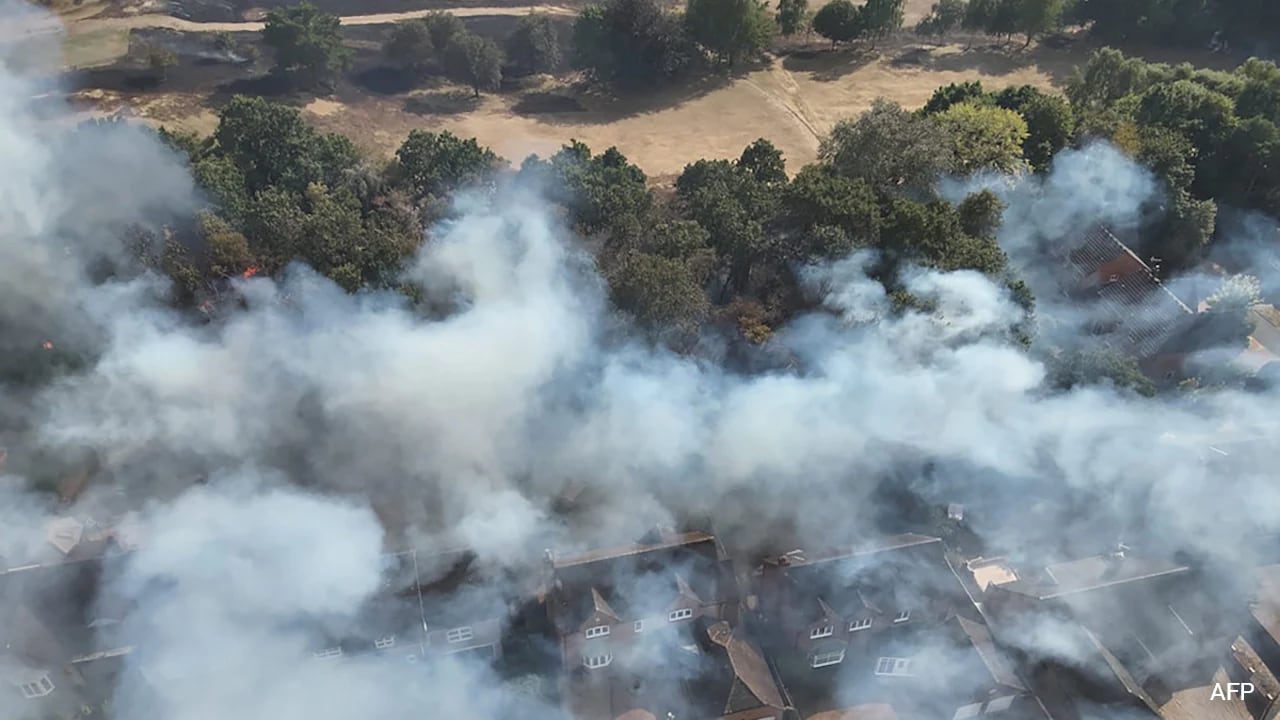
Wildfire proliferation across non-traditional European zones—ranging from northern France to parts of the United Kingdom—demonstrates a structural shift in fuel availability. The transition from controlled agricultural burns and localized brushfires to uncontainable crown fires relies on three quantified variables: fuel moisture content, relative humidity, and wind shear anomalies.
When relative humidity drops below critical thresholds alongside prolonged soil moisture deficits, vegetation transitions from a living sink to dry biomass. Fine dead fuels lose moisture rapidly, lowering the ignition energy required for spark transition. Once ignited, high ambient air temperatures reduce the energy required to pre-heat adjacent unburnt fuel, accelerating the rate of spread.
The wildfire crisis is fundamentally an infrastructure and land-management stress test. Traditional suppression tactics designed for Mediterranean scrublands fail when high-intensity fires move into central European mixed forests characterized by heavy organic soil layers and dense understories.
Sectoral Vulnerability and Economic Transmission Channels
The intersection of extreme heat and hydrological stress generates systemic risk across multiple economic domains simultaneously. The economic loss function extends far beyond direct timber and agricultural asset destruction:
- Transport Logistics: Low-flow conditions on critical inland waterways restrict commercial barge cargo capacity, forcing freight onto regional road networks and creating supply chain bottlenecks.
- Energy Generation: Thermal power plants require continuous water withdrawal for cooling. Elevated river temperatures combined with low volumetric flow rates trigger mandatory regulatory curtailments to prevent aquatic ecosystem collapse.
- Public Health Infrastructure: Urban heat islands amplify excess mortality rates, overwhelming emergency medical services and driving productivity losses across the labor force during peak thermal episodes.
Deploy structural adaptation frameworks that treat heat and drought as chronic baseline shifts rather than acute, temporary shocks. Municipalities must redesign urban zoning codes to mandate high-albedo materials, expand subterranean cooling infrastructure, and decouple power generation dependencies from superficial river water availability. Regional emergency management agencies must transition from reactive firefighting resource allocation to predictive, telemetry-driven fuel-load reduction protocols before the spring dry-season transition begins.