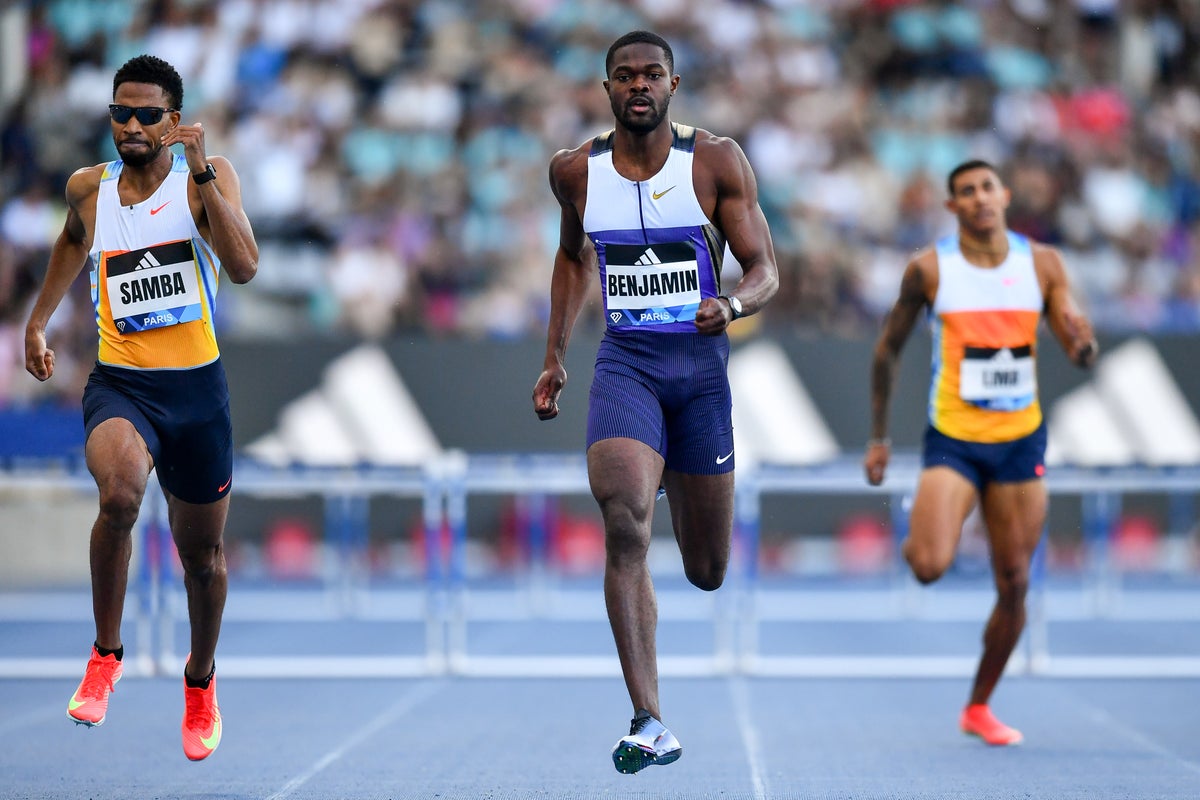
The friction between premier sporting events and urban operational limits during climate anomalies is no longer a theoretical risk management exercise; it is an active logistical bottleneck. The demand by French police unions to cancel the Paris Diamond League track and field meet under the pressure of a historic heatwave highlights a critical vulnerability in modern athletic event architecture. When ambient temperatures breach specific physiological and operational thresholds, the hosting infrastructure undergoes a rapid transition from standard operations to active failure modes.
This analysis deconstructs the decision matrix forcing this confrontation, focusing on the intersection of human thermal regulation, municipal resource constraints, and the legal liabilities governing public mass gatherings.
The Tri-Factor Risk Matrix of Urban Athletic Events
Evaluating the viability of a major outdoor athletic event during an extreme thermal event requires isolating three independent yet compounding variables: athlete safety, spectator vulnerability, and civil infrastructure preservation. Standard event planning often treats these categories as a singular, generalized "weather risk." In reality, each operates under distinct thresholds and demands specific mitigation frameworks.
                  [EXTREME THERMAL EVENT]
                             │
       ┌─────────────────────┼─────────────────────┐
       ▼                     ▼                     ▼
[Athlete Safety]    [Spectator Density]   [Civil Infrastructure]
 - Exertional Heat   - Static Thermal      - First Responder
   Illness (EHI)       Accumulation          Depletion
 - Wet Bulb Globe    - Microclimate        - Grid & Transport
   Temperature         Heat Islands          Strains
1. The Athlete Boundary: Wet Bulb Globe Temperature (WBGT) Metrics
Elite track and field athletes possess advanced cardiovascular conditioning, yet high-intensity exertion in extreme heat risks Exertional Heat Illness (EHI) and exertional heat stroke. Traditional ambient temperature readings (dry-bulb temperature) are fundamentally flawed metrics for athletic safety because they fail to account for humidity, wind speed, and solar radiation.
Sports medicine protocols rely instead on the Wet Bulb Globe Temperature (WBGT) index. The mathematical composition of WBGT illustrates why humidity modifies thermal risk so drastically:
$$WBGT = 0.7T_w + 0.2T_g + 0.1T_d$$
Where $T_w$ is the wet-bulb temperature (indicating evaporative capacity), $T_g$ is the black globe temperature (measuring radiant heat), and $T_d$ is the standard dry-bulb air temperature.
When WBGT exceeds 30.1°C (86.2°F), the human body's primary mechanism for heat dissipation—the evaporation of sweat from the skin—is severely compromised. At this juncture, elite performance drops exponentially as the cardiovascular system diverts blood flow away from working muscles to the skin surface in a desperate bid to shed heat. If the core body temperature reaches 40°C (104°F), cellular degradation begins, leading to organ failure.
In a Diamond League context, where athletes push absolute physiological limits in events ranging from the 100-meter dash to the grueling 5,000-meter run, crossing this critical thermal threshold transforms a sporting showcase into a high-probability medical emergency.
2. The Spectator Vector: Static Thermal Accumulation
While athletes experience dynamic thermal stress via exertion, spectators encounter static thermal accumulation. A stadium bowl during a heatwave serves as a microclimate heat island. Concrete structures absorb solar radiation throughout the day, retaining thermal energy and re-radiating it back into the seating areas long after the sun begins to set.
Spectator risk is a function of density, prolonged exposure, and demographic vulnerability. Unlike the highly conditioned competitors on the track, the crowd in the stands includes coaching staff, older adults, and children whose thermoregulatory systems are less resilient.
When thousands of individuals occupy fixed seating with minimal air movement and direct solar exposure, the demand for hydration and immediate medical intervention scales non-linearly. The logistics of supplying tens of thousands of liters of chilled water, managing heat syncope (fainting), and executing emergency evacuations within a crowded stadium rapidly exhaust on-site medical resources.
3. Civil Infrastructure Depletion: The Police Constraint
The core catalyst for the cancellation demand does not stem from sports medicine boards, but from law enforcement unions. This pivot reveals the often-overlooked dependency of private or commercial sporting events on public civil services.
French police forces operate under a strict capacity constraint. A historic heatwave increases the baseline incident rate across an entire metropolitan area. Urban centers experience higher rates of domestic disturbances, infrastructure failures (such as power grid overloads), and medical emergencies related to heat vulnerability in non-climate-controlled housing.
Managing a Diamond League event requires a massive deployment of law enforcement personnel for crowd control, traffic management, anti-terrorism perimeters, and VIP security. Forcing officers to stand in full protective gear for 8 to 12 hours in extreme temperatures creates an immediate occupational hazard, reducing operational efficiency and driving up heat exhaustion rates within the force itself.
From a strategic consulting perspective, the police union's demand is a declaration of resource exhaustion: the city cannot simultaneously guarantee municipal safety and secure a commercial entertainment product.
The Cost Function of Postponement vs. Operational Continuance
To understand why event organizers resist cancellation despite clear structural indicators, one must analyze the competing financial and legal pressures via a cost-benefit matrix. The decision to cancel or continue an elite sporting event involves balancing immediate, quantifiable liabilities against long-term, systemic damages.
Contractual Liquidated Damages and Broadcast Revenue
The economic engine of the Diamond League relies heavily on centralized media rights and synchronized global broadcast schedules. A cancellation triggers a cascade of contractual failures:
- Broadcast Default: Television networks hold strict windows for live sports programming. If the event is canceled, organizers face immediate revenue clawbacks and potential litigation for failing to deliver the broadcast product.
- Sponsorship Non-Performance: Corporate partners tie activation metrics to live television exposure and stadium branding. Cancellation requires complex make-good strategies or direct financial refunds.
- Athlete Compensation and Logistics: Elite track and field operates on an appearance-fee and prize-money model. Travel, lodging, and preparation costs for hundreds of international athletes are sunk expenses that cannot be recovered.
The Liability Pivot: Gross Negligence and Sovereign Immunity
Conversely, proceeding with the event in the face of formal warnings from municipal authorities shifts the legal risk profile dramatically. If the Paris police department officially states that it cannot guarantee safety due to thermal constraints, and organizers proceed anyway, the legal shield of standard waiver agreements is effectively invalidated.
Should an athlete suffer permanent injury or a spectator die from heatstroke under these conditions, plaintiffs can easily argue gross negligence—defined as a conscious and voluntary disregard of the need to use reasonable care. This exposure threatens not only the financial solvency of the local organizing committee but also inflicts severe reputational damage on World Athletics, the governing body.
Strategic Frameworks for Climate-Resilient Event Architecture
The confrontation in Paris is not an isolated incident; it is a preview of the operational realities facing twenty-first-century event management. To survive, global sports properties must move away from reactive scheduling and implement structural adaptations.
Decentralized Scheduling and Flex-Time Windows
The traditional model of locking in exact competition hours months in advance is obsolete under highly volatile climate conditions. Organizers must negotiate "Flex-Time" broadcast agreements that allow events to shift seamlessly into late-night windows when solar radiation drops to zero.
Furthermore, event calendars must incorporate regional climate data modeling to completely avoid hosting high-exertion outdoor competitions in historically vulnerable zones during peak thermal months.
Engineering Thermal Refuges
Stadium infrastructure must undergo engineering upgrades to artificially alter the microclimate of the venue. This includes:
- Radiant Cooling Materials: Applying retroreflective coatings to stadium exteriors to minimize concrete heat absorption.
- Micro-Misting Zones: Integrating high-pressure cooling mist systems into the structural framework of both the track infield and spectator concourses.
- Hyper-Hydration Logistics: Treating water access not as a concession commodity, but as critical safety infrastructure, requiring mandatory free distribution points every 50 meters.
Tactical Recommendation for the Paris Context
Based on the operational constraints outlined above, the optimal strategic path for the Paris Diamond League is neither immediate total cancellation nor stubborn adherence to the original schedule. The recommended move is an Immediate Shift to an Ultra-Condensed Nocturnal Competition Matrix.
By compressing the event schedule from a multi-hour afternoon program into a highly targeted, two-hour night window (commencing past 21:30 local time), organizers can achieve several structural advantages:
- Thermal Reduction: Eliminating solar radiation instantly lowers the WBGT index by several degrees, bringing athlete exertion back into a manageable physiological window.
- Resource Alleviation: A shortened, nighttime footprint reduces the required man-hours for law enforcement and first responders, allowing the city to reallocate critical personnel to high-risk municipal sectors during the peak heat hours of the day.
- Broadcast Preservation: While a shift in timing disrupts live schedules in certain time zones, it preserves the generation of the media product itself, mitigating the risk of total contractual default and liquidated damages.
Organizers must immediately issue a revised operational blueprint reflecting this shift, thereby neutralizing the police union’s primary grievance regarding prolonged daytime exposure while preserving the financial and athletic integrity of the meet.