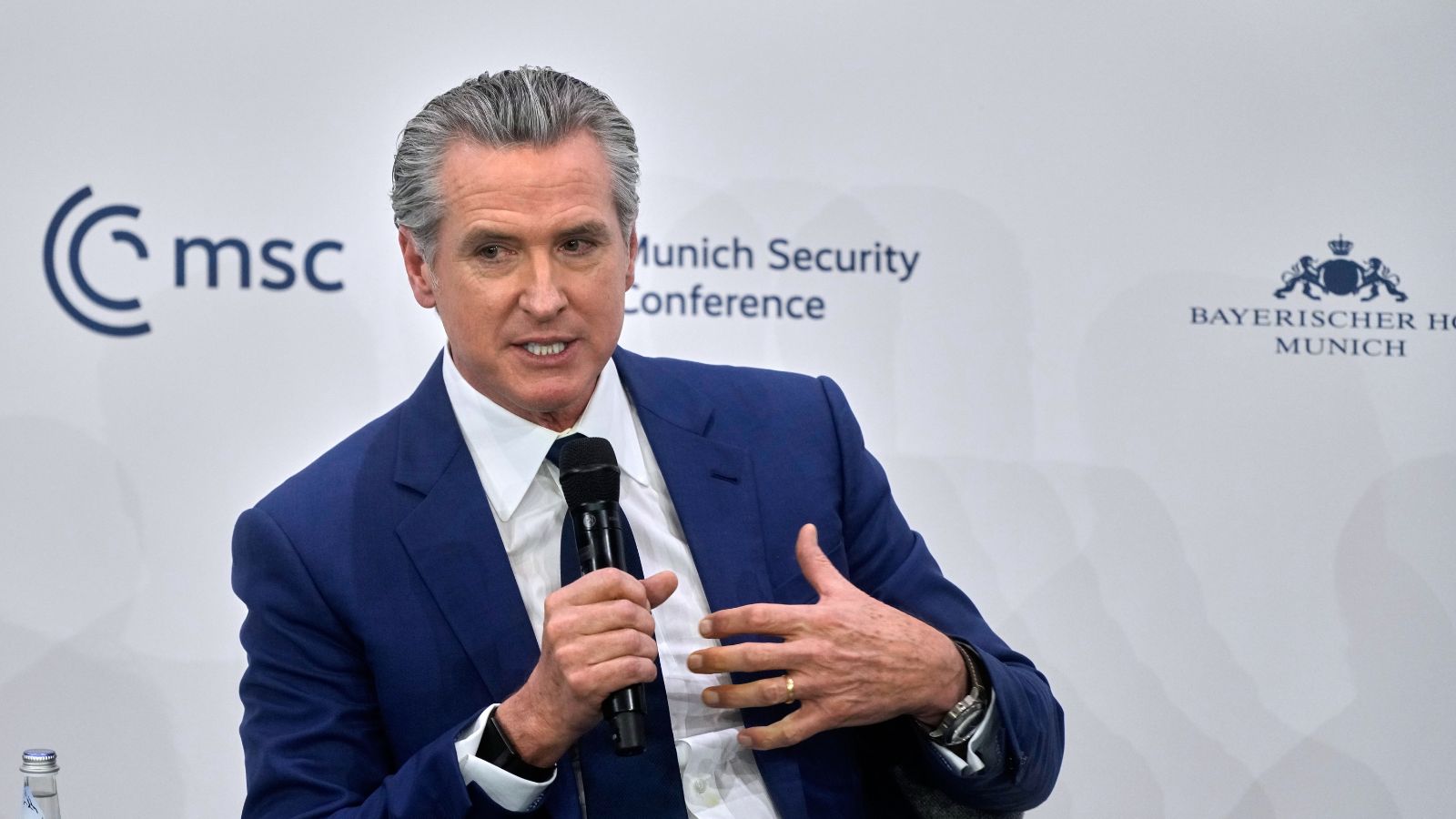
The air inside the Hotel Bayerischer Hof in Munich doesn't circulate so much as it stagnates under the weight of history. It is a thick, expensive oxygen, perfumed by espresso and the faint, metallic scent of armored motorcades idling on the Promenadeplatz. Here, at the Munich Security Conference, the world’s architects—the generals, the ministers, the billionaire agitators—gather to map out the next century. But this year, the map looked less like a blueprint and more like a Rorschach test.
I watched a high-ranking European diplomat stare into the bottom of a porcelain cup as if it held the secrets to the Baltic defense strategy. He looked tired. Not the kind of tired a night’s sleep fixes, but the bone-deep exhaustion of a man who has spent two years building a sandcastle while the tide is visibly coming in.
"They keep telling us the same thing," he whispered, nodding toward a cluster of American lawmakers nearby. "They say he is a temporary fever. A three-year glitch in the system."
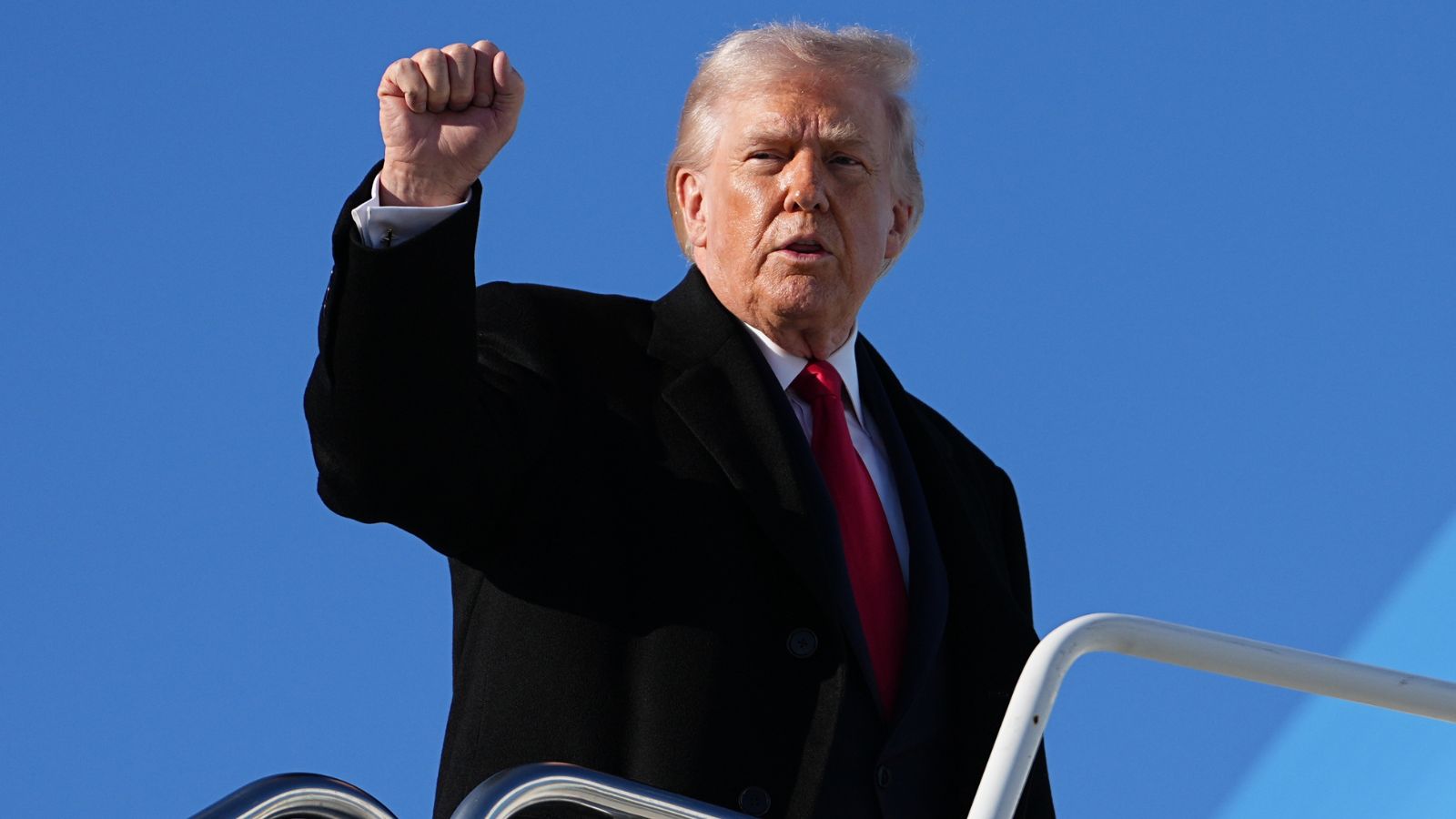
The "he," of course, is Donald Trump. And the "they" are the senior Democrats who crossed the Atlantic with a single, desperate mission: to convince a trembling Europe that the current volatility of American power is merely a transition, not a terminal diagnosis.
The sedative in the suite
Imagine you are a tenant in a coastal apartment building. For decades, the landlord has been reliable, if a bit overbearing. Suddenly, the landlord starts talking about burning the building down for the insurance money. Then, a representative from the landlord’s office knocks on your door. He smiles. He tells you the landlord is just having a mid-life crisis. He’ll be gone in three years, the rep says. Just keep paying your rent. Don't bother reinforcing the locks.
This is the metaphorical reality of the Transatlantic alliance right now.
In the gilded hallways of Munich, the American delegation—led by figures like Kamala Harris and Sheldon Whitehouse—worked the rooms with the practiced calm of hospice nurses. Their message was a sedative. They pointed to the polls, the legislative guardrails, and the sheer inertia of the American bureaucracy. They argued that the MAGA movement is a localized storm, and that by 2028, the "adults" will have the keys back for good.
But as I moved through the fringe events, where the champagne is replaced by lukewarm mineral water and the talk gets honest, the Europeans weren't buying the prescription.
"Three years is a lifetime when you share a border with a ghost," one Estonian official told me. He wasn't talking about Trump. He was talking about the vacuum Trump creates—a space where Vladimir Putin’s ambitions can breathe, expand, and eventually, solidify.
The invisible stakes of a 36-month gamble
The math seems simple to the Americans. If Trump wins in November, he has one term. Four years. Subtract the first year of setting up an administration and the final year of being a lame duck, and you are left with a 24-month window of true disruption.
To a Senator from Rhode Island, that is a blip on a career timeline.
To a manufacturer in Stuttgart or a drone operator in Kharkiv, it is an eternity.
The human element of this geopolitical chess game is often buried under talk of "strategic autonomy" and "NATO spending targets." But the reality is found in the eyes of the people who have to decide whether to invest billions in a new factory or whether to move their families further west.
Decisions are being made today based on the fear of what happens tomorrow. If Europe believes the U.S. is an unreliable partner for the next three years, they don't just wait it out. They pivot. They hedge. They look for new masters or they begin the agonizingly slow process of building their own "Fortress Europe."
The Democrats in Munich are selling the idea of "continuity," but continuity is a hard sell when the leading candidate for the opposition is openly suggesting that he would encourage aggressors to do "whatever the hell they want" to delinquent allies. That isn't a policy debate. It’s a structural failure.
The ghost at the banquet
There is a specific kind of silence that falls over a dinner table when someone mentions the end of an era. It happened on Friday night. A group of analysts were debating the "Trump-proof" legislation being wound through Congress—laws designed to prevent a President from unilaterally withdrawing from NATO.
It sounds robust on paper. It looks good in a press release.
But power isn't just about what is legal. It’s about what is believed.
If a President stands at a podium and says he won't defend a country, the treaty in the drawer is just a piece of vellum. The deterrent is dead. The "three-year" argument fails because it assumes that the world will stay in a state of suspended animation while America finds its soul.
The world doesn't wait.
While the American delegation was busy shaking hands and offering reassurances, the shadow of the 2024 election loomed over every interaction like a physical presence. It was the uninvited guest at every banquet. You could see it in the way the German Chancellor stood—slightly more rigid. You could hear it in the way the French talked about "European sovereignty," a phrase that used to be a dream and has now become a survival tactic.
The fragility of the "Temporary" label
Consider the psychological toll on an alliance when one half of it is constantly telling the other to "ignore the man behind the curtain."
The Democrats’ strategy is rooted in a belief in the resilience of American institutions. It is a noble belief. It is also, from a European perspective, terrifyingly naive. To them, the "fever" isn't a temporary infection; it’s a symptom of a permanent change in the American bloodstream.
The stakes aren't just about who sits in the Oval Office. They are about whether the concept of the "West" still exists as a coherent entity.
If the U.S. can flip-flop every four years on its most basic security commitments, then the commitment itself is worthless. You cannot build a bridge if the gravity on the other side changes every time there’s an election in Ohio.
I walked out of the hotel as the sun was setting, the cold Munich wind biting through my coat. A line of black limousines waited to whisk the leaders away to their private dinners and secure briefings.
One of the younger aides, a woman who had been taking notes for a European defense minister all day, stood near the entrance, scrolling through her phone. She looked up at the Bayerischer Hof, its windows glowing with amber light.
"They keep saying three years," she said, mostly to herself. "But I’m thirty. In three years, the world I was promised could be gone. And they’re talking about it like it’s a long weekend."
The tragedy of the Munich conference this year wasn't a lack of communication. It was the realization that the Americans and the Europeans are now speaking different languages of time. One side sees a temporary political hurdle. The other sees a cliff.
And as the motorcades began to pull away, disappearing into the gray Bavarian mist, it became clear that no amount of reassurance can fix a broken trust. You can tell a person the fire is temporary, but that doesn't stop the house from burning down while you’re waiting for the rain.
The lights in the ballroom began to dim, leaving the diplomats to find their way out in the shadows of a future they no longer control.