The wood-on-wood thwack of a beanbag hitting a cornhole board is a sound of pure Americana. It is the sound of summer barbecues, of lighthearted competition, of a game defined by its accessibility. Anyone can toss a bag. But for Sean Meisner, that sound represented a miracle of physics and willpower.
Meisner is a quadruple amputee. He lacks the hands that grip the canvas and the legs that anchor the stance. Yet, on the professional cornhole circuit, he became a sensation. He didn't just play; he competed at a level that defied medical expectations. He used his residual limbs to flick the bags with a precision that seasoned athletes envied. He was a symbol of the "no excuses" mantra, a man who had literally been carved down by life and chose to build himself back up into a marksman.
Then, the wooden boards were replaced by the cold linoleum of a police station. The cheers of the crowd were silenced by the clicking of handcuffs.
The story of Sean Meisner is no longer about the triumph of the human spirit. It is a descent into a dark, complex reality that challenges our perceptions of disability, violence, and the unseen fractures in a life lived under a microscope.
The Weight of the Bag
To understand the shockwaves this case sent through the sports world, you have to understand the sheer physical demand of what Meisner did. Imagine trying to balance your entire center of gravity while launching a sixteen-ounce bag fifteen feet with pinpoint accuracy—without fingers to guide the release.
He had to master a kinetic chain that most of us take for granted. Every toss was a calculated risk. It required a level of core strength and mental fortitude that made him a hero in the eyes of his peers. People looked at him and saw the ultimate underdog. They saw a man who had conquered his own body.
But bodies are only half the battle.
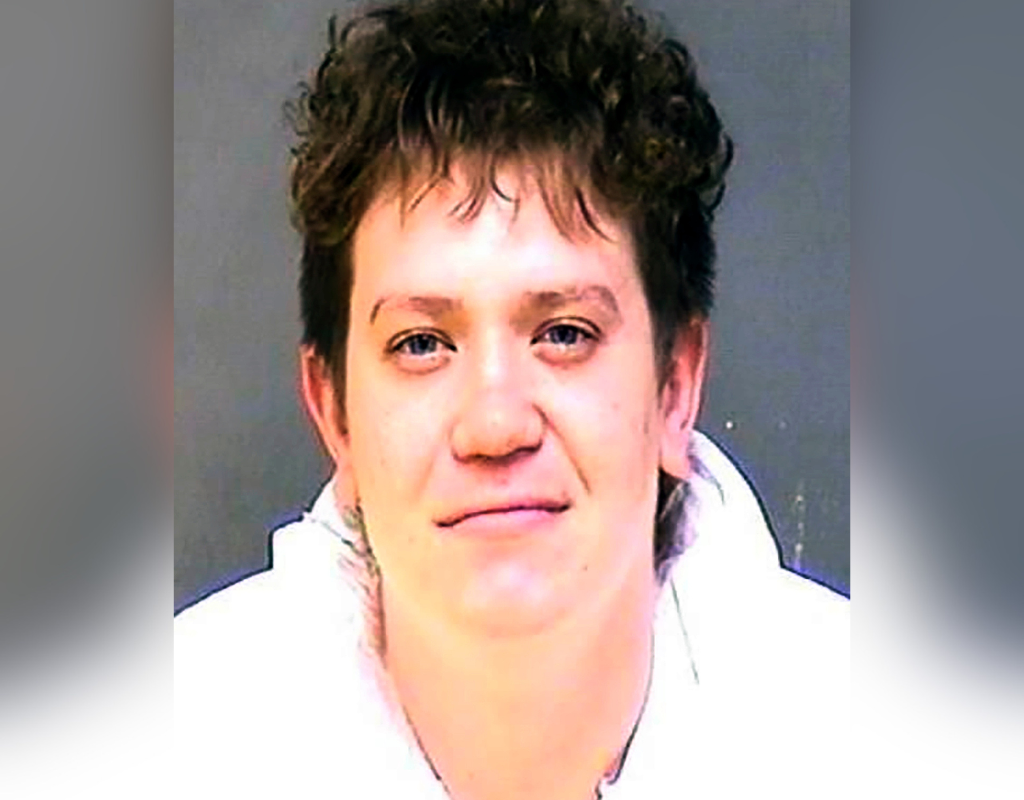
In late 2024, the narrative shifted from the podium to a crime scene. Meisner was arrested and charged in connection with the death of a 51-year-old woman in Maryland. The details provided by investigators are jarring. They describe a domestic dispute that turned fatal, an outcome that seems fundamentally at odds with the image of the resilient athlete.
The Invisible Stakes of a Public Life
When we see someone like Meisner, we often fall into the trap of "inspiration porn." We want them to be perfect. We want their struggle to be a neat, linear path from tragedy to victory. We forget that the same fire that allows a person to overcome a devastating physical loss can also burn in ways that are destructive.
Consider a hypothetical athlete, let’s call him Elias. Elias lost his sight in his twenties and became a world-class marathoner. The world sees the medals. They don’t see the exhaustion, the mounting pressure to remain a "symbol," or the isolation that comes when the cameras turn off. When the public demands you be a miracle every day, there is very little room left to be a flawed, hurting human being.
Meisner lived in that gap. He was a professional in a niche sport that requires immense focus. But behind the scenes, the pressures of his personal life were mounting. According to court documents, the victim, identified as his girlfriend, was found with traumatic injuries. The disparity between the "hero" on the cornhole court and the "defendant" in the courtroom creates a cognitive dissonance that is hard to stomach.
How does a man who needs assistance with the basic mechanics of daily life become the primary suspect in a violent homicide? This is the question that has left the public—and the legal community—reeling.
The Logistics of the Unthinkable
The legal proceedings have touched on the logistical realities of Meisner's condition. In a standard murder trial, the prosecution must prove "means, motive, and opportunity." When the defendant is a quadruple amputee, the "means" become a point of intense scrutiny.
The defense will likely point to his physical limitations as a barrier to the alleged act. However, the prosecution points to the very thing that made him a star: his incredible adaptation. If he could manipulate a cornhole bag with professional-grade velocity and accuracy, what else was he capable of?
This is the grim irony of the case. The very skills that brought him fame are now being cited as evidence of his capacity for harm.
The human body is an adaptable machine. We have seen people learn to drive with their feet, paint with their mouths, and, in Meisner’s case, dominate a sport with their limbs. But that adaptability doesn't discriminate between good and evil. It is simply a tool.
The Shattered Mirror
The community around professional cornhole is tight-knit. It’s a subculture where everyone knows everyone’s story. For them, this isn't just a news headline; it's a betrayal of the culture of mutual support they built.
One of his fellow players, speaking anonymously, described the atmosphere as "numb." They remember him as the guy who never complained about the heat or the long hours of a tournament. They saw the grit. Now, they are forced to look at the same man and see a shadow they didn't know existed.
It forces a reflection on how we consume stories of "triumph." We tend to strip away the messy parts of a person's humanity to make them fit a headline. We wanted Sean Meisner to be the man who beat the odds. We didn't want to see the man who might be struggling with anger, or trauma, or the mundane, grinding difficulties of a life that looks very different when the stadium lights go down.
The Complexity of the Truth
The trial is ongoing, and in the eyes of the law, Meisner remains innocent until proven guilty. But the court of public opinion moves faster. It is a harsh, unforgiving place that rarely allows for nuance.
The truth is rarely a straight line. It is more like the flight of a beanbag—subject to wind, arc, and the force of the release. Sometimes it lands exactly where it’s supposed to. Sometimes it slides off the back of the board into the dirt.
This story isn't just about a crime. It is about the danger of the pedestals we build for others. It is about the fact that a person can be both an inspiration and a cautionary tale at the exact same time. We are waiting for the final verdict, but the damage to the narrative is already done.
The miracle of the man who could throw without hands has been eclipsed by the tragedy of a life lost. We are left looking at the empty cornhole boards, the bags scattered on the ground, and a question that no amount of sportsmanship can answer.
Violence is not a disability. It is a choice. And as the gavel prepares to fall, the world is forced to recognize that the most difficult obstacles aren't the ones we can see. They are the ones we carry inside, deep in the parts of ourselves that no prosthetic can reach and no cheering crowd can heal.
The stadium is quiet now. The bags are packed away. The only thing left is the cold, hard weight of the facts, and a story that refused to have a happy ending.
Would you like me to research the current status of the legal proceedings or the specific forensic evidence being presented in this case?