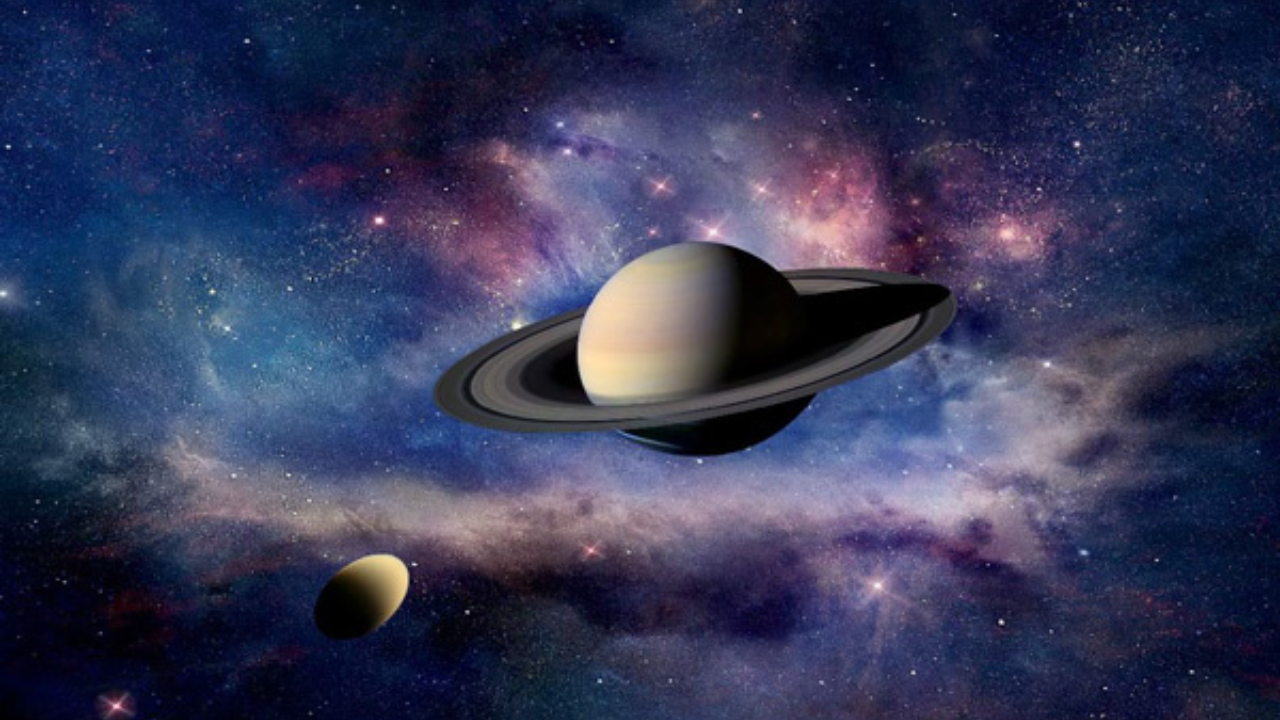
Planetary analogs typically fail under rigorous comparative analysis due to fundamental compositional divergences. Saturn's largest moon, Titan, presents an apparent exception that demands precise structural deconstruction. While Earth operates on a hydrologic cycle driven by polar-to-equator thermal gradients and $\text{H}_2\text{O}$ phase changes, Titan substitutes water ice for bedrock and liquid hydrocarbons for water. This operational shift alters fluid dynamics, thermodynamic efficiency, and geomorphological shaping processes across the moon's surface.
The Thermodynamic and Chemical Architecture
Understanding Titan requires separating surface morphology from underlying chemistry. The moon possesses a dense, nitrogen-dominated atmosphere with a surface pressure approximately 1.45 times that of Earth. This high-density gas column shifts the mechanics of atmospheric circulation and meteorological phenomena.
Methane ($\text{CH}_4$) and ethane ($\text{C}_2\text{H}_6$) fulfill the ecological and physical role that water occupies on Earth. At surface temperatures hovering near $94\text{ K}$ (-179°C), methane exists simultaneously in gas, liquid, and solid phases. This thermodynamic tripoint anchors a volatile transport cycle characterized by distinct physical phases:
- Atmospheric Reservoirs: Gaseous methane acts as a greenhouse agent, trapping thermal radiation to offset the severe solar deficit experienced at Saturn's orbital distance of roughly 9.5 astronomical units.
- Condensation Nuclei and Aerosols: Photochemical reactions in the upper atmosphere, driven by solar ultraviolet radiation and energetic electrons from Saturn's magnetosphere, break down methane and molecular nitrogen. This generates complex organic tholins that settle downward, forming a persistent atmospheric haze layer.
- Surface Liquid Bodies: Polar depressions contain stable expanses of liquid hydrocarbons, predominantly methane mixed with dissolved nitrogen and minor fractions of ethane. Kraken Mare, Ligeia Mare, and Ontario Lacus function as terminal basins governed by evaporation and subsurface seepage rates.
The efficiency of this hydrocarbon cycle depends on continuous replenishment. Because solar photolysis destroys atmospheric methane over geological timescales, Titan must outgas interior reserves through cryovolcanism or tectonic venting to maintain its current atmospheric density.
Precipitation Physics and Meteorological Mechanics
Titan experiences distinct meteorological events, but the fluid properties dictate a physical regime entirely distinct from terrestrial rainfall. Liquid methane droplets form within tropospheric clouds driven by latent heat release.
The physical parameters of methane rain contrast sharply with water rain on Earth:
- Lower Gravitational Acceleration: Titan's surface gravity is roughly $1.35\text{ m/s}^2$, approximately 14% of Earth's gravity.
- Increased Atmospheric Density: The high molecular weight of the nitrogen-methane gas mixture increases buoyancy forces on falling droplets.
- Viscosity and Surface Tension: Liquid hydrocarbons exhibit lower surface tension and different dynamic viscosity profiles compared to water, altering drop breakup mechanics and terminal velocities.
These variables combine to produce large-diameter raindrops that fall at significantly reduced terminal velocities. Calculations indicate that methane droplets descend much more slowly than terrestrial raindrops, while reaching larger stable droplet diameters before aerodynamic shear forces induce fragmentation.
Precipitation is not uniformly distributed across the globe. Observational data gathered by planetary missions reveal an asymmetric seasonal distribution. Titan's orbital eccentricity and the 29.5-year Saturnian orbit create long-duration seasons. Each season lasts roughly 7.5 Earth years. During the northern summer, intense insolation drives convective cloud formation at high northern latitudes, triggering intense methane storms that reshape local topography through sudden flash flooding.
Surface Erosion, Transport, and Fluvial Morphologies
Fluvial networks carved into the water-ice bedrock of Titan demonstrate that liquid hydrocarbons possess sufficient kinetic energy to perform mechanical work. Drainage densities and valley geometries observed by radar imaging resemble terrestrial river networks, indicating sustained liquid flow over extended intervals.
The erosion process relies on mechanical abrasion and sapping rather than chemical dissolution. Water ice acts as a rigid, rock-like substrate at $94\text{ K}$, possessing compressive strengths comparable to silicate rock under specific thermal conditions. As liquid methane runs off elevated terrain during seasonal storms, it entrains suspended solid organic sediments—primarily fine-grained tholins—and transports them toward lowland basins.
River channels terminate in alluvial fans and delta structures at the margins of northern hydrocarbon seas. The lack of significant tidal forces, due to Saturn's primary gravitational dominance outweighing the eccentricity effects on the lakes, results in wave-dominated or delta-dominated shoreline morphologies rather than extensive tidal estuaries. Wind-driven surface waves, though constrained by the low density and viscosity of liquid hydrocarbons, generate moderate fetch-limited wave action capable of eroding coastal bluffs through hydraulic action and mechanical battering.
Seasonal Shifts and Global Mass Transport
The seasonal cycle governs the global redistribution of volatiles between the polar reservoirs and the equatorial dune fields. Unlike Earth, where oceans cover most of the surface and facilitate rapid thermal buffering, Titan features distinct geographic provinces that store and release volatiles at differing rates.
During a hemisphere's summer, elevated temperatures increase the saturation vapor pressure of methane over the polar seas, accelerating evaporation rates. Atmospheric circulation cells transport these volatile gases toward the winter pole, where lower temperatures induce condensation and subsequent precipitation. This pole-to-pole atmospheric conveyor belt drives an annual mass balance cycle.
Equatorial regions present a contrasting morphology characterized by vast expanses of longitudinal dunes composed of solid organic particles. These areas experience arid conditions due to limited precipitation and high evaporation capacity. The dunes, measuring hundreds of kilometers in length, align with zonal wind patterns that transport fine organic grains produced in the upper atmosphere. The interaction between atmospheric winds, surface roughness, and sediment supply determines dune migration rates, which remain constrained by the low momentum transfer from Titan's thin surface winds despite the high atmospheric density.
Strategic Observational Outlook
Future exploration vectors must transition from orbital remote sensing to in-situ surface sampling and autonomous mobility. The primary analytical bottleneck involves quantifying the subsurface hydrology and measuring the exact chemical composition of the lakebed sediments.
The upcoming deployment of specialized rotorcraft architectures will enable vertical profiling of the atmospheric boundary layer, direct measurement of methane replenishment rates, and high-resolution mapping of fluvial entry points. By measuring isotopic ratios of carbon and nitrogen within the atmosphere and surface reservoirs, researchers can constrain models of planetary accretion and volatile outgassing history. Resolving these variables will determine whether Titan's hydrocarbon cycle operates in a steady-state equilibrium or represents a transient epoch in the broader evolution of outer solar system satellites.