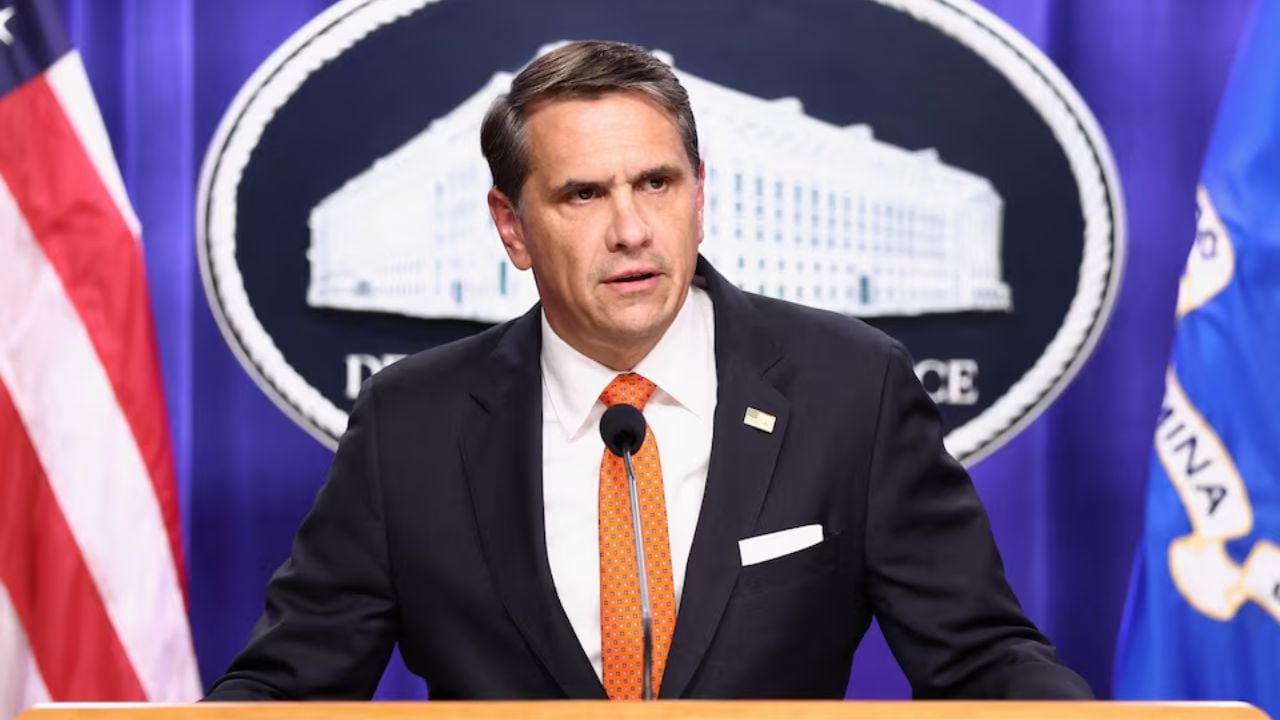
Acting Attorney General Todd Blanche has signaled a sharp departure from his predecessors by confirming that the Department of Justice (DOJ) provided direct legal guidance to the White House regarding Iran-related policy while simultaneously launching an aggressive internal hunt for unauthorized disclosures. This dual-track strategy aims to re-establish the DOJ as a primary advisor to the executive branch while cracking down on the "culture of leaks" that has plagued the federal government for years. By openly discussing the department's role in shaping foreign policy legalities, Blanche is effectively signaling a new era of transparency regarding the executive-judicial relationship.
The Shift Toward Executive Consultation
For years, the distance between the Oval Office and Pennsylvania Avenue has been a subject of intense scrutiny. Blanche’s recent admission that the DOJ proactively advised the White House on Iran indicates a narrowing of that gap. This isn't just about routine paperwork. It represents a strategic alignment where the DOJ acts as a legal shield and architect for high-stakes foreign policy.
The specifics of the Iran advice likely involve the navigation of sanctions, the legality of various "maximum pressure" tactics, and the thresholds for executive action without immediate Congressional approval. When the DOJ weighs in on these matters, it provides the President with a layer of legal immunity that is difficult to pierce. If the White House can point to a formal DOJ opinion, they can argue they acted in good faith, even if the policy later faces a court challenge.
However, this level of involvement carries significant risks. Critics argue that when the DOJ becomes an active consultant on policy, it loses its ability to serve as an independent watchdog. The line between legal advisor and political enabler is thin. Blanche seems to be betting that by bringing these consultations into the light, he can prove the department's utility without sacrificing its integrity.
Hunting the Source of the Leaks
While Blanche is opening doors for the White House, he is slamming them shut for whistleblowers and unauthorized sources within his own ranks. The announcement of a formal probe into leaks is a clear shot across the bow for career officials who might be inclined to share classified or sensitive information with the press.
Leaks regarding Iran are particularly sensitive because they often involve intelligence methods and sources. When a memo or a conversation about Tehran hits the front page of a major newspaper, it can jeopardize ongoing operations or diplomatic backchannels. Blanche’s "vow" to investigate suggests that the DOJ will use every tool at its disposal—from auditing digital footprints to polygraphing high-level staff—to find the culprits.
This crackdown creates a climate of tension within the department. Career prosecutors and investigators often view themselves as the last line of defense against political overreach. If they feel they cannot voice concerns internally without being labeled a leaker, the internal checks and balances of the DOJ could erode.
The Iran Strategy as a Legal Testing Ground
Iran remains one of the most complex legal puzzles in American foreign policy. Between the Joint Comprehensive Plan of Action (JCPOA) and the subsequent withdrawal from it, the legal framework is a mess of executive orders and statutory requirements.
Blanche is using the DOJ to clarify what the executive branch can and cannot do. For example, can the President unilaterally designate certain foreign entities as terrorist organizations without a specific finding of fact from an independent body? The DOJ’s advice likely touched on these "gray area" powers. By establishing a firm legal foundation for Iran policy, the administration hopes to avoid the kind of litigation that stalled previous foreign policy initiatives.
The Mechanics of Internal Investigations
How does a probe like this actually work? It usually starts with the Office of Professional Responsibility (OPR) or the Inspector General. They look at who had access to specific documents. They track who was in certain meetings. In the modern era, "access" is a digital trail. Every time a file is opened, every time an email is sent, a record is created.
Blanche’s team will likely focus on "mosaic leaks," where small bits of information from different sources are pieced together by journalists to reveal a larger picture. This makes the investigation harder because there isn't just one "smoking gun" document. It requires a deep dive into the communications of dozens of officials.
A Department in Transition
Todd Blanche is not a career DOJ official in the traditional sense. His background as a high-profile defense attorney gives him a unique perspective on the department’s power. He knows exactly how the DOJ can squeeze a target. Now that he is the one holding the lever, he is applying that same pressure internally.
The message to the White House is clear: We are your partners. The message to the DOJ staff is equally clear: Fall in line or face the consequences. This is a high-stakes gambit. If the investigations fail to produce results, Blanche looks weak. If they are too aggressive, he risks a revolt from the career staff who keep the department running day-to-day.
The Weight of Precedent
Every Attorney General talks about stopping leaks. Very few succeed. Information is the currency of Washington, D.C., and as long as there are policy disagreements, there will be people willing to talk to the media. What makes Blanche's approach different is the explicit link between policy advice and the leak probe.
He is essentially saying that for the DOJ to provide effective advice to the President, it must be able to keep a secret. This framing turns a personnel issue into a national security necessity. It is a powerful argument, but one that will be tested by the first major leak that inevitably follows his announcement.
The department's credibility is currently on the line. By moving the DOJ closer to the White House on matters of national security and foreign policy, Blanche is reshaping the department's role for the foreseeable future. The success of this strategy depends entirely on whether he can maintain the department's reputation for impartiality while serving as a key player in the administration’s most sensitive operations.
The investigation into the leaks will be the first real test of his authority. If he can identify and punish a high-level source, he will have established a level of control that his predecessors lacked. If not, the DOJ will continue to be a sieve, and the White House will look elsewhere for legal counsel they can trust.
Aggressive enforcement of internal secrecy usually results in a more cautious bureaucracy. People stop taking notes. They stop sending emails. They stop having the very conversations that lead to sound legal advice. The irony is that in his quest to make the DOJ a better advisor to the White House, Blanche might accidentally stifle the internal debate that makes that advice valuable in the first place.