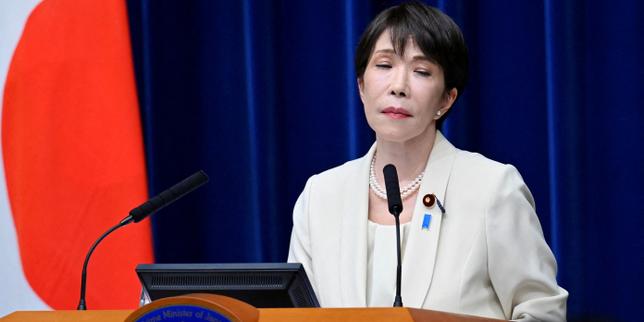
The standard narrative out of Tokyo regarding the Kuril Islands is pure theater. When political figures throw tantrums over Vladimir Putin visiting the disputed chain, the media eats it up. They frame it as a direct assault on Japanese sovereignty, a diplomatic outrage, and a non-negotiable grievance that defines modern Tokyo-Moscow relations.
It is a comfortable lie.
I have watched diplomats waste decades chasing an imaginary ghost over these volcanic rocks, treating a frozen historical technicality as if it were an existential economic lifeline. It is not. It is a domestic political prop. Every time a leader needs a surge in nationalistic approval ratings, they drag out the Kuril dispute, feign righteous fury, and pretend a breakthrough is just around the corner if only Russia would see reason.
Russia does not care. And more importantly, the economic future of East Asia has already left this territorial squabble in the dust.
The Geography of Illusion
Let us look at the actual mechanics of this standoff. Tokyo insists on using the term Northern Territories to describe Etorofu, Kunashiri, Shikotan, and the Habomai islets. Moscow calls them the Southern Kurils. The administrative reality is that Russia has held undisputed physical control since the closing weeks of the Second World War.
Possession is nine-tenths of the law, but in geopolitics, it is ten-tenths.
The lazy consensus in international relations circles suggests that if Tokyo just maintains economic pressure, keeps signing sanctions packages, and issues enough formal protests, Moscow will eventually hand back sovereignty over a strategic military choke point guarding the Sea of Okhotsk. That is a fantasy. For the Kremlin, these islands represent an unsinkable aircraft carrier and a nuclear submarine bastion. Giving them up would be military suicide for Russia's Pacific Fleet.
Expecting Moscow to trade territory for a few joint fishing ventures or stalled peace treaties ignores the hard math of national security. Yet, mainstream commentary keeps pushing the narrative that a diplomatic grand bargain is perpetually within reach.
The Economic Red Herring
Focusing on the Kurils acts as a smokescreen for missed opportunities elsewhere. While Tokyo burns political capital arguing over islands with declining populations and limited infrastructure, the broader regional architecture of energy, trade, and security is shifting rapidly.
I have seen corporate strategies paralyzed because executives thought geopolitical tensions in the North Pacific would suddenly melt away into bilateral cooperation. They waited for a peace treaty that was never coming. Meanwhile, actual markets moved elsewhere.
Russia's primary economic partner in the region is Beijing, not Tokyo. The idea that Japan can peel Moscow away from China by dangling investment dollars over a few disputed rocks misunderstands the depth of the Sino-Russian alignment. It is a strategy born of outdated Cold War thinking, kept alive because admitting defeat on the Kurils means facing uncomfortable domestic political questions about where Japan's real security priorities ought to lie.
Dismantling the Sovereignty Trap
Let us address the core legalistic argument: the San Francisco Peace Treaty and the 1956 Joint Declaration. Tokyo argues that the Soviet Union renounced claim to the Kuril chain, and that these specific southern islands were never part of that geographic definition. Moscow counters with wartime agreements and the simple reality of unconditional surrender.
Here is what nobody in the mainstream press wants to admit. Legal arguments only matter if you have the military or economic leverage to enforce them. Japan does not have the power to seize the islands, and economic coercion has zero impact on a nuclear-armed state insulated by vast resource wealth and alternative Asian markets.
Clinging to a legalistic purity test while ignoring the balance of power is not principled diplomacy. It is diplomatic stagnation.
What Actually Matters Now
If you want to understand how Japan secures its maritime approaches and energy security, look at regional alliances, naval modernization, and supply chain resilience in the Indo-Pacific. Look at semiconductor partnerships with allies. Look at active deterrence.
Obsessing over a cluster of islands administered by Moscow for nearly eighty years drains resources that should be spent on confronting contemporary security threats in the East China Sea and beyond. Every headline screaming about an unacceptable visit by a foreign leader to the Kurils is a distraction from the real game.
Stop waiting for an apology or a land transfer that will never happen. The map is drawn.
Deal with it.