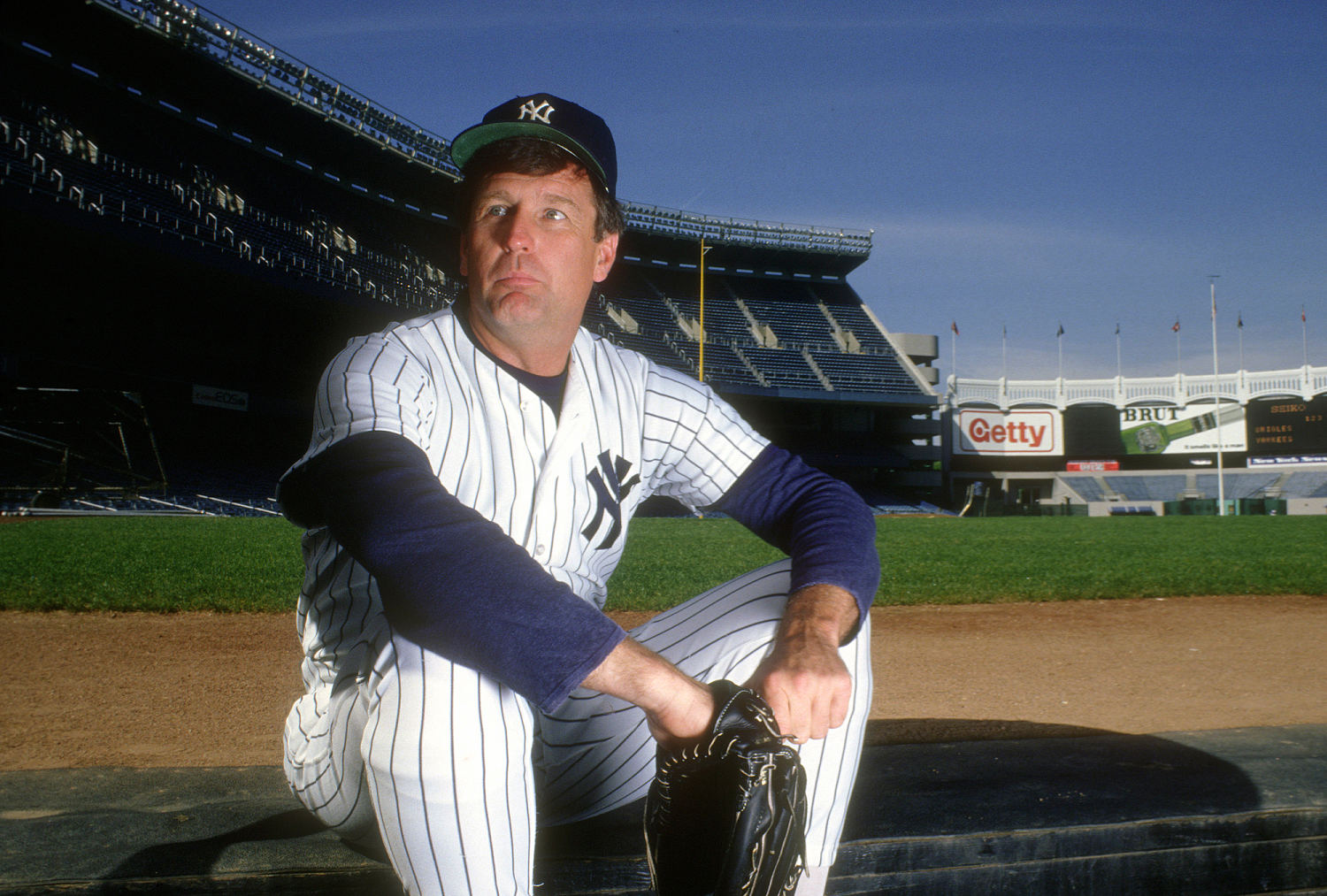
We mourn the man and myth of Tommy John, but we refuse to look in the mirror at what his name actually represents. When the iconic left-hander passed away at eighty-three, the obituaries flooded in with predictable reverence. They praised his durability, his longevity, and above all, the medical miracle that bears his name.
That narrative is complete garbage. If you enjoyed this piece, you should check out: this related article.
The procedure that saved Tommy John in nineteen seventy-four did not revolutionize baseball. It created an industrial meat grinder. It turned human elbows into disposable commodities and turned modern pitching development into a reckless race to the velocity bottom.
Strip away the sentimentality, and the truth is brutal. Tommy John surgery is not a badge of honor. It is a symptom of a catastrophic failure in how we teach, train, and protect throwers from Little League to the major leagues. For another angle on this event, see the recent coverage from NBC Sports.
The Myth of the Miracle Repair
Let us rewind to the origin story. Frank Jobe took a flyer on a torn ulnar collateral ligament in a thirty-one-year-old pitcher whose arm was dead on arrival. It was a Hail Mary. If it failed, John’s career was over anyway. It worked. John came back and won another one hundred and sixty-four games.
The media swallowed the fairy tale whole. Suddenly, a torn ligament was no longer a career death sentence. It was a minor inconvenience with a built-in repair kit.
That single assumption broke the sport.
Before the procedure existed, pitchers paced themselves. They understood their anatomy was finite. They learned to pitch with nuance, location, and changing speeds because they knew that once the tissue went, the game was over. The introduction of Dr. Jobe’s intervention removed the fear of God from the equation.
The Velocity Trap and the Biology of Shredded Arms
Modern analytics departments and pitching labs worship at the altar of radar gun metrics. Spin rate, vertical break, and ninety-nine miles per hour velocity rule the day. Organizations demand max-effort throws on every single pitch, from the first inning to the last.
Why do they risk it? Because the medical insurance policy of Tommy John surgery sits waiting in the bullpen.
Front offices treat the ulnar collateral ligament like a replaceable fan belt on a sports car. Throw it until it snaps, send the kid to Dr. Neal ElAttrache for an eighteen-month vacation, and install a brand-new tendon harvested from a forearm or a cadaver. Sometimes, the new tendon is supposedly thicker and stronger than the original.
Biology does not work that way.
A biological joint subjected to repeated micro-trauma at superhuman torque points will fail again. The data proves the carnage. High schoolers are getting their arms reconstructed before they can legally vote. College pitchers are hitting the operating table before they even sign a professional contract. And at the major league level, over a third of all active pitchers are walking around with a synthetic graft holding their elbow together.
If a safety feature in automobiles led to drivers intentionally crashing their cars at eighty miles per hour because they knew the airbags would catch them, we would ban the feature. Yet baseball celebrates a surgery that encourages pitchers to abuse their arms until structural collapse becomes routine.
The Anatomy of a Broken Development Pipeline
The institutional failure starts long before a player reaches a professional mound.
Travel ball coaches and showcase circuits treat teenage arms like lottery tickets. Pitchers throw year-round, chasing radar gun validation for college scouts. They throw curveballs before their growth plates fuse. They throw high-velocity bullpens in November with zero rest.
When a sixteen-year-old complains of elbow soreness, the collective response from parents and coaches is terrifyingly nonchalant. They do not rest the arm. They schedule an MRI and pencil in the reconstruction date as if it were a routine dental cleaning.
This is not progress. This is systemic negligence disguised as modern medicine.
We have optimized the repair while completely destroying the prevention. Pitching coaches talk ad nauseam about arm care routines, resistance bands, and weighted ball programs. Yet pitchers continue to snap in half at historic rates.
The Dirty Little Secret of Graft Longevity
Let us talk about what happens after the scars heal.
The mainstream sports media loves a triumphant return story. A pitcher misses a year and a half, rehabs religiously, and comes back throwing harder than before. That is the highlight reel.
What about the graveyard of careers that never quite recover?
Imagine a scenario where a twenty-two-year-old prospect undergoes his first reconstruction. He misses eighteen months of vital developmental reps. When he returns, his command is erratic. His slider lacks its former bite because the mechanics required to protect the new joint alter his natural release point. Within three years, he experiences a revision procedure—the dreaded second Tommy John. By twenty-seven, he is out of affiliated ball, left with a scarred elbow that will ache every time it rains for the rest of his life.
The success rate of primary reconstructions is high, but the success rate of secondary and tertiary procedures plummets. More importantly, the psychological toll of chronic elbow instability changes a competitor. They stop trusting their arm. They nibble at corners. They lose the fearless aggression that made them elite in the first place.
What Actually Needs to Fix the Game
If baseball wants to stop writing obituaries for healthy arms, it has to stop treating surgery as a standard development milestone.
First, pitch counts in youth and amateur leagues must be regulated with extreme prejudice. Organizations that allow teenagers to throw more than one hundred competitive pitches a week should face tournament bans.
Second, major league organizations must penalize max-effort velocity culture. When front offices stop rewarding pitchers who empty the tank on every single delivery and start paying for deep-game durability and pitch efficiency, behavior will change overnight.
Third, we need to stop romanticizing the scar. Wearing a signature four-inch vertical slash on the inner elbow should not be a rite of passage. It should be recognized as a failure of management, coaching, and biomechanical design.
Tommy John was a pioneer who prolonged his own career through sheer grit and a revolutionary medical breakthrough. But his legacy has been hijacked by an industry too lazy to fix its own training methods and too addicted to velocity to care about the collateral damage.
The next time a phenom walks off the mound holding his elbow in agony, do not blame bad luck. Blame a system that planned for his injury before he threw his first professional pitch.