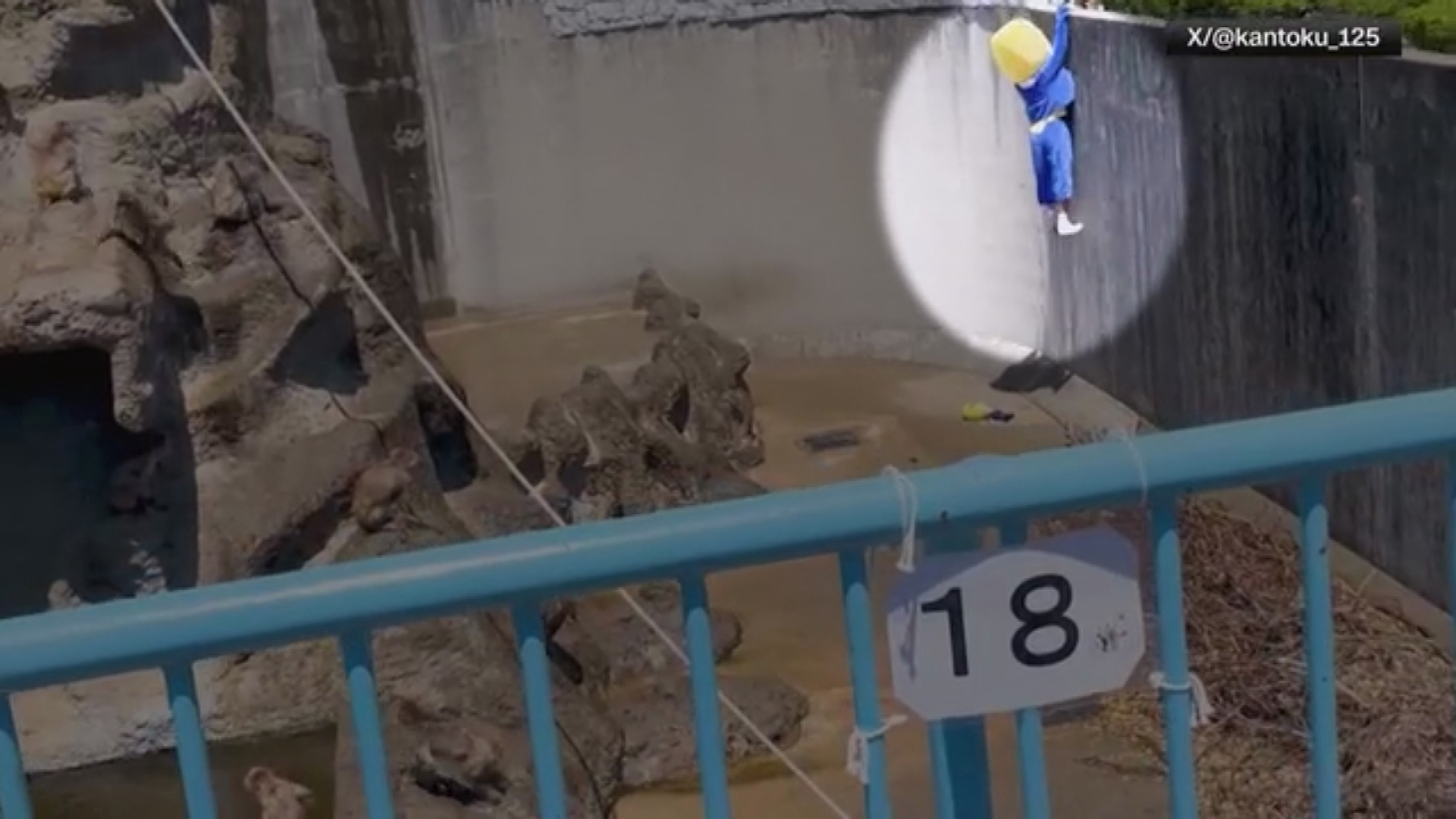
Two American tourists get arrested in Japan after a bizarre stunt involving a monkey enclosure. The media immediately rolls out the standard, lazy playbook. The narrative is always the same: generic outrage, hand-wringing over "tourist behavior," and a collective sigh about the decline of public decency.
That narrative is completely wrong. It misses the systemic reality of modern travel. You might also find this similar story useful: The Drone War Illusion Why Moscow and Danube Strikes are Military Theater.
The mainstream press loves to view these incidents through a narrow, moralistic lens. They treat every viral zoo break-in or defaced monument as an isolated case of individual stupidity. But blaming the individual is a cheap cop-out. It protects the multi-billion-dollar travel and entertainment industries from facing a much harsher truth.
Viral tourism is an economic engine designed to produce chaos. The infrastructure itself is broken. When a system relies on creating viral, hyper-accessible moments to drive foot traffic, it cannot act surprised when the barrier between spectator and spectacle collapses. As extensively documented in recent reports by Reuters, the results are significant.
The Myth of the Isolated Incident
Every time an influencer steps over a barrier or a traveler handles wildlife for a selfie, the industry feigns shock. This is pure theater.
I have spent over a decade analyzing operational risk and crowd dynamics for major hospitality groups. If you design an environment to maximize social media engagement, you are actively engineering security failures.
Look at the mechanics of viral attractions. The goal of modern destination marketing is no longer just education or conservation. The goal is friction-free exposure. Content algorithms reward proximity, absurdity, and exclusivity.
When a destination goes viral, it draws a massive influx of low-intent visitors. These are people who are not there to appreciate the culture or respect the local ecosystem. They are there to replicate a digital image.
[Traditional Tourism] -> Education -> High Respect -> Low Risk
[Viral Tourism]       -> Replication -> Zero Context  -> High Risk
By pushing for maximum throughput and infinite digital shares, destinations implicitly signal that the rules are flexible. The actual layout of many modern wildlife parks exacerbates this. Low fences and open-air enclosures look great on camera. They remove visual barriers for the visitor. Unfortunately, they also remove physical barriers for bad actors.
The Economics of Inadequate Security
Why do these security breaches keep happening? Because robust physical security cuts into profit margins.
It is far cheaper for an organization to post a polite sign or print a warning on a ticket than it is to employ trained, active security personnel or install advanced biometric monitoring. The "lazy consensus" argues that we just need better public education campaigns for travelers. That is a fantasy. Education does not stop a person chasing clout. Physical infrastructure does.
Consider the reality of crowd management. Most tourist hubs operate on a thin operational line. They scale up capacity without scaling up oversight.
- The Signage Fallacy: Assuming a "Do Not Enter" sign in three languages will deter someone looking for a million views.
- The Liability Shield: Using basic security measures not to prevent incidents, but to avoid lawsuits after the incident occurs.
- The Underpaid Staff Factor: Relying on low-wage hospitality staff or volunteers to police aggressive, entitled crowds.
When a breach happens, the institution uses the "bad apple" defense. They blame the specific tourists, issue a press release about their commitment to safety, and keep pocketing the increased revenue generated by the viral fame. It is a highly profitable cycle of outrage and monetization.
Dismantling the Premise of "Better Behavior"
If you look at public forums or read the comments on these news stories, people always ask the same flawed questions.
Why can't people just respect local laws when traveling?
This question assumes that human behavior exists in a vacuum. It ignores the psychological impact of the "tourism bubble." When people travel, they experience a sense of anonymity and detachment from reality. Psychologists call this situational disinhibition.
The industry counts on this disinhibition to get people to spend money on things they never would buy at home. You cannot stoke that exact mindset to boost gift shop sales and then expect visitors to instantly switch back to perfectly rational, rule-abiding citizens the moment they stand near an animal enclosure.
Should countries ban certain types of tourists?
This is a logistical nightmare and an economic impossibility. Nations dependent on travel revenue will never implement meaningful entry restrictions based on predicted behavior.
The solution is not vetting the character of every person boarding a flight. The solution is designing environments that assume every single visitor is completely reckless.
The Danger of the Frictionless Experience
The travel sector has spent twenty years trying to remove "friction" from the user experience. You can book a flight in two clicks, check into a hotel via an app, and walk straight into a cultural site without ever interacting with a human being.
When you remove all friction from an experience, you also remove all gravitas.
Imagine a scenario where an ancient temple or a sensitive wildlife habitat requires a mandatory, thirty-minute safety briefing and a physical check before entry. Total attendance would plummet. Revenue would drop. But security breaches would drop to zero.
The industry will never adopt this approach because they prioritize volume over safety. They have chosen to accept a baseline level of chaos, property damage, and animal stress as a acceptable cost of doing business.
The Real Fix That Nobody Wants to Implement
Stop asking travelers to be better people. They won't listen. Stop asking social media platforms to police behavior. They profit from the footage.
If an institution genuinely wants to protect its assets, its animals, or its cultural heritage, it must shift from a model of passive hospitality to active containment.
- Hard Physical Barriers: If a human being can jump over a wall in a costume, your enclosure is poorly designed. Period.
- Financial Disincentives for Venues: Hold the destination financially liable for security failures. If a facility faces massive fines every time a visitor breaches a perimeter, they will find the budget for real security guards overnight.
- Dynamic Crowd Throttling: Tie entry caps directly to the number of active safety personnel on duty. If you only have two guards on the floor, you only let fifty people in the building.
The current setup is a farce. We watch the video, mock the idiots, arrest the perpetrators, and change absolutely nothing about the system that enabled them. Until venues realize that their open, camera-friendly layouts are an open invitation to chaos, the cycle will repeat.
The next time you see a headline about an American tourist making a mockery of a local site, save your anger for the people who cashed their ticket money and left the gate unlocked.