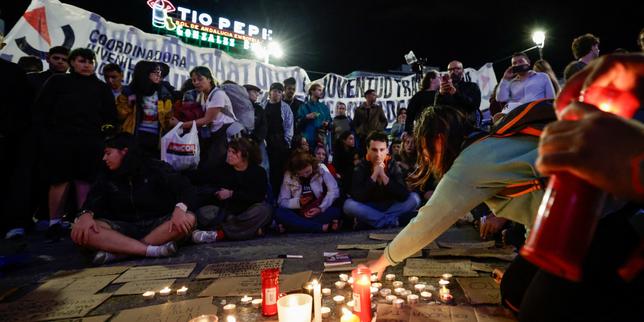
On a Tuesday morning in late September 2026, eighty-seven-year-old María del Carmen Abascal was carried out of her Madrid apartment on a stretcher. She had lived in that exact home in the central Retiro neighborhood for seventy years.
Emergency workers and social operators had to physically remove her because she was in a state of utter exhaustion. Pictures and video footage of police lines and an elderly woman ejected from her lifelong home triggered an immediate political earthquake. Within hours, hundreds of thousands of people flooded the streets across Madrid, Barcelona, and Valencia.
Spain reached a breaking point. Maricarmen became the tragic face of an explosive housing crisis that has left ordinary citizens completely priced out of their own cities.
Why This Eviction Ignited a Country
The rental agreement for Maricarmen's apartment dated back to 1956. Back then, under the Franco regime, women legally could not sign a lease, so the contract was registered under her father's name. It later passed to her mother, and eventually to Maricarmen, who was still paying around 500 euros a month.
To property management firm Urbagestión, that historical rent was an anomaly to be corrected. But to the rest of Spain, it represented a brutal corporate stripping of human dignity.
When the eviction notice landed, the property firm gave her thirty minutes to pack her entire life into boxes. They refused to grant even a few hours for her belongings. Even an offer from a well-known writer willing to pay the rent difference indefinitely was completely ignored by the landlords.
Spaniards saw the footage and realized a terrifying truth. If an eighty-seven-year-old woman who paid her rent faithfully for seven decades can be thrown onto the pavement with half an hour's notice, nobody is safe.
The Numbers Behind the Madness
You cannot understand the massive protests without looking at the raw economics. Over the past decade, residential square meter prices in Spain surged past 2,300 euros on average. Renting a home costs nearly twice as much as it did ten years ago, hitting over 15 euros per square meter in major hubs.
According to official polling from the Centre of Investigations Sociologiques, housing is now the single greatest fear for the Spanish public. Over thirty-seven percent of citizens rank it as their primary worry, crushing traditional concerns like unemployment or economic instability.
Wages have flatlined while tourism rentals, luxury conversions, and vulture funds swallow up entire neighborhoods. Young professionals spend entire paychecks on tiny rooms, while retirees face sudden displacement.
A Bitter Ending and Political Fallout
Following intense public outrage and hospital treatment for exhaustion, an agreement was finally brokered allowing Maricarmen to return to her home.
It was too late. On October 7, 2026, just weeks after she was dragged from her doorstep, Maricarmen Abascal passed away in the hospital.
Her death transformed a localized housing dispute into a historical national trauma. Prime Minister Pedro Sánchez offered public condolences, calling the situation a severe social tragedy, while political parties blamed each other for failing to protect vulnerable tenants from predatory real estate practices.
Protesters did not disperse after her passing. Instead, the anger intensified into demands for sweeping regulatory overhauls, rent caps, and severe restrictions on short-term tourist rentals. Maricarmen never got to sleep in her apartment again, but her story permanently altered the political landscape of modern Europe.


