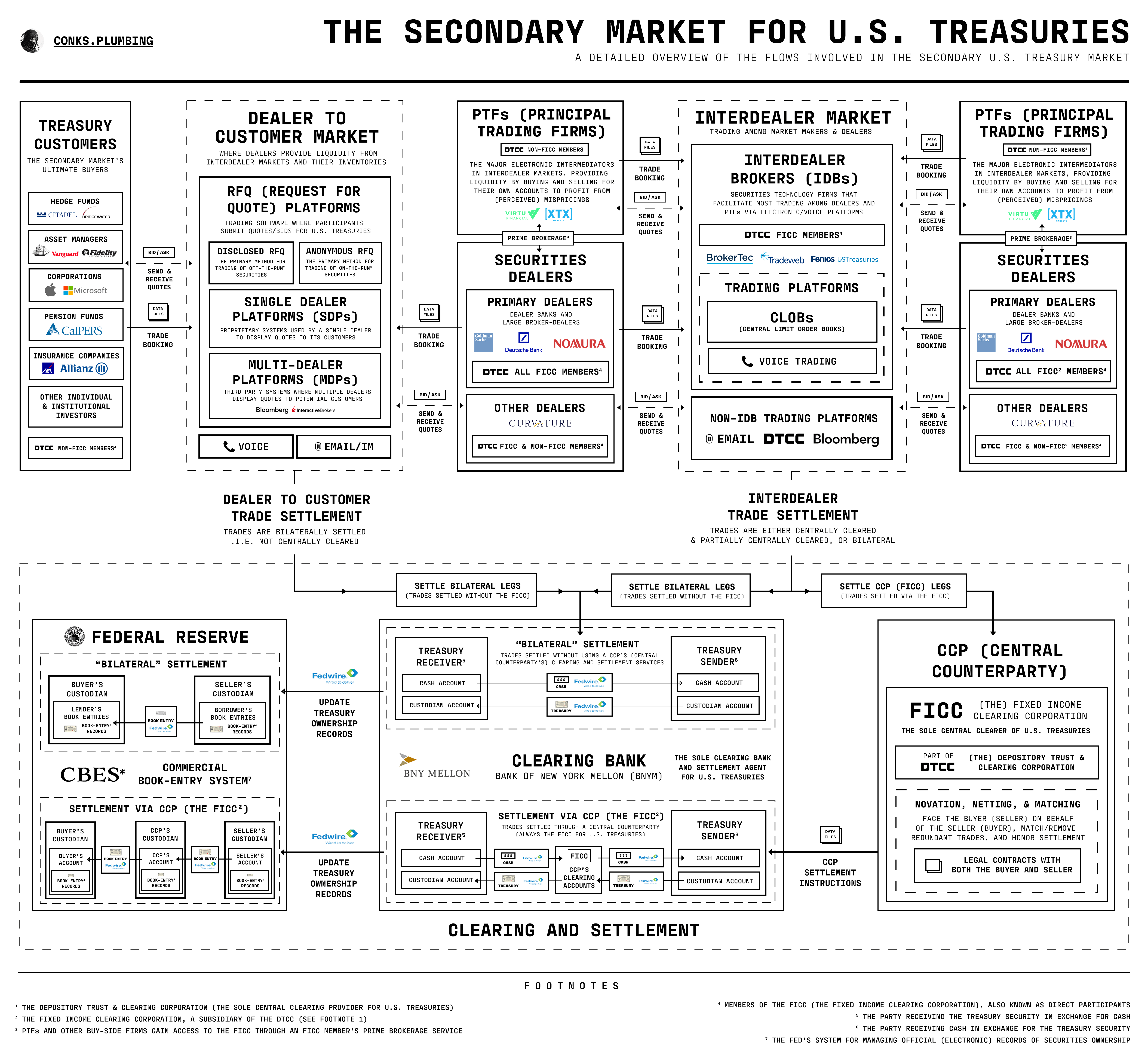
The recent attempt by Treasury Secretary Scott Bessent to moderate long-term interest rates through an expansion of debt buyback operations marks a transition in federal debt management. This policy shift, increasing buybacks from $2 billion to at least $4 billion per operation for long-dated securities, functions as a signal of intent rather than a structural solution to the underlying fiscal pressures driving the bond market. To understand the efficacy of this move, one must distinguish between the technical plumbing of bond liquidity and the fundamental macroeconomic drivers of yield.
The Mechanics of Buyback Operations
The Treasury utilizes buyback programs to optimize the liquidity profile of the $32 trillion in publicly held government debt. By repurchasing specific "off-the-run" securities—older issues that lack the daily trading volume of newly auctioned "on-the-run" bonds—the Treasury aims to smooth price volatility and ensure that the market for government debt remains orderly.
When the Treasury executes these purchases, it effectively reduces the net supply of available securities. In a standard market environment, a reduction in supply, holding demand constant, exerts downward pressure on yields. However, the current bond market is not operating under standard conditions. The scale of the current buyback—even when doubled—is marginal relative to a market exceeding $30 trillion. Consequently, the intervention functions primarily as a liquidity buffer rather than a tool for significant yield curve control. The market’s rapid reversal, with yields rising shortly after the announcement, indicates that participants prioritize fiscal fundamentals over technical liquidity adjustments.
The Fiscal Friction Points
Bond yields are currently the equilibrium price for three primary macroeconomic variables: the federal deficit, inflation expectations, and exogenous shocks. Bessent’s intervention addresses the symptoms of market stress but does not alter the underlying fiscal trajectory.
- Deficit Projections and Debt Accumulation: With the national debt reaching $40 trillion, the interest burden is consuming an increasing share of federal revenue. The structural deficit, exacerbated by tax policy and elevated defense spending, creates a persistent demand for new issuance. When the supply of new debt exceeds the appetite of long-term investors, yields must rise to attract incremental capital.
- The Inflationary Impulse: The ongoing conflict in Iran and the resulting fluctuations in global energy markets have introduced a non-trivial risk premium into long-term interest rates. Inflation expectations are inherently tied to commodity prices, and as long as these geopolitical pressures persist, the term premium—the extra compensation investors demand for holding long-term debt—will remain elevated.
- Capital Competition: The rapid development of artificial intelligence infrastructure is absorbing significant private capital. This creates a supply-demand imbalance where Treasuries must compete with high-growth corporate investment opportunities for the same pool of global liquidity.
Strategic Limitations of Administrative Intervention
The disparity between the Treasury's objective—lowering long-term borrowing costs—and the market's response reveals the limitation of discretionary intervention.
First, credibility is a function of fiscal consolidation. If the market perceives that buybacks are a substitute for spending discipline, the intervention may become counterproductive. Investors interpret the move as a tacit admission of vulnerability, which can lead to a risk-off shift in broader asset portfolios. Second, the reliance on short-term debt issuance to fund buybacks shifts the supply burden to the short end of the curve. This does not eliminate the debt; it rearranges the duration risk, which can distort the yield curve if not managed with precise calibration.
The market is currently pricing in a fiscal risk premium that technical operations cannot offset. Historical precedent suggests that interest rate stabilization is achieved through policy convergence—aligning federal spending with revenue generation—rather than through market-making activities by the debt issuer.
The Path Forward
The efficacy of the Treasury’s current strategy hinges on the transition from liquidity support to fiscal signaling. Future stability in the bond market will not be dictated by the volume of debt repurchased, but by the tangible reduction in the primary deficit.
The strategic play is to monitor the delta between announced spending cuts and actual realized fiscal contraction. If the administration succeeds in shifting the narrative from debt management to deficit reduction, the term premium will likely compress, providing the desired relief for long-term yields. If the current trajectory of deficit spending persists, bond market volatility will remain the dominant feature, regardless of the size of the Treasury's buyback program. The focus should shift from technical interventions toward a credible, multi-year plan for structural fiscal consolidation to stabilize the baseline interest rate environment.