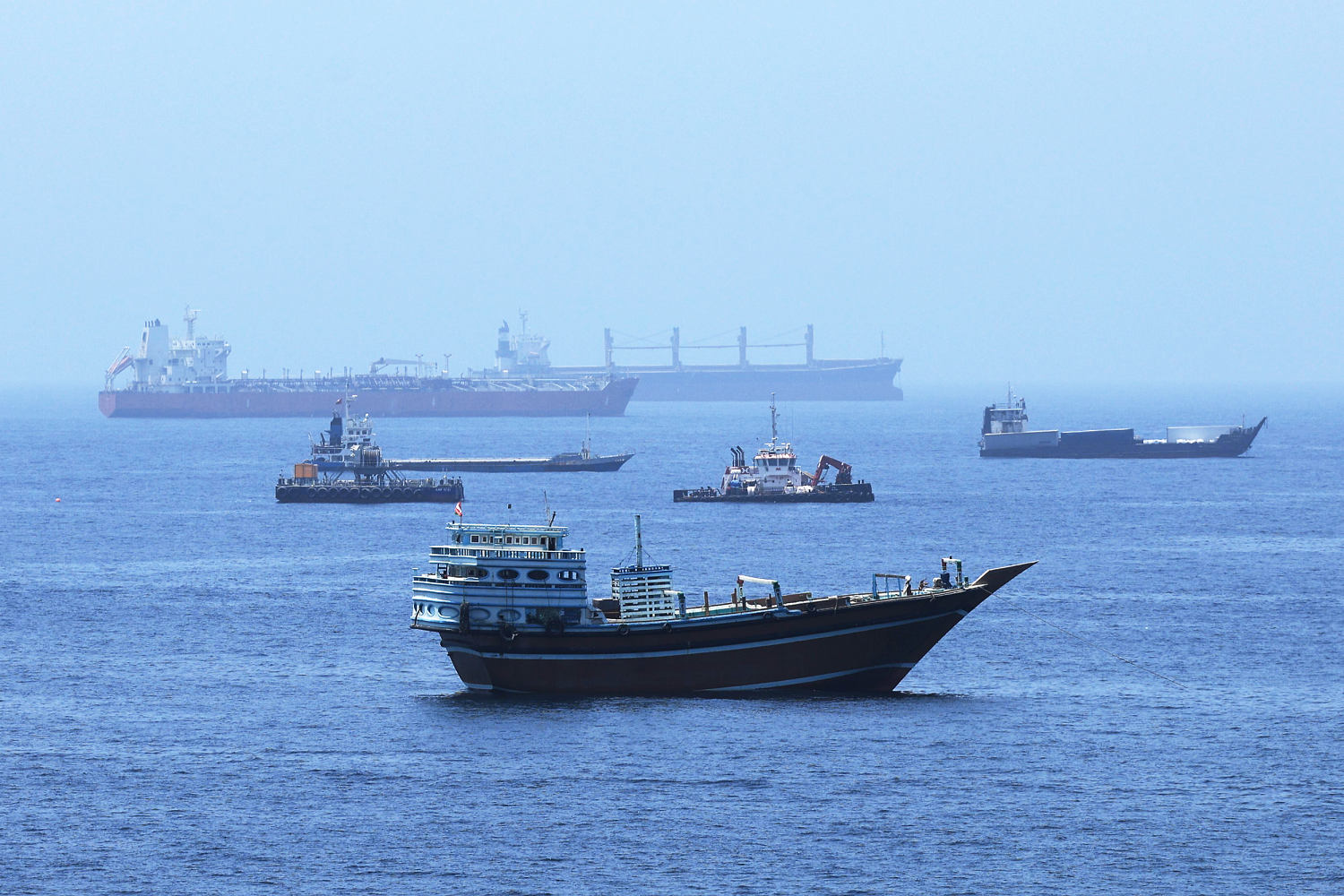
The Hundred Dollar Mirage
Financial media thrives on panic. The moment a drone targets a commercial tanker off the coast of Yemen, desk traders fire up their terminals, scramble to bid up crude futures, and unleash a flood of headlines predicting $100 oil.
It is a predictable script. It is also completely wrong. Don't forget to check out our earlier coverage on this related article.
The dominant narrative claims that disruption in the Bab el-Mandeb strait—a choke point handling roughly 12% of sea-borne traded oil—will inevitably squeeze global supply, blow out transit costs, and trigger a sustained spike in global inflation. Narratives like this make great television, but they completely ignore the fundamental realities of modern energy logistics and global demand.
Panicking over supply route detours mistakes temporary friction for structural deficit. Long-term oil prices are dictated by geology and macroeconomics, not lengthened transit times. If you want more about the history here, Al Jazeera provides an excellent breakdown.
Route Disruption Is Not Destruction
When shippers avoid the Red Sea to bypass Houthi missile range, vessels reroute around the Cape of Good Hope. That detour adds roughly 10 to 14 days to a journey from the Persian Gulf to Western Europe.
Does this burn more bunker fuel? Yes. Does it tie up shipping capacity? Absolutely. But notice what it does not do: it does not destroy a single barrel of crude at the wellhead.
Traffic jams do not diminish the amount of gasoline in the pipeline. They simply alter the delivery schedule.
Market commentators routinely blur the line between a supply shock and a logistical delay.
- Supply Shock: Physical production is forcibly shut down (e.g., sanctioning millions of barrels of Russian crude, or physical destruction of processing facilities like the 2019 Abqaiq–Khurais attack).
- Logistical Delay: Crude exists, is loaded on a tanker, and takes a longer geographic path to reach its final refining destination.
Once the initial fleet of rerouted tankers completes the longer voyage around Africa, a new steady state emerges. The pipeline of ships at sea normalizes. Crude continues to arrive at refineries on a daily cadence, just with a slightly larger volume sitting in transit on the ocean at any given time—a phenomenon known as floaters.
I have watched hedge fund traders burn tens of millions of dollars buying short-dated call options every time a Middle Eastern headline hits the wire. They trade the initial knee-jerk surge, only to get crushed when physical buyers refuse to pay the markup and fundamental inventories remain well-stocked.
The Invisible Buffers The Headlines Ignore
The media treats the global oil supply chain as a brittle wire that snaps under tension. In reality, it is an adaptive, heavily buffered network designed specifically to absorb geopolitical friction.
1. The Atlantic Basin Flood
While news cameras focus on the Middle East, production in the Western Hemisphere has quietly shattered historic records. Non-OPEC output—driven primarily by the United States Permian Basin, Brazil, and Guyana—continues to outpace global demand growth.
When Persian Gulf crude gets delayed or becomes too expensive due to inflated freight rates, European refiners do not throw up their hands and close shop. They shift their buying to light sweet crude coming out of the US Gulf Coast, West Africa, and the North Sea. Physical trade flows pivot within days.
2. OPEC’s Massive Spare Capacity
The narrative surrounding $100 oil ignores the massive overhang of spare production capacity held by Saudi Arabia and the UAE. OPEC+ has spent years artificially withholding millions of barrels per day from the market to maintain a price floor.
If crude prices genuinely threatened to spike into triple digits due to regional instability, the Saudi Ministry of Energy would face immense pressure to release production. Why? Because $100 oil accelerates demand destruction, incentivizes capital expenditure in renewable alternatives, and accelerates the adoption of electric vehicles in critical growth markets like China. OPEC does not want a temporary $100 spike that destroys its customer base for the next decade.
3. China’s Slower Engine
The ultimate cap on oil prices isn't on the supply side; it is on the demand side. China, historically the main engine of global oil demand growth, is undergoing a structural shift. Between massive electrification of its domestic auto fleet and a real estate sector cooling off, Chinese crude imports are no longer expanding at the breakneck speeds of the past decade.
You cannot sustain a secular bull market in commodities when your primary marginal consumer is slowing down its purchasing.
The Hidden Cost of the Contrarian Reality
It would be dishonest to pretend that supply chain detours have zero impact. The costs are real, but they show up in places the mainstream financial press rarely covers.
The true burden of Red Sea disruptions falls almost entirely on freight rates and marine insurance premiums, not the base price of the commodity itself.
[ Persian Gulf Crude ]
        │
        ├──► Normal Route (Red Sea) ──► Low Freight Cost ──► Standard Margin
        │
        └──► Cape Route (Africa)   ──► High Freight Cost ──► Margin Squeeze (Refiner/Consumer)
Shipping companies pass higher operational costs—longer voyages, extra fuel, war risk premiums—onto refiners and end consumers. This creates localized price distortions in refined products like diesel and jet fuel, but it does not mean crude oil itself is structurally scarce.
If you are managing risk for a freight carrier or an industrial manufacturer, hedging against a spike in tanker shipping rates makes sense. Buying out-of-the-money crude oil futures because of a Red Sea headline is a strategy built on fundamental misunderstanding.
Stop Trading Headlines and Track the Physical Freight
The financial media needs panic to generate clicks, and commodity brokers need volatility to generate commissions. That alignment of incentives creates an endless loop of alarmism every time a ship changes course.
If you want to understand where energy markets are actually heading, stop reading commentary from macro analysts who have never looked at a bill of lading. Ignore the geopolitical fear-mongering.
Look at physical inventory levels in Cushing, Oklahoma. Watch floating storage metrics off the coast of Singapore. Track the actual volume of crude moving out of the US Gulf Coast.
The physical data tells a simple story: the world is well-supplied with oil, alternative routes are functioning, and supply chain delays are a minor tax on trade, not an existential crisis. Triple-digit oil is a ghost story told to frighten retail investors into buying overpriced calls.
Stop buying the hype.

/https://i.s3.glbimg.com/v1/AUTH_e84042ef78cb4708aeebdf1c68c6cbd6/internal_photos/bs/2026/g/B/3vpkvHQKizRKAfzDxjXA/vini-jr-antes-e-depois.jpg)