Donald Trump doesn't think the rules apply to him, especially after going to war.
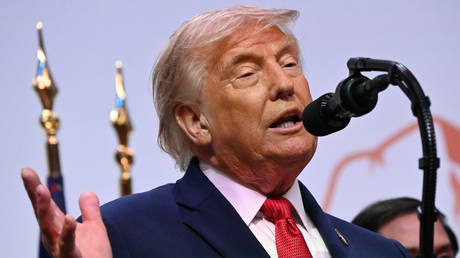
Following the conclusion of the U.S. conflict with Iran, the president sat down for an interview on "The Axios Show" and dropped a line that sent shockwaves through Washington. When asked what the war taught him about the constraints of the executive branch, Trump answered bluntly: "There are no limits. I haven't learned that lesson yet. I know there are, but there are no limits."
It's a staggering statement, but it perfectly summarizes his approach to governance. He views power not as a set of constitutional boundaries, but as a test of personal will. To understand what this means for the rest of his term, you have to look past the rhetoric and look at the actual reality of the recent deal with Tehran.
The Gap Between Rhetoric and Reality in the Iran Deal
If you listen to Trump, the newly signed 14-point memorandum of understanding (MoU) with Iran is a historic triumph. He claimed the agreement "probably is unconditional surrender" and insisted that the U.S. military achieved total victory.
But the details of the MoU tell a completely different story.
Before the military conflict began, the administration laid out maximalist demands. The U.S. insisted that Iran completely end domestic uranium enrichment, transfer its existing stockpiles abroad, and dismantle major components of its nuclear program.
The final agreement doesn't do that. Instead, both sides agreed to halt hostilities, reopen the critical Strait of Hormuz, and establish a framework for future talks regarding sanctions relief and international supervision of Iran's nuclear material. Critics from both major parties point out that the deal leaves Iran's infrastructure largely intact and includes a $300 billion reconstruction fund.
So why does Trump call it an unconditional surrender? Because he measures power by submission, not by the fine print of a contract. In his view, forcing Iranian President Masoud Pezeshkian to digitally sign a joint document is proof enough of American dominance.
The Fear of Becoming Herbert Hoover
Behind the bravado lies a surprising dose of economic pragmatism. Trump admitted that he chose to sign the agreement because continuing the war would have triggered a global economic crisis.
A prolonged naval blockade would have kept the Strait of Hormuz closed, cutting off a massive portion of the world's energy supply. Trump noted that global petroleum reserves were running low, and dropping more bombs would have kept the shipping lanes locked down for months.
"This is the kind of thing that could cause a worldwide depression," Trump said during the interview. He made his primary fear explicitly clear: "I never want to be the late, great Herbert Hoover."
This reveals the actual boundary on Trump's actions. It isn't international law or congressional oversight. It's the stock market. He knows that an oil shock or a domestic recession would destroy his political standing, so he chose a diplomatic exit while rewriting the narrative to claim total victory.
A History of Testing Executive Boundaries
This isn't the first time Trump has expressed an expansive view of presidential authority. Earlier this year, following a quick military operation targeting Venezuelan leader Nicolás Maduro, Trump told reporters that his "own morality" and his "own mind" were the only true constraints on his power to order military strikes.
When asked about international frameworks, he dismissed them, stating he doesn't need international law.
A forthcoming book by journalists Maggie Haberman and Jonathan Swan reports that Trump has privately compared his executive reach to historical conquerors and dictators like Alexander the Great and Napoleon, joking that modern technology makes the presidency far more powerful than rulers of the past. He even shared a document on Truth Social echoing these comparisons.
While Congress frequently attempts to pass measures to rein in presidential war powers—such as recent Senate votes aimed at limiting actions in South America—Trump retains the power of the veto. Bipartisan majorities are rarely large enough to override it, leaving the White House with a free hand in foreign policy.
What Happens Next
If you want to track where executive power goes from here, stop watching the press conferences and start watching the concrete actions of the administration.
First, monitor the implementation of the U.S.-Iran MoU. The phased process for easing restrictions on Iranian oil exports will serve as the real test of whether this ceasefire holds, or if shipping vulnerabilities in the Strait of Hormuz will trigger another standoff.
Second, watch the federal budget debates. Congress holds the power of the purse, and how lawmakers handle funding requests for regional reconstruction and border security operations will show whether Capitol Hill has any leverage left to check the executive branch.