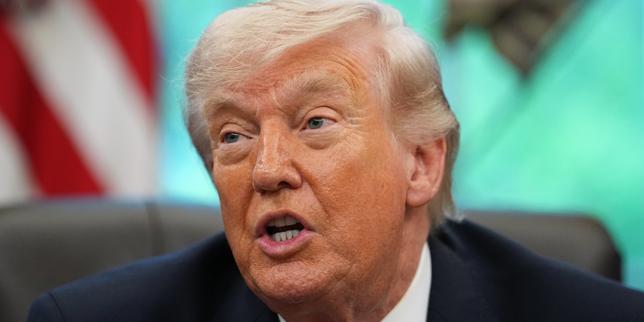
The Middle East is currently vibrating with a tension that feels different than the usual static of the region. It's not just another cycle of headlines. We're seeing a fundamental shift in how the major players—Israel, Iran, and the United States—are signaling their intentions. Donald Trump recently threw a verbal grenade into this mix, essentially telling Iran it's time to "capitulate." Meanwhile, the Israeli military is drawing what it calls a "red line" with Hezbollah that has already been crossed in spirit, if not yet by a full-scale ground invasion.
If you're trying to make sense of the chaos, you have to look past the rhetoric and see the actual chess pieces moving. We aren't just talking about border skirmishes anymore. This is about the total collapse of the old rules of engagement. For years, there was a "gentleman’s agreement" of sorts regarding how much damage each side could take before a total war broke out. Those days are gone.
Trump and the Art of the Geopolitical Ultimatum
Donald Trump doesn't do nuance. His recent stance on the Iran-Israel conflict is a return to the "maximum pressure" strategy on steroids. By demanding Iran capitulate, he’s signaled that he’s not interested in the diplomatic balancing acts that have defined the current administration's approach. It’s a binary choice for Tehran: back down or face the consequences.
Whether you like his style or not, this directness changes the math for the Iranian leadership. For the last few years, Iran has operated through proxies—Hezbollah in Lebanon, the Houthis in Yemen, and various militias in Iraq. They’ve enjoyed a level of "plausible deniability" that allowed them to harass Israel without inviting a direct strike on Iranian soil. Trump’s rhetoric suggests that the buffer of proxy warfare is officially being ignored.
But can Iran actually capitulate? It’s a regime built on the foundation of "Resistance." To back down now, under the glare of American and Israeli pressure, would be a domestic nightmare for the Supreme Leader. They’re stuck between a rock and a hard place. If they fight, they risk total destruction. If they surrender, they risk a revolution from within.
Israel and the Yellow Line in Lebanon
While Trump talks about Iran, the IDF is focused on its immediate northern border. The "yellow line" is a term that’s being used to describe the limits of Israeli patience. Hezbollah has been firing rockets into northern Israel since October 8, displacing nearly 100,000 Israeli citizens. For the Israeli government, this is an intolerable status quo.
I’ve seen how these military doctrines evolve. Usually, it starts with targeted assassinations of mid-level commanders. Then it moves to infrastructure. We’re currently in the phase where Israel is taking out high-ranking Hezbollah officials in the heart of Beirut. This isn't just "sending a message" anymore. It’s a systematic dismantling of Hezbollah’s command structure.
The threat of strikes "beyond the yellow line" refers to a massive, multi-dimensional assault that would likely target not just Hezbollah’s military assets, but the Lebanese state infrastructure that supports them. It’s a high-stakes gamble. Hezbollah is significantly better armed than Hamas ever was. They have precision-guided missiles that can reach Tel Aviv and Ben Gurion Airport. If Israel crosses that line, the response won’t be a few stray rockets; it’ll be a deluge.
Why the Proxies are Failing Iran
Iran’s strategy has always been to fight its wars on other people's land. Using Hezbollah is a way to bleed Israel without getting Iranian hands dirty. But the effectiveness of this strategy is hitting a wall. Israel has shown it’s willing to hit the source.
- Intelligence Superiority: Israel’s ability to find and kill top leaders in secure bunkers proves that the proxy networks are compromised.
- Economic Collapse: Lebanon is a failing state. Hezbollah’s base is tired of a war that brings them nothing but rubble.
- Regional Isolation: Arab nations aren't rushing to defend Hezbollah or Iran like they might have twenty years ago. They’re more worried about their own stability.
The Economic Impact You’ll Actually Feel
Don’t think for a second that this is just a regional problem. If Trump’s "capitulation" demand leads to a direct confrontation or if the Lebanon front explodes, the global economy is going to take a hit. We’re talking about the Strait of Hormuz. We’re talking about oil prices.
If Iran feels truly cornered, its most potent weapon isn’t its nuclear program—which is still a ways off from a deliverable warhead—it’s the ability to choke the world’s energy supply. A single tanker sunk in the wrong place could send gas prices through the roof overnight. That’s the real leverage Tehran holds, and it’s why the rhetoric from Washington and Jerusalem is so dangerous.
What Happens When Diplomacy Dies
We’ve reached a point where the diplomats are basically just filling seats. The UN is sidelined. The regional "ceasefire talks" feel more like a performance than a process. When Trump speaks about capitulation, he’s acknowledging that the era of the nuclear deal and "de-escalation" is likely dead.
What’s left is a raw contest of power. Israel is betting that it can degrade Hezbollah enough to force a new border reality. Iran is betting it can survive the pressure until the political winds in the West shift again. It’s a game of chicken played with hypersonic missiles and millions of lives.
The reality is that "beyond the yellow line" isn't just a military coordinate. It’s a psychological state. Once you cross it, there’s no going back to the way things were on October 6.
If you want to track where this is going, stop listening to the official press releases from the Pentagon or the Iranian Foreign Ministry. Watch the flight paths of civilian airlines in the region. Watch the price of Brent Crude. And most importantly, watch the movement of Israeli reserves toward the northern border. Those are the only metrics that don't lie.
Check the news out of Cyprus and Greece as well. They're often the first to see the logistical fallout when things go south in the Levant. If you're invested in international markets, now's the time to look at your exposure to energy and defense. The volatility isn't a bug; it's the new feature of the Middle Eastern theater. Get ready for a very loud few months.