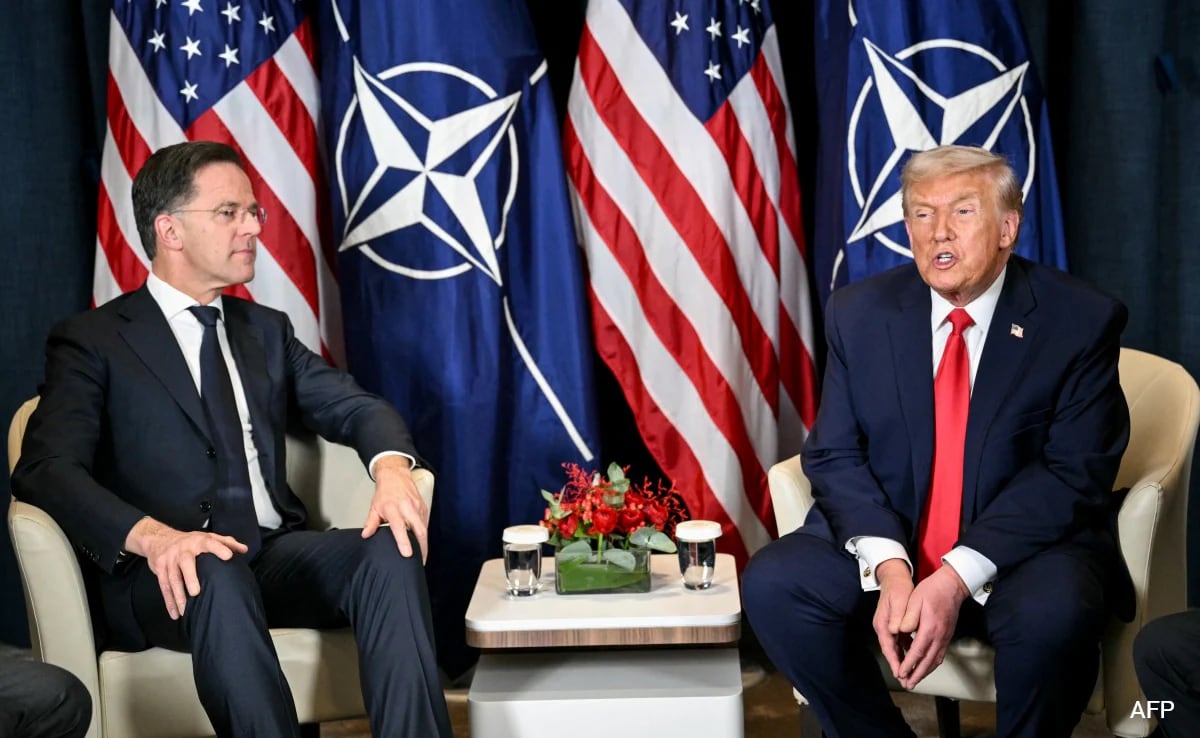
Donald Trump didn’t just meet with NATO Secretary General Mark Rutte yesterday. He basically sat the alliance down for a performance review that ended with a public lashing. If you think the "will he or won't he" drama about the U.S. leaving NATO is just campaign rhetoric from the past, you're missing the current reality. Following their closed-door session on April 8, 2026, the temperature in Washington hasn't just dropped—it’s hitting freezing levels for European diplomats.
The core of the frustration isn't about the old 2% spending targets anymore. It's about a war NATO didn't sign up for. For a different view, see: this related article.
The Iran War is the New Breaking Point
While most headlines focus on the abstract idea of a "pullout," the actual spark is the U.S.-Israeli conflict with Iran. Trump is livid. He expected the alliance to fall in line when he launched strikes on February 28. Instead, he got the cold shoulder from heavyweights like France, Germany, and Spain.
White House Press Secretary Karoline Leavitt put it bluntly: "They were tested and they failed." Related reporting on this matter has been provided by The Guardian.
The administration’s view is that the American taxpayer shouldn't fund the defense of countries that won't back American interests in the Middle East, specifically regarding the Strait of Hormuz. Trump’s latest Truth Social blast was even less subtle, calling the alliance a "paper tiger" and claiming they won't be there when the U.S. needs them. When the leader of the world's most powerful military says "Nato wasn't there," the foundation of collective defense starts to crack.
Not a Full Exit but a Massive Shakeup
Talk of a total withdrawal is the "nuclear option," and there’s a lot of legal red tape in the way. Congress passed laws specifically to prevent a president from unilaterally ditching NATO without a two-thirds Senate majority. But Trump has other ways to make his point.
The Wall Street Journal recently leaked a plan that should keep European leaders up at night. Instead of leaving NATO entirely, the White House is weighing a "repositioning" strategy.
- The Punishment List: Countries like Germany and Spain, which stayed out of the Iran conflict, could see their U.S. military bases closed or downsized.
- The Reward List: Countries like Poland and the Baltic states, which have been more aggressive in their support and spending, might see a surge in U.S. troop presence.
Basically, Trump is moving toward a "pay-to-play" or "loyalty-based" defense model. It's not about the treaty anymore; it’s about who has your back in a street fight.
The Hague 5% Commitment
Mark Rutte is often called the "Trump Whisperer" because he knows how to handle the President’s ego. During his CNN interview after the meeting, Rutte didn't focus on the tension. Instead, he praised Trump for the "Hague spending commitment."
Under Trump's pressure, the alliance has moved past the old 2% of GDP target. The new goal is a staggering 5% for defense spending by 2035.
| Country | 2026 Defense Spending (% of GDP) |
|---|---|
| Poland | 4.3% |
| Lithuania | 4.0% |
| United States | 3.19% |
| Germany | 2.1% |
While every NATO member finally hit the 2% mark this year, Trump doesn't think it's enough. He’s looking at the $1.4 trillion collective expenditure and wondering why the U.S. is still carrying the heaviest load while its allies hesitate to join his regional conflicts.
Why This Time Feels Different
In his first term, Trump’s NATO threats felt like a tactic to get more money. In 2026, it feels like a fundamental shift in ideology. The U.S. is currently engaged in a fragile two-week ceasefire with Iran, and Trump is looking for partners to secure global oil routes.
If Europe continues to prioritize the war in Ukraine while staying neutral on Iran, the "divorce" might not happen on paper, but it'll happen in practice. A NATO where the U.S. picks and chooses which allies to protect based on recent favors is a NATO that has already ceased to function as a deterrent.
What You Should Watch Next
Don't wait for a formal "Exit" speech. Watch the troop movements. If you see the U.S. shifting hardware out of Ramstein Air Base in Germany and into Eastern Poland, you'll know the "pullout" is already happening in all but name.
If you're tracking this for business or security reasons, keep a close eye on the maritime security talks regarding the Strait of Hormuz. That’s the real bargaining chip. If Rutte can't convince European members to send ships to the Gulf, expect the White House to start pulling the plug on European security guarantees by the end of the summer. The era of "unconditional" American protection is officially over.



