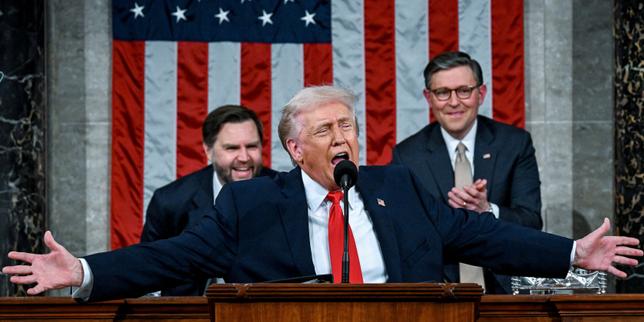
You've seen the tweets and heard the rally clips. "Low Energy Jeb." "Crooked Hillary." "Sleepy Joe." While critics dismiss these as schoolyard insults, Donald Trump’s habit of branding his enemies with humiliating nicknames isn't just a quirk of his personality. It’s a deliberate, psychological operation.
Most people think he's just being mean. They're wrong. He's actually performing a high-stakes branding exercise that most corporate marketers would kill for. By the time an opponent realizes they've been tagged, the damage is already done. The nickname becomes the person.
The Psychology of the Sticky Label
Have you ever tried to forget a bad nickname from middle school? It’s impossible. Trump knows this. When he attaches a pejorative adjective to a proper noun—like "Lyin' Ted"—he isn't just making an assertion. He’s creating a presupposition.
Linguists like David Beaver from the University of Texas at Austin have pointed out that saying "Hillary is crooked" requires your brain to process a claim and decide if it's true. But the phrase "Crooked Hillary" treats the "crookedness" as an established fact. Your brain skips the "is it true?" phase and goes straight to the "this is who she is" phase.
It’s visceral. It’s emotional. It bypasses the intellect. That's why these names stick like napalm. They don't just describe a person; they replace the person's identity in the public's mind.
Why Branding Beats Policy Every Time
Politicians usually try to win by debating white papers and tax brackets. Trump wins by turning his opponents into cartoons. Think about Jeb Bush in 2016. He was a well-funded, serious candidate from a political dynasty. Then came "Low Energy."
Suddenly, every time Jeb blinked or paused during a debate, he was proving Trump right. He couldn't just be "deliberative" or "calm" anymore. He was trapped in the "Low Energy" box. Once that label took hold, his $100 million war chest couldn't buy his way out.
The Trump Playbook for Humiliation
He doesn't just pick words at random. He looks for a perceived weakness and magnifies it until it’s all you can see.
- Physical traits: "Little Marco" or "Mini Mike" Bloomberg.
- Mental acuity: "Sleepy Joe" or "Slow Joe."
- Moral failure: "Crooked Hillary" or "Lyin' Ted."
- Personality quirks: "Liddle’ Bob Corker" or "Wacky Omarosa."
He’s essentially a caricature artist using words. He finds the one feature that's slightly out of proportion and draws it so big that the rest of the face disappears.
The Media is an Unwitting Accomplice
Every time a news anchor repeats one of these names—even to criticize it—they're reinforcing the brand. It’s the ultimate "don't think of an elephant" trick. When the media spends three days debating whether "Sleepy Joe" is a fair name, the word "Sleepy" is being associated with Joe Biden millions of times.
It's a feedback loop that Trump didn't invent, but he certainly perfected. By 2026, we’ve seen this play out in dozens of cycles. The names might change—like the "Comrade Kamala" or "Tampon Tim" we saw in the mid-2020s—but the tactic is identical.
What Opponents Keep Getting Wrong
If you’re the target, your instinct is to fight back or explain why the name is wrong. That’s a mistake. Explaining is losing. When Elizabeth Warren tried to address the "Pocahontas" nickname by taking a DNA test, she didn't end the joke. She became the punchline.
Opponents who try to use "intellectual" insults usually fail. "Dangerous Donald" or "Mr. Macho" (Bernie Sanders' attempt) felt forced. They lacked the "adolescent glee" that makes Trump’s nicknames so effective. To beat a nickname, you have to ignore it or replace it with a better story. Most politicians just aren't built for that kind of mud-wrestling.
The Evolution of the Schoolyard Bully
It's tempting to call this "unpresidential." Many do. The Gottman Institute actually categorizes name-calling as a sign of "contempt," one of the predictors of relationship failure. In a political context, it signals that the opponent isn't just a rival—they're unworthy of respect.
But for Trump’s base, this isn't a bug; it’s a feature. It makes him look "authentic" and "tough." It separates him from the polished, teleprompter-reading politicians they've grown to distrust. He speaks like a guy at a bar, and in that world, giving your buddies (and enemies) nicknames is just how things work.
Actionable Takeaways from the Trump Branding Machine
If you're looking at this from a strategy perspective, there are lessons here that go beyond politics:
- Define your competition before they define you. Once a label sticks, it’s nearly permanent.
- Simple beats complex. A two-word nickname is more memorable than a 20-page policy proposal.
- Find the "Inner Truth." The best nicknames are based on a grain of truth (or a public perception of it) that the target is already struggling with.
- Repeat until it’s reality. Consistency is what turns a joke into a brand.
Stop waiting for the "discourse" to return to "normal." This is the new normal. Trump didn't just break the rules of political etiquette; he realized they were optional. In a world of 8-second attention spans, the person with the stickiest label wins.
Don't spend your time complaining about the tactics. Start studying how they actually work. If you want to survive in the modern attention economy, you need to understand that a nickname isn't just a name—it's a weapon. Use it or prepare to have it used against you.
Start by auditing your own brand. What’s the one-word "adjective" people would put in front of your name? If you don't like it, you’d better change the narrative before someone else does it for you. Look at your competitors and identify their "Low Energy" trait. Don't be "mean," be precise. Use that focus to differentiate yourself in a crowded market where everyone is shouting but nobody is listening.