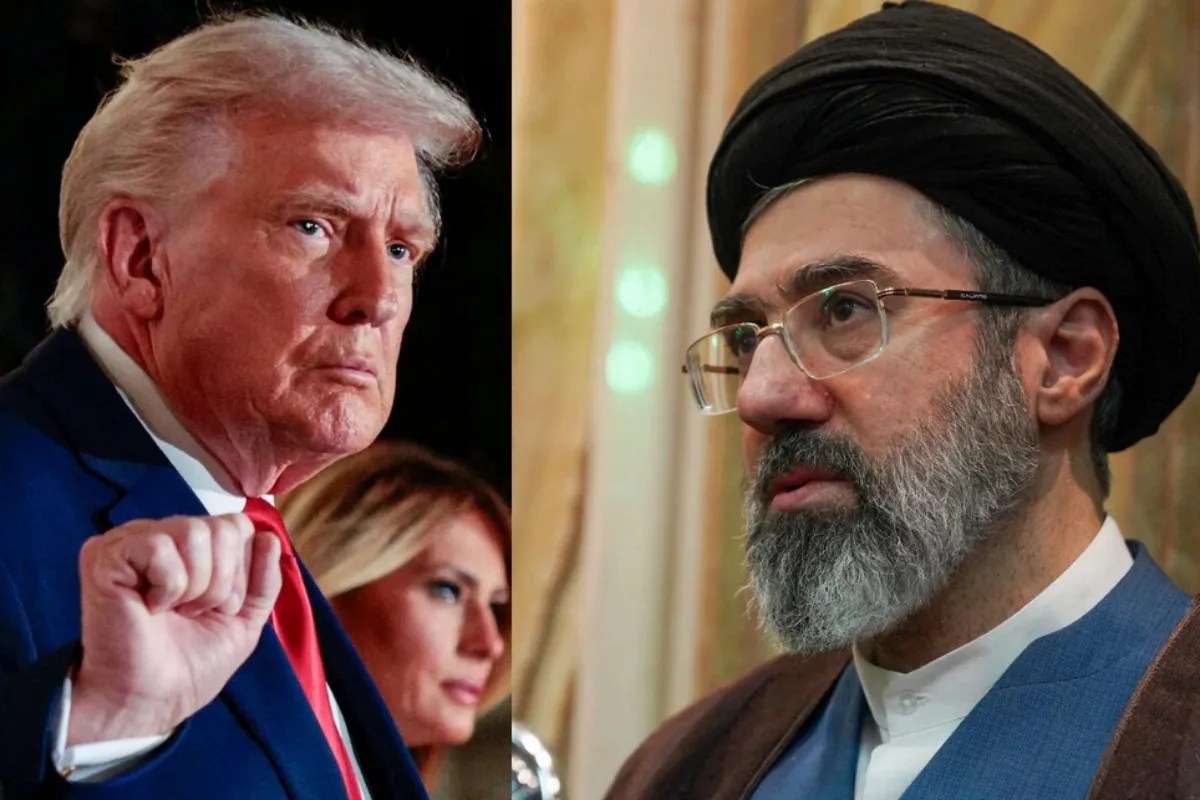
The tension in the Strait of Hormuz just hit a breaking point that has nothing to do with diplomacy and everything to do with muscle. Donald Trump’s latest move, a naval operation he’s calling "Project Freedom," is essentially a high-stakes game of chicken with Tehran. If you think this is just another routine patrol, you're missing the bigger picture. Iran’s National Security chief, Ebrahim Azizi, just made it clear that any American interference in the waterway's "new maritime regime" will be treated as a direct violation of the current ceasefire.
Honestly, the situation is a mess. We have over 800 ships and roughly 20,000 sailors literally rotting in the sun because they can't get out of the Gulf. Trump’s logic is simple: these are neutral ships, the crews are running out of food, and the world needs its oil. But by moving 15,000 troops and 100 aircraft into the area to "guide" these vessels, he's effectively telling Iran that their control over the Strait is over.
The Project Freedom blueprint and why it’s risky
Trump announced on Truth Social that the operation begins Monday morning. The goal is to create an "enhanced security area" south of the usual shipping lanes to get those stranded tankers moving. It sounds humanitarian on paper—Trump even called it a "gesture" for the good of Iran—but the military hardware backing it up tells a different story. We’re talking guided-missile destroyers and multi-domain unmanned platforms. That’s not a helping hand; it’s a clenched fist.
Iran's response hasn't been subtle. Azizi basically laughed off the announcement, calling it the product of "delusional posts." Tehran’s stance is that they own the Strait, and any ship that doesn't follow their rules—which include paying a toll—won't be allowed to pass. The US has already warned companies that paying those tolls could lead to sanctions. So, shipping companies are caught between a rock and an Iranian missile battery.
Why the ceasefire is on life support
The ceasefire we’ve been living with lately is fragile. While it stopped the heavy bombing runs, the US never lifted its naval blockade of Iranian ports. Tehran views that blockade as a breach of the peace. Now, with Project Freedom, the US is trying to break Iran’s counter-blockade.
I’ve seen this pattern before. One side claims they're just protecting "freedom of navigation," while the other claims they're defending "sovereignty." Usually, this ends with someone's radar locking onto a target. The real problem is that Trump and the Iranian leadership aren't even talking directly. Everything is being filtered through Pakistan, which means nuance gets lost in translation.
- The Humanitarian Angle: Thousands of sailors are in limbo.
- The Economic Trigger: Global oil markets are at a tipping point.
- The Military Reality: 15,000 US service members are now in the line of fire.
What actually happens on Monday morning
If the US Navy starts moving those ships without Iranian permission, we're looking at a potential "accidental" war. Iran's Revolutionary Guard has already threatened to use force against any vessel transiting without their go-ahead. They've also hinted at attacking ports in West Asia if their own infrastructure is touched.
Don't expect a smooth "guidance" process. The Joint Maritime Information Center is already warning about mines in the usual traffic lanes. This means the US "Project Freedom" route has to be perfectly cleared and defended, or one stray mine could end the ceasefire in seconds.
The missed angle on the 14 point proposal
While everyone's focused on the ships, there’s a 14-point peace proposal from Iran sitting on Trump’s desk. He’s already said he’ll likely reject it because Iran "hasn't paid a big enough price." This suggests that Project Freedom isn't just about freeing ships—it’s about leverage. By breaking the Iranian hold on the Strait, Trump is trying to force Tehran to accept a deal on his terms, likely one that includes dismantling their missile production.
It’s a brutal strategy. If it works, the ships go free and the US looks like the global hero. If it fails, we’re back to full-scale hostilities in the most vital energy corridor on the planet.
If you're an investor or just someone worried about gas prices, keep your eyes on the news cycles coming out of Oman and Tehran over the next 24 hours. The transition from "ceasefire" to "active engagement" can happen in the time it takes to press a button on a drone controller. Watch for any reports of "warning shots"—in this part of the world, there’s no such thing as a small mistake.
Trump's naval mission in the Strait of Hormuz
This video provides a direct look at the Iranian government's reaction and the specific warnings issued by Ebrahim Azizi regarding the naval mission.
http://googleusercontent.com/youtube_content/1