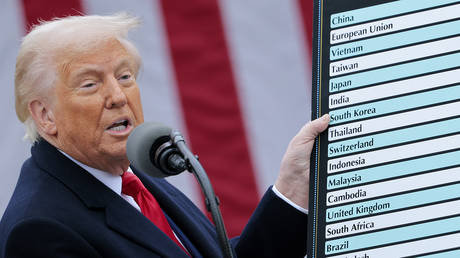
Everybody in Washington is screaming about trade wars. The lazy consensus goes like this: Donald Trump threatens Brussels with massive punitive duties, European regulators panic over sovereign digital markets, and Silicon Valley caught in the crossfire bleeds cash while transatlantic relations crumble into ash.
It sounds tidy. It makes for great cable news. And it is completely, fundamentally wrong.
I have spent the last two decades watching executive boards sweat over regulatory compliance. I have seen tech giants blow millions on legal theater designed to appease European bureaucrats who treat corporate fines as an alternate tax stream.
The standard narrative paints Trump as a blunt instrument threatening retaliation just to protect American corporate profit margins. That misses the entire point of what is actually happening. These threatened trade penalties are not a declaration of war against Europe. They are a forced intervention for an addicted industry.
Silicon Valley does not need protection from European antitrust actions. It needs to be punched out of its complacency.
The Fine Farming Economy
Let us look at how the game is actually played. Brussels levies multi-billion dollar penalties under the Digital Markets Act or privacy frameworks. The targets issue polite, heavily scrubbed press releases about respecting local laws. Then, they quietly bake those billions into their operating expenses as the cost of doing business abroad.
It is a protection racket disguised as consumer advocacy. European regulators need cash and local champions they could never build organically, so they tax American balance sheets. American tech executives pay the tribute because they want frictionless access to European consumer markets.
Everybody wins except the actual product innovation pipeline.
When a company reaches a certain scale, risk dies. Legal departments replace product visionaries. Compliance budgets eclipse research and development spend. The tech giants stopped building things that change the world because they were too busy figuring out how to survive regulatory cross-examination in three dozen jurisdictions simultaneously.
Enter the threat of massive trade duties.
Suddenly, the calculus shifts from quiet compliance to active confrontation. If punitive measures hit European imports because of discriminatory enforcement against American platforms, the financial equation changes overnight. Brussels can no longer view Silicon Valley as an endless ATM machine without triggering a wider economic backlash at home.
The Real Cost of Complacency
People ask why American tech companies cannot seem to recapture the ferocious startup energy of the late nineties or the early two-thousands. The answers given by mainstream analysts usually point to market saturation or venture capital drying up.
That is nonsense. There is more dry powder sitting in venture funds right now than at any point in human history.
The real killer is regulatory capture and defensive engineering. When your primary engineering problem is not scaling a breakthrough architecture, but ensuring your app complies with localized data-handling edicts across twenty-seven different European member states, your talent pool is rotting. You are hiring armies of lawyers and policy wonks instead of raw engineering talent.
I have watched brilliant machine learning teams spend six months altering core model behavior just to clear administrative hurdles in Dublin or Paris. That is not progress. That is bureaucratic taxidermy.
When trade threats enter the picture, they expose the fragility of this entire compliance-industrial complex. They force executives to choose between feeding a foreign regulatory monster or backing American market sovereignty. It is messy, it is loud, and it is long overdue.
The Counter-Intuitive Reality of Protectionism
Let us address the obvious counter-argument. Critics argue that retaliatory levies will invite counter-tariffs, raising the cost of hardware, squeezing margins, and ultimately harming the end consumer.
They are right about the mechanics. Prices might tick up. Supply chains will tighten.
Here is what those critics miss: friction is good for engineering.
When inputs are cheap and regulatory penalties are treated as minor line items, laziness wins. Companies sprawl. They bloat. They build bloated, inefficient software because hardware is cheap and cloud infrastructure has infinite elastic capacity.
Introduce real macroeconomic friction, and the fat burns off instantly. Suddenly, companies have to write lean code again. They have to optimize algorithms to run on fewer servers. They have to figure out how to deliver immense value without relying on frictionless global arbitrage that rewards regulatory capture over raw utility.
The trade threat acts as an artificial shock to a system that has grown entirely too comfortable with managed decline.
What the PAA Experts Get Wrong
If you search for analysis on this dynamic, you will find a dozen think-piece headlines asking: Will transatlantic trade tensions destroy the global tech ecosystem?
The premise of the question is flawed from the jump. It assumes the global tech ecosystem is currently healthy. It assumes that a fragmented, heavily policed internet where compliance officers dictate product roadmaps is a baseline worth preserving.
It is not. That ecosystem is already dying under the weight of its own administrative bloat.
Asking whether trade penalties will hurt tech is like asking whether chemotherapy hurts the patient. Of course it hurts. It kills healthy cells alongside the malignant ones. But without it, the disease wins. The threat of trade escalation forces a reckoning that internal boardrooms were too cowardly to initiate themselves.
Silicon Valley needed a crisis that makes business-as-usual impossible. Threatening trade warfare over regulatory overreach provides exactly that.
Unconventional Strategy for the Next Decade
If you are running a technology company right now, stop planning for a return to the old normal. The days of treating European regulatory fines as just another cost of international expansion are coming to an end.
Here is what you actually need to do:
- De-risk your dependency on foreign administrative approvals. If your product roadmap requires sign-off from overseas bureaucrats before it touches a user, your architecture is broken.
- Relocate capital into foundational infrastructure and domestic resilience. Stop treating international markets as your primary growth engine if those markets demand ideological and structural compliance as an entry fee.
- Embrace the friction. Lean into the structural shifts caused by macroeconomic realignment. The companies that survive the coming shakeout will be the ones built to withstand trade disruption, not the ones optimized for smooth diplomatic cocktail parties in Brussels.
The era of corporate appeasement is collapsing under the weight of its own contradictions. The trade threats are just the first tremor of a much larger earthquake.
Stop mourning the illusion of a borderless digital utopia. It was always a fiction maintained by regulatory arbitrage and cheap capital.
The future belongs to the builders who know how to survive the storm.