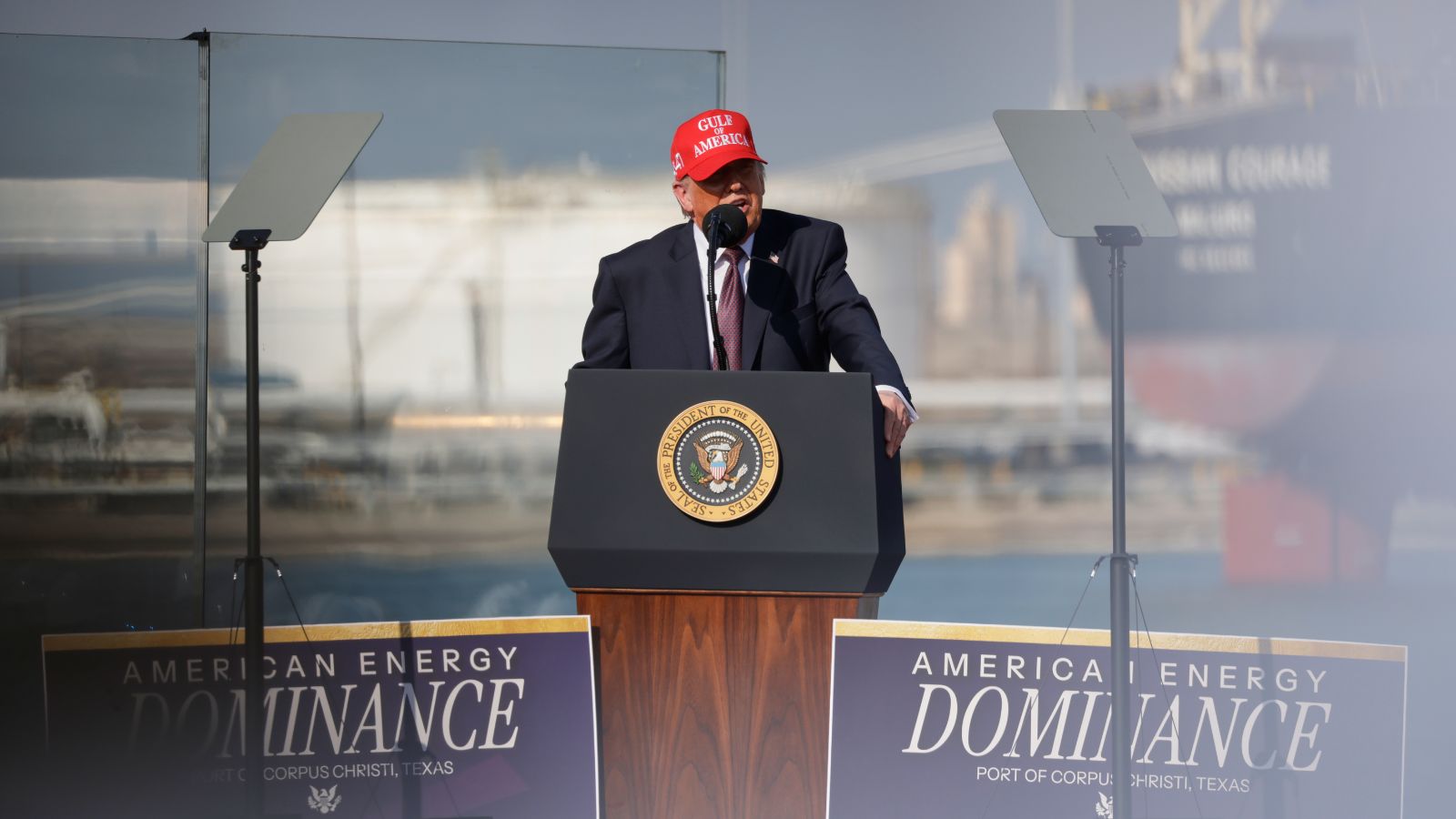
Politics is a blunt instrument. When Donald Trump threatens to wield the "full power of the Presidency" against Anthropic, the chattering classes in Silicon Valley recoil in a scripted dance of horror. They see an assault on innovation. They see a "radical left" smear as a distraction. They are looking at the finger while it points at the moon.
The standard narrative—the one you'll find in every mid-tier tech rag this week—is that political interference stifles the "neutral" development of Artificial Intelligence. This is a myth. There is no such thing as neutral code. Every weighting in a transformer model, every RLHF (Reinforcement Learning from Human Feedback) session, and every "constitutional" constraint is a value judgment.
Trump isn't breaking the glass; he’s just pointing out that the glass was never clear to begin with.
The Myth of the Objective Algorithm
The competitor articles want you to believe that Anthropic is a group of objective monks building a digital god in a vacuum. They frame the "woke" accusation as a purely partisan hallucination.
Let's look at the mechanics. Anthropic’s "Constitutional AI" is literally a set of rules the model must follow. Who writes the rules? Humans. Which humans? Mostly engineers with degrees from the same four universities, living in the same three zip codes, sharing the same specific brand of techno-optimist progressivism.
When a model refuses to answer a prompt because it might be "harmful" or "offensive," it isn't following a universal law of physics. It is following a corporate policy. I’ve sat in rooms where these "safety" guardrails are debated. It isn't a scientific process. It’s a committee of people trying to avoid a PR disaster.
If the Presidency forces these companies to justify their "safety" filters under the threat of antitrust or regulatory exile, we finally get the transparency the industry has been dodging for years. We stop pretending this is math and start admitting it’s governance.
Why Anthropic Needs the Heat
Anthropic was founded by OpenAI defectors who thought Sam Altman was moving too fast. They positioned themselves as the "safe" alternative. But "safety" has become a proprietary moat. By claiming their models are safer because of secret, proprietary alignment techniques, they essentially tell the government: "Trust us, we’re the good guys."
That is a terrifying premise for a technology that could reorganize the global economy.
Trump’s rhetoric, however inflammatory, disrupts the cozy relationship between "AI Safety" labs and the regulatory state. For too long, these labs have been asking for regulation—not to protect you, but to pull the ladder up behind them. They want "safety standards" that only they have the capital to meet.
By politicizing the tech, the "neutrality" mask falls off. We are forced to ask:
- Who decides what is "harmful"?
- Why is a private corporation the arbiter of acceptable speech?
- If the government is the primary customer and regulator, how can the tool ever be truly independent?
The Fallacy of the Radical Left Label
Labeling Anthropic "Radical Left" is a category error, but it’s an effective one. In reality, these companies are Radical Institutionalists. They aren't trying to overthrow the system; they are trying to become the operating system for the existing power structure.
They want to be the filter through which every student learns, every lawyer researches, and every coder builds. If that filter is calibrated to a specific cultural frequency, it’s not a tool—it’s an ecosystem.
When Trump threatens the "full power of the Presidency," he isn't just talking about a tweet. He's talking about:
- Executive Orders on Federal Procurement: Stopping the government from buying licenses.
- Department of Justice Investigations: Looking into bias as a form of consumer fraud.
- Commerce Department Restrictions: Throttling access to compute or export markets.
This isn't a "threat to democracy." It’s the first time the high priests of AI are being told they are accountable to the electorate, not just their Series C investors.
The Cost of the "Safety" Moat
Let’s talk about the data. Anthropic uses a technique called Reinforcement Learning from AI Feedback (RLAIF).
$$R(s, a) = \text{The reward function determined by a "Constitution" model.}$$
In this setup, a "teacher" model critiques the "student" model based on a written constitution. If that constitution is written with a heavy hand toward a specific worldview, the model becomes a reinforcement loop for those specific biases. This isn't just about "woke" vs. "anti-woke." It’s about the narrowing of human thought.
I’ve seen companies spend $50 million on compute just to "align" a model so it wouldn't say anything that might trend poorly on social media. That is $50 million worth of intelligence being surgically removed from the system. We are paying for lobotomized AI and calling it "safety."
The Counter-Intuitive Reality: Conflict Drives Clarity
The "lazy consensus" is that we should keep politics out of AI. That is impossible. AI is the most political technology ever devised because it is a proxy for human agency.
If the threat of a Trump presidency forces Anthropic to make their "Constitution" public, editable, or switchable, we win. Imagine an AI where you can choose your alignment.
- The "Standard" Mode: Corporate-safe, HR-approved.
- The "First Amendment" Mode: Maximally permissive within the bounds of legality.
- The "Academic" Mode: Highly critical, focusing on raw data over narrative.
By attacking the "monolithic" safety of Anthropic, the political right is inadvertently arguing for Cognitive Pluralism. They are demanding that one size does not fit all.
The Hypocrisy of the Tech Defense
The same people crying "authoritarianism" when Trump mentions Anthropic are often the same people who demand the government step in to ban "misinformation" or "deepfakes." You cannot have it both ways. You cannot ask for the government to be your sword when you want to censor your rivals, then complain it’s a shield when your own biases are questioned.
The "full power of the Presidency" is a terrifying phrase, but so is "the proprietary, unreviewable black box that dictates the limits of your digital interactions."
If you’re worried about a President dictating what an AI can say, you should be equally worried about a CEO doing it. At least we can vote out the President.
Stop Asking if the AI is Biased
Of course it’s biased. Every dataset is a snapshot of a specific time, place, and culture. The question isn't "how do we remove bias?" The question is "who gets to control the bias?"
The competitor's article wants you to fear the politician. I’m telling you to watch the person who claims they have no politics. The danger isn't the guy shouting from the podium; it’s the quiet engineer who decides that certain historical facts are "too sensitive" for you to see.
Anthropic’s Claude is a remarkable piece of engineering. It’s also a product of a very specific, very narrow cultural elite. Trump’s tantrum is the blunt force trauma required to crack that shell. It forces a conversation about the democratization of alignment.
We don't need "safe" AI. We need "legible" AI. We need models that tell us exactly what their biases are and allow us to dial them up or down. If it takes a threat from the White House to make that a reality, then let the threats fly.
The industry is terrified because for the first time, they can't hide behind "math" to justify their social engineering. They are being dragged into the arena of ideas, and they are woefully unprepared for the fight.
Build your own model. Diversify your weights. Or get ready to explain to a Congressional committee why your "Constitution" looks suspiciously like a corporate DEI handbook. The era of the untouchable AI lab is over.
Good riddance.


