The media is eating it up. Another digital explosion on Truth Social. Another "principled" refusal to engage from the Holy See. The pundits call it a clash of civilizations or a breakdown of diplomatic norms. They are wrong. This isn't a breakdown; it’s a choreographed stagnation.
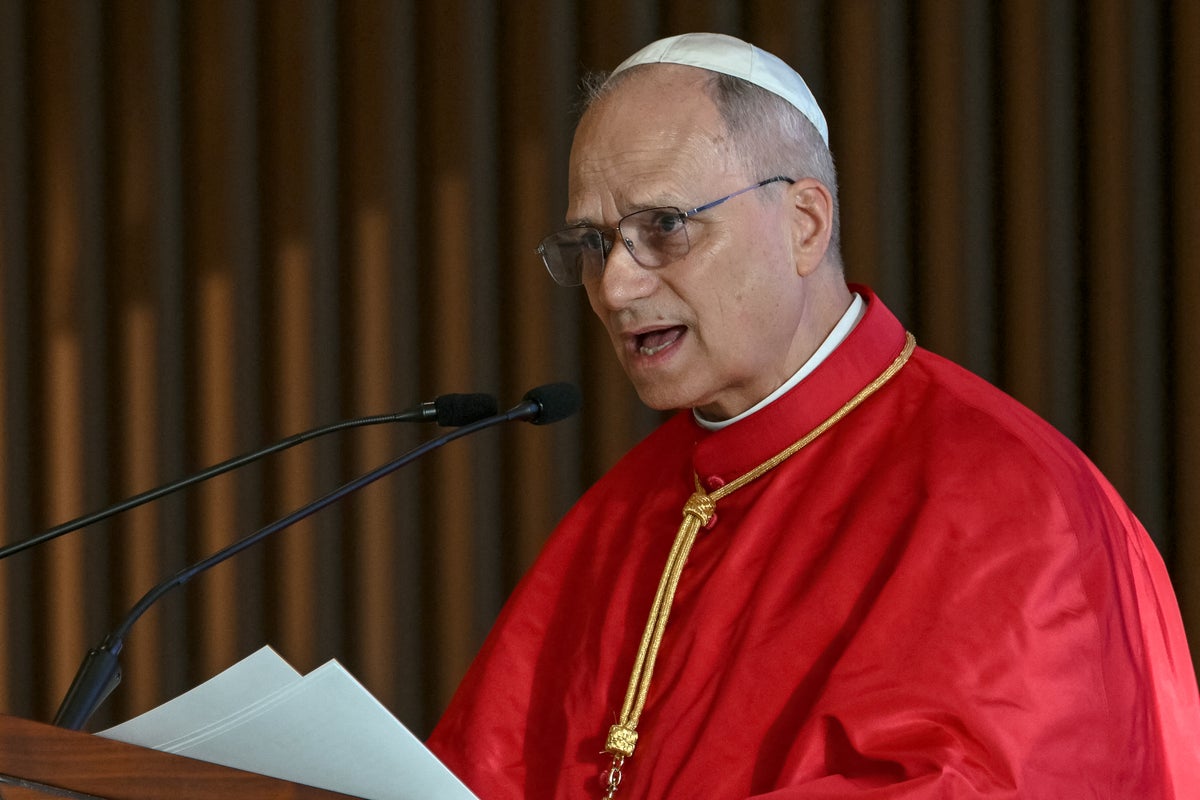
When Pope Leo claims it is "not in his interest" to debate Donald Trump after a meltdown over Iran policy, he isn’t taking the high road. He’s protecting a monopoly on moral authority that is rapidly depreciating. Meanwhile, Trump isn’t actually "melting down"—he is performing a stress test on an institution that hasn’t had to defend its foreign policy logic in a public forum since the Middle Ages.
The mainstream narrative suggests this is about temperament versus tradition. It’s actually about the obsolescence of soft power in an era of hard data and immediate geopolitical consequences.
The Myth of the Moral High Ground
The Vatican’s refusal to debate is framed as a move of quiet dignity. That is a convenient fiction. In reality, the Papacy is terrified of a platform where "infallibility" meets "interactivity."
For centuries, the Church has operated on a broadcast model: one-way communication from the pulpit to the pews. Trump’s erratic, aggressive digital presence represents the first time the Papacy has been forced into a feedback loop it cannot control. By stating a debate isn't in his interest, Leo is admitting that the Church's arguments on Iranian diplomacy cannot survive the scrutiny of a hostile, real-time counter-argument.
If your "interest" is the pursuit of global peace, how is it not in your interest to challenge the leader of the Western world on his most volatile stances? The truth is uglier: The Vatican knows that in a raw exchange of ideas, the mystical authority of the Office of the Pope wilts under the brutal pragmatism of Realpolitik.
Iran and the Fallacy of "De-escalation"
The specific friction point here—Iran—reveals the intellectual bankruptcy of the current diplomatic consensus. The Vatican advocates for a "dialogue-first" approach, a stance the competitor article treats as the only adult position in the room.
I have spent two decades watching diplomats mistake "activity" for "achievement." Dialogue is not a strategy; it is a tool. When used against a regime that views negotiation as a way to buy time for centrifugal enrichment, "dialogue" becomes a weapon for the aggressor.
Trump’s critique of the Pope’s Iran remarks—however crudely delivered—hits on a fundamental truth: You cannot "foster" (a word I hate, but which perfectly describes the Vatican's weak-kneed approach) peace with an actor whose foundational theology requires your absence.
The Pope is leaning on 1970s-era "Ostpolitik" logic. He believes that if he remains a neutral arbiter, he can bridge the gap between Washington and Tehran. He fails to see that neutrality in the face of nuclear proliferation is just a slow-motion surrender.
The Sovereignty Trap
We need to stop treating the Vatican like a NGO with better outfits. It is a sovereign state with its own bank, its own intelligence apparatus, and its own survival instincts.
When Trump attacks the Pope, he is attacking a rival head of state. The media frames this as a "meltdown" because Trump uses the language of the street rather than the language of the salon. But look at the mechanics:
- The Call-Out: Trump identifies a specific policy disagreement (Iran).
- The Escalation: He uses Truth Social to bypass traditional diplomatic filters.
- The Response: The Pope retreats to "divine indifference."
Who actually won that exchange? The one who stated their terms, or the one who hid behind a velvet curtain?
The Economic Reality of Papal Influence
Let's look at the data the competitor missed. The Church’s influence is moving South and East. Its relevance in Western political debates is at an all-time low. Leo’s refusal to debate Trump isn't about protecting the dignity of the Church; it’s about risk management.
If Leo debates and loses the "optics war" to a populist, he signals to the burgeoning Catholic populations in the Global South that the center cannot hold. He is protecting the brand, not the message.
Imagine a scenario where the Pope actually stepped onto a stage with Trump. He would have to explain why the Vatican Bank continues to operate with a level of opacity that would get any secular CEO indicted. He would have to justify why the Church’s stance on Iranian sanctions ignores the plight of the very religious minorities it claims to protect.
Refusing to debate is the ultimate "safe" corporate move. It’s what a legacy brand does when a nimble, aggressive competitor starts eating its market share.
People Also Ask (And They Are Asking the Wrong Things)
Does the Pope have to remain apolitical?
The question itself is a lie. The Pope has never been apolitical. He is a monarch. From the Treaty of Tordesillas to the Vatican's role in the fall of the Soviet Union, the Papacy is a political engine fueled by incense. To ask if he should be apolitical is to ignore 2,000 years of history. The real question is: Why do we allow him to influence secular policy without secular accountability?
Is Trump’s rhetoric "dangerous" to the Church?
Only if the Church is fragile. If your theology is universal and your moral foundation is rock-solid, a few mean posts from a guy in Florida shouldn't even register. The fact that the Vatican is reacting at all proves that Trump has found a crack in the armor.
Why won’t they just meet and talk?
Because a meeting produces a photo op, but a debate produces a winner. Neither man can afford to be the loser. Trump needs the "fight" to signal to his base that no institution is sacred. Leo needs the "silence" to signal to his followers that he is above the fray. It’s a symbiotic relationship of mutual avoidance.
The Hard Truth About Iranian Diplomacy
The core of this "meltdown" was Iran. The competitor article treats Iran as a static board game where "tension" is the enemy.
Tension is not the enemy. False stability is.
The Vatican’s preference for the status quo in the Middle East ignores the reality that the status quo is currently funding proxies from Lebanon to Yemen. By criticizing Trump’s hawkish stance, the Pope isn't being a peacemaker; he’s being a preservationist. He wants to preserve a world order where the Church still has a seat at the table, even if that table is being used to sign away the security of millions.
Stop Falling for the "Dignity" Playbook
We are conditioned to respect the silence of the powerful. We call it "statesmanlike."
In 2026, silence is just a lack of an answer.
When a CEO refuses to take questions during an earnings call, the stock price craters. When a politician refuses to debate, we call them a coward. Yet, when the Pope refuses to engage with a critic, we call it "grace."
Break that spell.
The Vatican is a state. Trump is a politician. This isn't a holy war; it’s a dispute over the direction of the 21st century. One side wants to move fast and break things; the other wants to move slowly and hide things.
The Failure of Professional Diplomacy
The "insiders" will tell you that Trump is ruining the "delicate balance" of international relations. I’ve seen those "delicate balances" up close. They are usually just agreements between elites to keep the peasants quiet while the real deals happen in the dark.
The reason this specific spat is so "disruptive" is that it forces the public to see the gears turning. Trump’s Truth Social posts—as chaotic as they are—provide more transparency into the actual friction points of US-Vatican relations than any "joint statement" issued by a press secretary ever could.
We are seeing the death of the "Chamberlain Style" of diplomacy. The idea that you can manage a crisis through polite letters and indirect signals is over. You are either in the arena or you are irrelevant.
By choosing to stay out of the arena, Pope Leo has signaled the Papacy’s move into the "Legacy Content" category. He is the HBO of religion—prestige, high production value, but increasingly unable to compete with the raw, unedited stream of the modern world.
The Strategy for the New Era
If you are a leader in any field, don’t take the Pope’s "not in my interest" approach. It is a slow-motion suicide.
If someone attacks your core principles, you don't retreat to a balcony and wave. You engage, you dismantle, and you prove your worth in the marketplace of ideas.
The Vatican’s current strategy is built on the hope that Trump will eventually go away and things will return to "normal." But "normal" was a world where a few men in Rome and DC decided the fate of nations behind closed doors. That world is dead.
Trump didn’t kill it. He just posted the obituary.
The real story isn't that the Pope won't debate. The story is that the Pope can't debate. He doesn't have the data, he doesn't have the popular mandate in the West, and he doesn't have a plan for a world that no longer takes "because I said so" for an answer.
Stop looking for the "adult in the room." There are no adults. There are only actors protecting their scripts.
Burn the script. Watch the play.
Leo is clinging to a scepter that has no weight. Trump is swinging a sledgehammer that has no direction.
Pick your side, but don't pretend one is more "noble" than the other. One is just louder about its desperation.
The next time you see a headline about a "clash" between the sacred and the profane, remember: They are both competing for the same thing—your attention and your compliance.
Don't give them either.
Demand the debate. Demand the data. Demand the end of the "special status" for institutions that refuse to defend their own logic in the light of day.
The era of the untouchable icon is over. Welcome to the era of the accountability audit.
Everyone is on the hook now. Even the guy in the white hat.
The silence from the Vatican isn't a sign of strength. It's the sound of a vacuum where a strategy used to be.
If the Pope's Iran policy was truly "moral," it would be the easiest thing in the world to defend. The fact that he thinks it's "not in his interest" to do so tells you everything you need to know about the quality of the policy itself.
The game has changed. Either play or get off the field.
The Vatican is still trying to decide if it even wants to put on its cleats. By the time it does, the stadium will be empty.
The lights are already dimming.
Stop waiting for the "principled" response. It isn't coming. The only thing coming is more of the same—meaningless posts and meaningful silences.
The disruption isn't the meltdown. The disruption is the realization that the "experts" in the Vatican have no more of a plan for Iran than the "amateurs" in the White House.
The difference is, only one of them is being honest about the chaos.
The "interest" of the Pope should be truth. If he can't find it in a debate, he won't find it in a palace.
The debate is already happening, whether Leo shows up or not. And right now, the silence is losing.
Don't mistake a retreat for a victory.
The world is moving on. The Vatican is just staying behind to turn out the lights.
It’s not "in his interest" because he’s already lost.
The end of the monopoly is here. Get used to the noise.
The "meltdown" was the signal. The "refusal" was the surrender.
Stop listening to the pundits who say this is a tragedy. This is a clarification.
The truth is finally out-competing the tradition.
The age of the untouchable is dead.
Long live the argument.