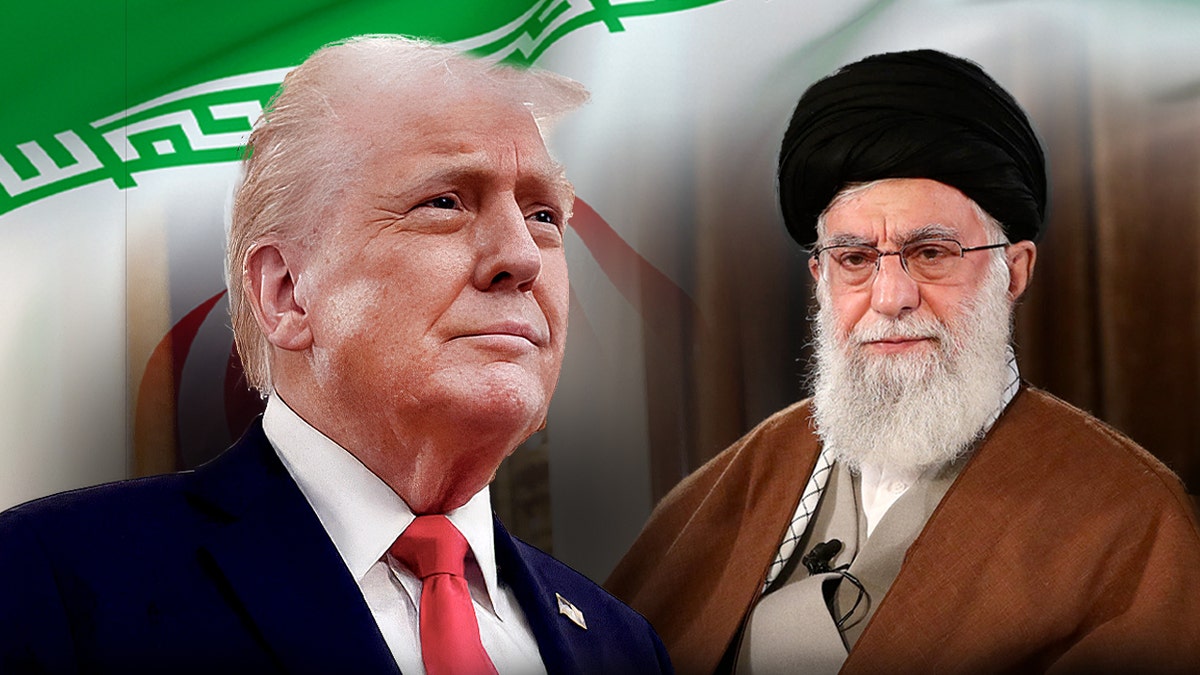
The prevailing narrative in Washington—and specifically the one peddled by Donald Trump on the campaign trail—is that Iran is a house of cards waiting for a stiff breeze. The logic is seductive: sanctions work, the rial is trash, and the regime is "collapsing financially." It’s a comforting bedtime story for hawks who want to believe that a few more months of pressure will force a total surrender or a democratic awakening in Tehran.
It is also a dangerous delusion.
The "collapsing Iran" trope misses the fundamental evolution of the global shadow economy. While D.C. pundits track official exchange rates and oil tanker movements via satellite, they ignore the reality that Tehran has spent forty years becoming the world’s most sophisticated practitioner of economic survivalism. You don’t collapse an economy that has already decoupled itself from the systems you control.
The Myth of the Financial Death Spiral
The "lazy consensus" argues that because the Iranian rial has depreciated significantly and inflation is rampant, the state is on the verge of bankruptcy. This is a fundamental misunderstanding of how a resistance economy functions.
High inflation is a catastrophe for the middle class, certainly. It erodes savings and makes life miserable for the average citizen in Isfahan or Shiraz. But for a revolutionary government focused on survival, inflation is a tool as much as a burden. It allows the state to liquefy its debts and maintain nominal spending. More importantly, the Iranian state doesn't run on rials; it runs on a complex, decentralized network of commodity swaps, front companies, and regional trade that bypasses the SWIFT system entirely.
Trump’s claim that Iran is "broke" assumes that liquidity equals power. In the Middle East, power is measured in influence, proxy hardware, and ideological persistence. None of those require a triple-A credit rating from Moody’s.
Washington’s Ceasefire Obsession is a Strategic Anchor
While the headlines scream about Washington "prolonging" or "facilitating" ceasefires, they fail to mention that the diplomatic process itself has become a trap for Western interests. We treat a ceasefire as a goal; the regional actors treat it as a refueling stop.
By prioritizing the optics of a temporary halt in hostilities, the U.S. actually provides the very "financial oxygen" it claims to be cutting off. Every month the U.S. spends chasing a diplomatic breakthrough is a month where the enforcement of existing sanctions softens.
Look at the data. Iranian oil exports didn't crater under the "Maximum Pressure" 2.0 era; they found new homes in independent Chinese refineries (teapots). These refineries don't care about U.S. secondary sanctions because they have no exposure to the U.S. financial system.
The Resilience of the "Teapot" Trade
- China’s Role: China isn't just a buyer; they are a partner in a parallel financial universe.
- The Price Point: Iran sells at a discount, roughly $5 to $10 below Brent. That’s not a sign of collapse; it’s a cost of doing business that they’ve accounted for.
- Currency Diversification: Trade is increasingly settled in RMB or through barter for industrial goods, making the "dollar-denominated" collapse irrelevant to the regime's military budget.
The Shadow Economy is the Real Economy
I’ve spent years analyzing trade flows in sanctioned environments. One thing you learn quickly: the official GDP numbers are fiction. Iran operates via a "bonyad" system—massive, opaque religious foundations that control up to 30% of the economy. These entities don't report to international monitors. They don't care about the IMF.
When Trump says they are "collapsing," he’s looking at the front window of a store while the real business is happening in the alleyway.
Understanding the Bonyad Mechanics
Imagine a scenario where a state-linked foundation needs to procure drone components. They don't open a Letter of Credit at a Swiss bank. They use a network of "money changers" (hawala) in Dubai, Istanbul, and Erbil.
- Step 1: Oil is sold to a third-party intermediary in Southeast Asia.
- Step 2: The proceeds are moved through a shell company in a jurisdiction with lax oversight.
- Step 3: The "profit" is used to purchase dual-use technology or support proxies like Hezbollah.
This is not the behavior of a "collapsing" entity. It is the behavior of a hardened, agile insurgent state. To say they are out of money is like saying a pirate is broke because he doesn't have a checking account at Wells Fargo.
The Miscalculation of the "One More Push" Strategy
The "One More Push" school of thought—popular among the MAGA foreign policy elite—suggests that if we just tighten the screws 10% more, the regime will fold.
This ignores the Law of Diminishing Sanctions Returns. The first 50% of sanctions hurt the most because they sever easy ties. The last 10% are useless because the target has already built workarounds. By the time you reach the current level of pressure, the only people left to hurt are the civilians. The regime’s core—the IRGC—is the last group to feel the pinch. In fact, sanctions often strengthen the IRGC because they give the military wing a monopoly over the black market.
If you want to kill a business, you don't just stop people from buying its product; you make its product obsolete. The U.S. hasn't made Iran's regional influence or its oil obsolete. We've just made the transaction more expensive, which, ironically, creates a profit motive for every middleman in the Middle East to help them bypass us.
The Regional Reality Check
Stop asking "When will Iran collapse?" and start asking "What does a permanent Iranian war economy look like for the West?"
The answer is a permanent state of low-intensity conflict that the U.S. is ill-equipped to handle. Our military is designed for "Big War." Our treasury is designed for "Transparent Finance." Iran is the master of "Gray Zone War" and "Opaque Finance."
Why the Ceasefire Narrative Fails
- Tactical Breathing Room: Every time Washington "prolongs" a ceasefire or enters a new round of talks, it validates the Iranian strategy of "Pressure for Presence."
- Proxy Autonomy: Groups like the Houthis or PMF in Iraq have developed their own revenue streams. They are no longer entirely dependent on a direct wire transfer from Tehran.
- The Hubris of Sanctions: We assume we are the only ones playing the game. We aren't. Russia and Iran are now sharing "sanctions-evasion playbooks," creating a bloc of "pariah states" that trade with each other.
The Hard Truth Nobody Admits
The Iranian regime is not going to have a "Lehman Brothers moment." There will be no morning where the Supreme Leader wakes up and realizes he can't pay the electric bill for the centrifuges.
The strategy of waiting for a financial implosion is a substitute for a real policy. It’s an excuse for inaction. Whether it’s Trump claiming he’ll fix it in 24 hours or the current administration hoping a ceasefire leads to a grand bargain, both sides are ignoring the fact that Iran has successfully adapted to the "New Normal."
They aren't collapsing. They're evolving.
If you want to actually disrupt Tehran, you don't do it by shouting about the rial's exchange rate on cable news. You do it by aggressively targeting the specific, physical nodes of their shadow trade—the port operators in Malaysia, the insurance brokers in the UAE, and the "teapot" refineries in Shandong.
But that requires actual work and a willingness to piss off our "allies" and "trading partners." It’s much easier to just stand on a stage and say the enemy is falling apart.
The next time you see a headline about Iran’s "imminent economic ruin," remember that they’ve been "collapsing" for nearly half a century. If you’re still waiting for the fall, you aren't paying attention; you're just a tourist in a very sophisticated house of mirrors.
Stop looking at the ticker. Start looking at the tankers.