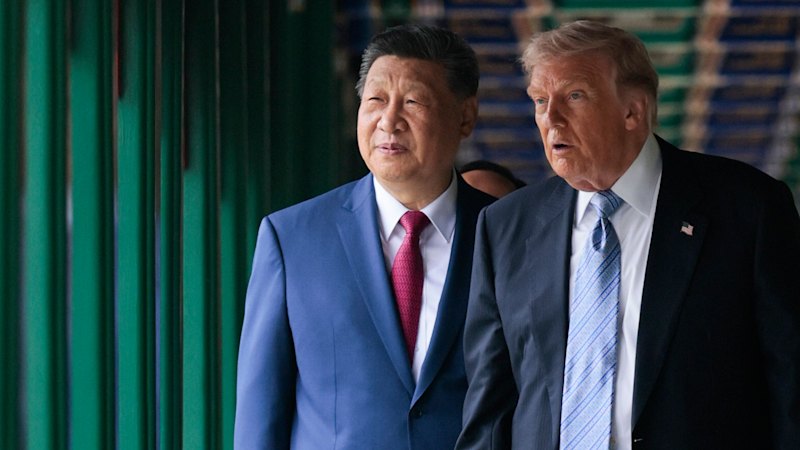
Donald Trump says he just made fantastic trade deals with Xi Jinping in Beijing. He stood in the manicured gardens of Zhongnanhai, praised his friend, and hyped up massive purchases of American goods.
Don't buy the hype.
When you strip away the heavy optics, the high-stakes summit wrapped up with a lot of polite smiles but very little concrete economic substance. If you came looking for a massive, structural overhaul of global trade, you aren't getting it.
The markets saw right through the theater. Right after Trump announced that Beijing agreed to buy 200 big Boeing jets, shares of the aviation giant actually dropped. Why? Investors expected a real, hard commitment, not a soft, recycled promise. The reality behind the closed-door meetings shows a deep disconnect between Washington's rhetoric and Beijing's cold strategy.
The Mirage of the Multibillion Dollar Shopping List
We've seen this script before. Trump loves big numbers, and Beijing knows exactly how to package them. The problem is that a verbal agreement to buy soybeans, oil, and airplanes isn't a binding contract.
China's current economic playbook revolves around buying time, not shifting its economic model. Xi Jinping agreed to buy things China already needs, but on its own terms. Take a look at the actual landscape of the agreements.
- The Boeing Blip: A declaration of interest to purchase 200 aircraft sounds massive. In reality, China's state-run aviation buyers frequently pool orders or reiterate previous commitments to generate positive headlines during diplomatic visits. Wall Street wanted a fresh, ironclad contract. They got a press release.
- The Energy Shuffle: Beijing expressed interest in buying American oil. Sounds great on paper. But China stopped buying significant amounts of US crude after previous rounds of tariffs. They can easily switch suppliers back and forth to score political points without changing their total import reliance.
- The Soybean Stalemate: Agricultural buyers in China have already pivoted heavily toward Brazil over the past year. Promising to purchase more American soy is a cheap concession that Beijing can scale back the moment political tensions flare up again.
This isn't an isolated diplomatic failure. It's a calculated strategy. Beijing has mastered the art of offering symbolic economic gifts to defuse immediate tariff threats while leaving its core industrial policy completely untouched.
Security Guarantees Outweighed Commercial Wins
While the business community walked away empty-handed, the real movement happened on the geopolitical chessboard. Trump wanted wins on global security flashpoints, and that's where Xi actually gave some ground.
The ongoing war in the Middle East hovered over every single meeting. Trump revealed that Xi gave him a firm, personal assurance that China would not provide military equipment to Tehran. With the Strait of Hormuz essentially shut down due to the conflict, any Chinese military assistance to Iran would blow up the global energy market.
Xi went a step further, offering to help open the crucial shipping lane. China is the top foreign buyer of Iranian oil. It desperately needs that water highway to stay open for its own economic survival. This wasn't a favor to Washington. It was an act of self-interest wrapped in the language of global diplomacy.
However, the camaraderie hit a brick wall when the topic shifted to Taiwan. Xi didn't mince words. He delivered a blunt, unambiguous warning regarding America's involvement with Taipei. He even invoked the Thucydides Trap—the political theory that war is almost inevitable when a rising power challenges an established titan.
That single warning shattered the illusion of a cozy partnership. It proved that while Beijing will gladly talk about buying grain, its core geopolitical red lines remain completely non-negotiable.
The Invisible Guardrails of Artificial Intelligence
Behind the scenes, US Treasury Secretary Scott Bessent was trying to pull off a quiet diplomatic pivot. He confirmed that the world's two AI superpowers are finally trying to establish guardrails for artificial intelligence.
Don't expect a grand treaty anytime soon. Washington's aggressive export controls on advanced semiconductor technology remain a massive, throbbing sore point for the Chinese leadership. You can't expect a country to cooperate fully on AI safety guidelines while you're actively suffocating their domestic microchip industry.
The two sides are essentially speaking different languages. Washington wants to talk about safety and ethical guardrails to keep technology from spiraling out of control. Beijing views those exact talks as a Western mechanism designed to lock in American technological dominance permanently.
What Actually Changes for Businesses Now
If you're an executive running a global supply chain, this summit didn't fix your problems. It didn't lower structural tariffs, and it didn't eliminate political risk.
You need to ignore the warm handshakes and prepare for continued volatility. The temporary pause in escalation is a window of opportunity, not a permanent peace treaty.
Stop waiting for a comprehensive trade deal that restores the old status quo. It's not happening. Diversify your sourcing away from single-country dependence. Move assembly lines to secondary markets in Southeast Asia or Mexico. Use the current diplomatic lull to front-load critical component shipments before the next inevitable rhetorical flare-up.
The Beijing summit proved that the structural rift between the two largest economies is far too deep for a single weekend of garden walks and private dinners to fix. Goodwill keeps the lines of communication open, but it doesn't write the checks.